
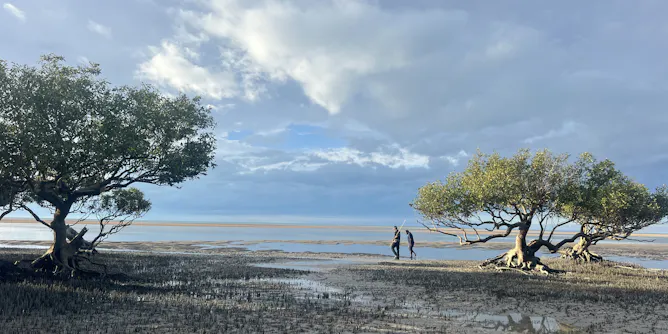
Since the first pilot program in 1998, Australia’s Indigenous Protected Areas have grown hugely. How can we strengthen them for the future?
Articles on Native title
Displaying 1 - 20 of 39 articles
The High Court has long said it can’t hear cases about Indigenous sovereignty, but new research shows that may not be the case.
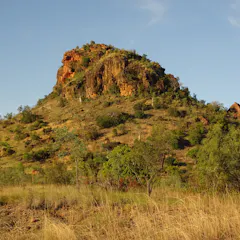
Unlike economic damages, there is no formal method for deciding on compensation for cultural loss when a court rules land has been damaged or taken away.
The High Court ruled the Gumatj Clan was eligible for compensation for mining on their land decades ago. It changes our understanding of how native title law works.
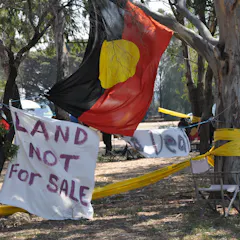
The review will focus on the ‘future acts’ provisions, and whether they are fair to traditional owners.

Some Voice opponents are claiming the new advisory body could lead to the conversion of private land title to native title. But this is not how native title law works.
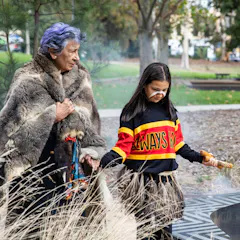
Non-Indigenous Australians need to actively seek the truth about past violence and injustice against Indigenous Australians.

What do popular ‘settler’ Australian stories like The Castle and Trent Dalton’s books say about who we are? What do they evade? Jeanine Leane investigates the state of post-Mabo Australian literature.
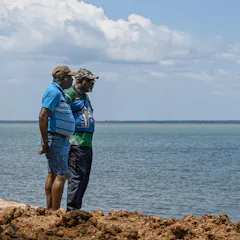
First Nations leaders Pabai Pabai and Paul Kabai filed a landmark class action against the Australian government to protect communities in the Torres Strait from climate change.
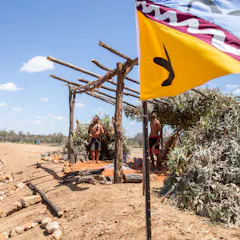
Recently Queensland police recognised the cultural rights of Wangan and Jagalingou people to conduct ceremony under provisions of a Human Rights Act. What does this mean for other Traditional Owners?
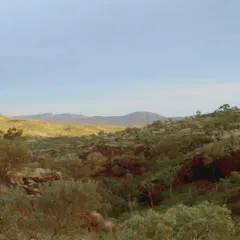
The A Way Forward report addresses the issues of cultural heritage protection in Australia after Rio Tinto destroyed Juukan Gorge. However, achieving change will be far from straightforward.
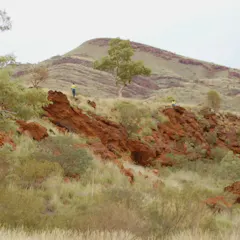
In the wake of the Juukan Gorge blast, more land authority is shifting back to First Nations people.
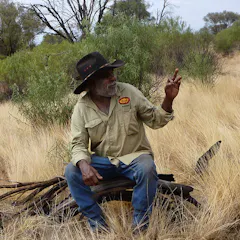
The characterisation of Aboriginal worlds at 1788 is the central debate between Bruce Pascoe’s Dark Emu and Peter Sutton and Kerryn Walshe’s Farmers or Hunter-gatherers.

Yes, transitioning Australia to a zero-carbon economy is essential, but the federal government must remedy this imbalance.
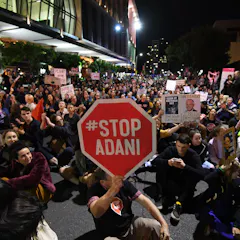
The deep politics of racial division is at play when governments position mining as in the public interest, with Indigenous land owners obstructive of that interest.
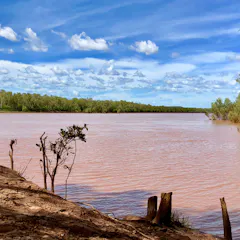
A decision to award A$2.5 million compensation for loss of native title marks an important shift in how such claims are handled.
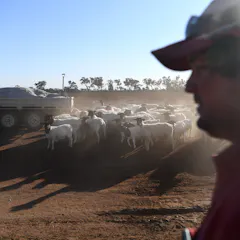
Rural and regional Australia is a big and diverse place, but some broad common issues do emerge as policy priorities.
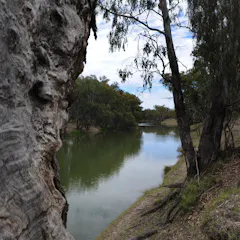
Neither of the two federal investigations into fish deaths in the Darling River include any Indigenous representation.
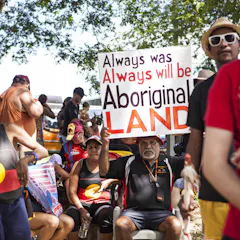
The decision will have huge implications for Indigenous peoples who have lost their land rights and for state and territory governments that may be liable for compensation.
In an article published in the lead up to Australia Day, WA Liberal Party policy committee chairman Sherry Sufi said “native title can only exist if Australia was settled, not invaded”. Is that right?
Top contributors
-

Professor, RMIT University
-
Professor, Australian and Aboriginal History, Faculty of Arts, Design and Architecture, Convenor: Indigenous Land & Justice Research Group, UNSW
-
Adjunct Fellow, T.C. Beirne School of Law, The University of Queensland
-
Chair of National Native Title Council and Ngalia Cultural Leader | EthnoEcologist, Indigenous Knowledge
-
Senior Research Fellow, Melbourne Climate Futures, The University of Melbourne
-
Program Director, Energy & Resource TC Beirne School of Law, The University of Queensland
-
Professorial Fellow, University of Canberra
-
Senior Research Fellow, Deakin University
-
Senior Lecturer and Programme Director - Comparative Tribal Constitutionalism Research Programme, The University of Melbourne
-
Professor of law, Australian National University
-
Adjunct Professor, University of Notre Dame Australia
-
Senior Lecturer in Social Research and Policy, UNSW
-
Director, The Cairns Institute, James Cook University
-
Associate Professor, Peace and Conflict Studies, The University of Queensland
-
Research scholar, Centre for Aboriginal Economic Policy Research, Australian National University