

The High Court has long said it can’t hear cases about Indigenous sovereignty, but new research shows that may not be the case.
Articles on Mabo
Displaying 1 - 20 of 21 articles
But resisting is possible – and the long history of First Nations resistance against colonial violence demonstrates how people can resist digital colonialism.
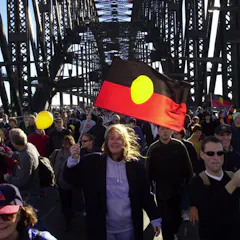
In May 2000, Australians marched to symbolise coming together. But in the decades that followed, promises to Indigenous people have gone unfulfilled.
The High Court ruled the Gumatj Clan was eligible for compensation for mining on their land decades ago. It changes our understanding of how native title law works.
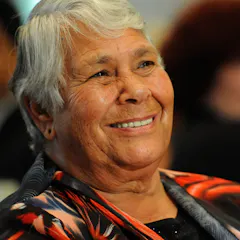
An activist from a young age, it was in her role as inaugural chair of ATSIC that O'Donoghue changed advocacy on Indigenous issues.

Some Voice opponents are claiming the new advisory body could lead to the conversion of private land title to native title. But this is not how native title law works.
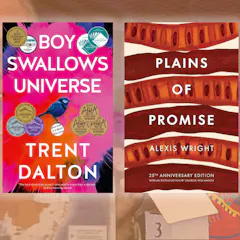
What do popular ‘settler’ Australian stories like The Castle and Trent Dalton’s books say about who we are? What do they evade? Jeanine Leane investigates the state of post-Mabo Australian literature.

Australia has a rich history of community co-ops – from small neighbourhood preschools, to major enterprises with $100 million-plus profits. So why do our business schools largely ignore them?
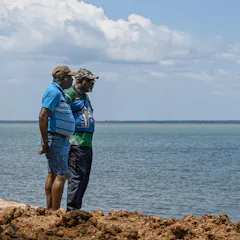
First Nations leaders Pabai Pabai and Paul Kabai filed a landmark class action against the Australian government to protect communities in the Torres Strait from climate change.

Queensland’s payment to settle a stolen wages class action marks the first recognition that these claims have legal as well as moral and political merit.

In less than two generations, the proportion of Australians who never pick up a Bible has leapt to seven out of ten. But a robust biblical literacy can help us decode creative works and understand the past.

In an article published in the lead up to Australia Day, WA Liberal Party policy committee chairman Sherry Sufi said “native title can only exist if Australia was settled, not invaded”. Is that right?
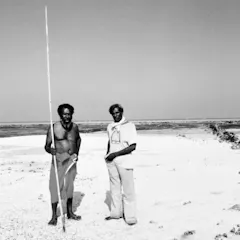
The Mabo decision changed Australia’s concept of land ownership. It was a divisive yet important step toward recognising Indigenous rights and establishing native title.
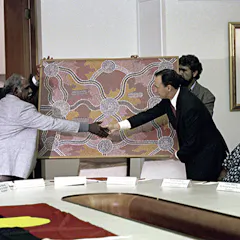
Cabinet papers reveal the extent to which the Keating government was torn between concern for fiscal responsibility and a desire to tackle Indigenous disadvantage and pursue meaningful reconciliation.

What did Isaac Newton, Captain Cook and Eddie Mabo all have in common? Each, in their own way, looked to the heavens to make sense of the world, and the importance of their place in it.
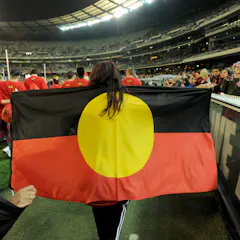
Few in Australia understand the context and true meaning of customary law. Denials of its validity are often based on ignorance or on specific examples devoid of context.
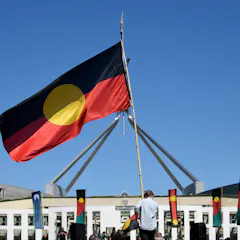
The Recognition of Aboriginal Customary Laws examined the interaction between two legal systems – one based in British law and the other in the customary laws of the Aboriginal peoples of Australia.
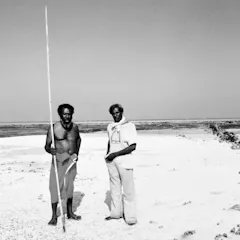
The ALRC report made some useful recommendations about how settler law could deal more fairly with Aboriginal people by taking their traditions and customs into account.
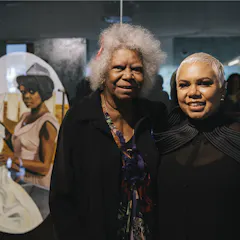
Boneta-Marie Mabo’s art responds to a colonial past in which Aboriginal women were fetishised as “black velvet”. But it also celebrates strong women, including her activist grandmother Bonita Mabo.
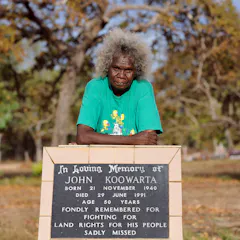
This week’s Federal Court ruling that the Wild Rivers declarations introduced by the former Queensland Labor Government were rushed and invalid was the long-awaited result many Cape York Indigenous groups…
Top contributors
-

Professor, RMIT University
-
Distinguished Teaching Fellow, Western Sydney University
-
Associate Dean Indigenous and Professor of Publishing and Communications, The University of Melbourne
-
Professor of Criminology, The University of Western Australia
-
Senior Lecturer in Social Research and Policy, UNSW
-
Professor of law, Australian National University
-
Adjunct Professor, University of Notre Dame Australia
-
Senior Lecturer, UNSW Law, UNSW
-
Director, Centre for Resources, Energy and Environmental Law, Melbourne Law School, The University of Melbourne
-
Associate Professor, Macquarie University
-
Associate Professor In Creative Writing, The University of Melbourne
-
Professor of Law, University of Technology Sydney
-
Honorary Associate, Department of History, University of Sydney
-
Emeritus Professor of Business and Labour History, University of Sydney
-
Lecturer, Griffith Law School, Griffith University