

A new book examines the relationship between national security and access to information in Australia, New Zealand, US, UK and Canada, comparing it with other countries around the world.
Articles on National security
Displaying 221 - 240 of 482 articles
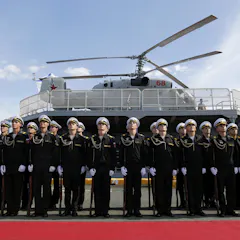
With Russia’s military capacity and soft power influence steadily increasing in the Asia-Pacific region, it may be time to reevaluate Australia’s Russia strategy.
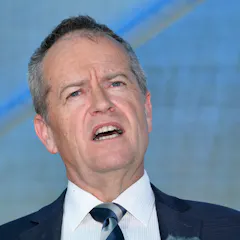
With polling showing Labor is vulnerable on security issues, the opposition leader has the difficult task of distinguishing his party from the government while not being wedged from the right.
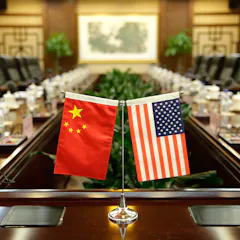
Chinese investment in the US has never been high, but the ongoing trade war could dampen it further, with significant long-term repercussions.
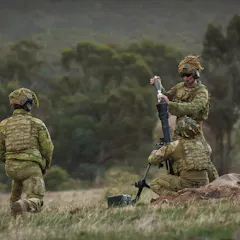
The bill makes it easier for states and territories to seek help from the Australian Defence Force (ADF) to respond to terrorist and other violent occurrences.
It is likely that the parliamentary intelligence and security committee will want more clarification on how things would operate in the grey area.
Michelle Grattan speaks with Deep Saini about the week in Australian politics.
The changes are designed to meet criticisms from charities, universities and others, and to get a quick agreement with Labor on the legislation.
Where possible, Opposition leader Bill Shorten tries to stick like glue to the government on national security issues, for reasons of politics as well as substance.

As more physical objects are becoming digitalised, it is leading to greater national security risks.
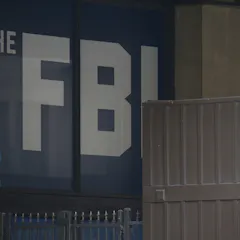
An informant gathered information from Trump campaign staffers for the FBI’s Russia probe. An historian writes that informants are one of the most basic ways the FBI and police investigate.
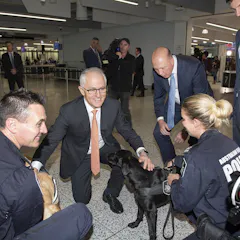
We need to ensure we do not sacrifice our liberty in the pursuit of a goal that is at best ineffective and at worst counterproductive.
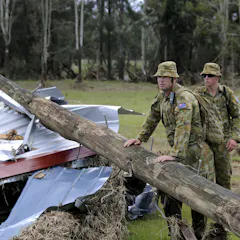
Australia faces many security issues driven by climate change, including more international migration and an increase in defence personnel being sent on disaster relief missions, a Senate inquiry has found.

It is vital for governments and citizens to discuss how much privacy should be sacrificed when issues of national security arise.

John Bolton just started his job as National Security Adviser to President Trump. He’s the latest in a ever-changing cast of staffers, raising the question: Who’s in charge of national security?
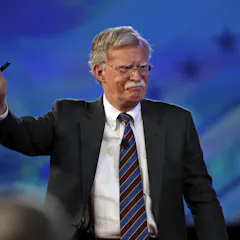
A former State Department official says Bolton is a military hawk who wants the US to reclaim its global dominance – mostly by force.

During the Cold War, the US built nuclear weapons at a network of secretive sites across the nation. Some are still heavily polluted and threaten public health today.
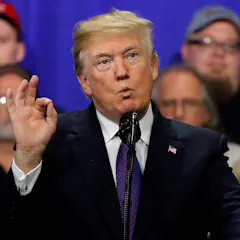
Mounting evidence suggests we are so mesmerised by the theatre around Donald Trump that we have lost sight of how the US security establishment wields power.
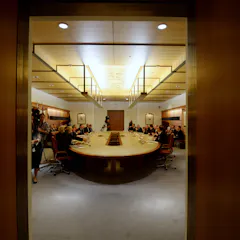
We need to balance a legitimate desire for transparency in politics with the need for free and thoughtful debate.

It’s increasingly difficult for investigative journalists to hold governments to account – partly due to anti-terror and security laws making it harder for whistleblowers to act.
Top contributors
-

Professorial Fellow, University of Canberra
-
Associate Professor, Griffith Criminology Institute, Griffith University
-
Senior Research Associate, Andrew & Renata Kaldor Centre for International Refugee Law, UNSW Law School, UNSW
-
Associate Professor, TC Beirne School of Law, The University of Queensland
-
Visiting Fellow, Department of Political and Social Change, The Philippines Institute, Australian National University
-
Assistant Professor in Public Law and Human Rights, Durham University
-
Vice-Chancellor and President, University of Canberra
-
Professor, Strategic and Defence Studies Centre, Australian National University
-
Associate Professor, Law School, The University of Western Australia
-
Senior Lecturer in Politics and International Relations, University of Notre Dame Australia
-
Teaching Professor of Computer Science and Electrical Engineering, and Associate Director, UMBC Cybersecurity Institute, University of Maryland, Baltimore County
-
Senior Research Fellow, Centre for Advancing Journalism, The University of Melbourne
-
Chair in Global Islamic Politics, Alfred Deakin Institute for Citizenship and Globalisation, Deakin University
-
Research Fellow, Griffith University
-
Professor of the Practice of Political Science and International Relations, USC Dornsife College of Letters, Arts and Sciences