
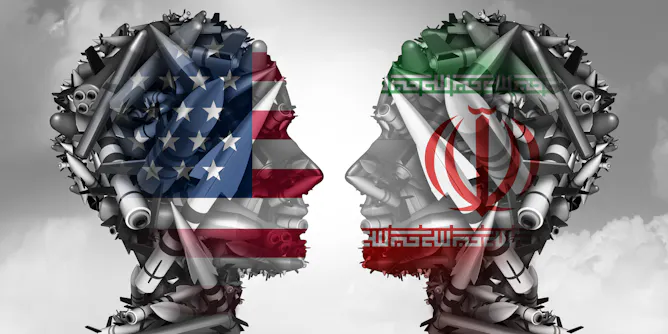
National security isn’t just about warding off physical attacks. It’s also about understanding cultural forces that drive a society to think, feel and act in certain ways, a political scientist says.
Articles on National security
Displaying 181 - 200 of 482 articles
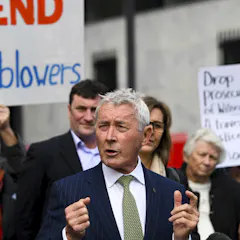
The purpose of the NSIA is to protect national security information from being disclosed in courts. But this can undermine a defendant’s ability to argue his or her innocence.
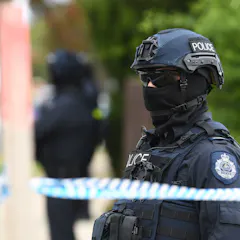
Australia now has one of the most comprehensive ranges of anti-terrorism laws of any Western democracy. It’s time to think creatively about solutions, rather than continually reworking old strategies.

In many instances, whistleblowers find the abusive power they have revealed turned against them, both ending their careers and harming their personal lives.

Political leaders are ignoring dangerous threats to American national sovereignty, security and citizens’ peace of mind.
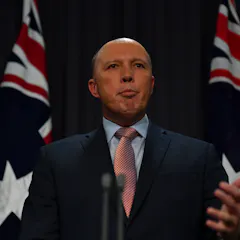
While the ministerial direction represents a genuflection in the direction of press freedom, it provides nothing by way of protection for whistleblowers.
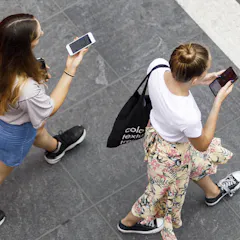
Under controversial national security laws, parts of your mobile phone data is accessible by federal police and counterterrorism agencies. But in reality dozens of other organisations can access it too.

Labor is proposing establishing a new parliamentary committee to look into press freedom; one that will deal with whistle blowers and have crossbench representation.
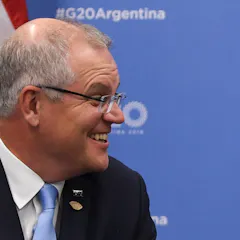
China threatens to divide the close bond Australia and the US have shared for decades.
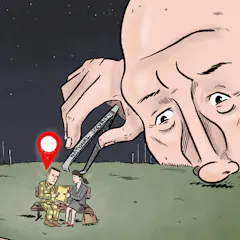
Ideally, Australia would introduce constitutional protections for media freedom. But, in the meantime, four laws need urgent reform to better balance those freedoms with national security.

Many current and former US military leaders call climate change a serious national security threat, but few of them mention the Defense Department’s big carbon footprint.
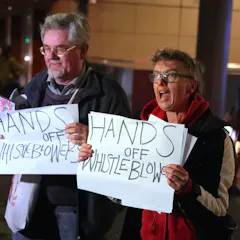
After this week’s police raids on media outlets, we need a better way to balance two crucial elements of our democracy - national security and press freedom.

This week’s raids on media show our democracy at its darkest.
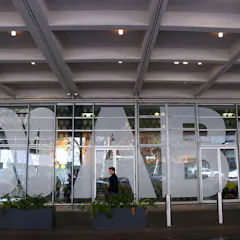
This week’s raids on journalists and media outlets show not just the risk to those doing work in the public interest, but the potentially chilling effect it will have on more such journalism being brought to light.
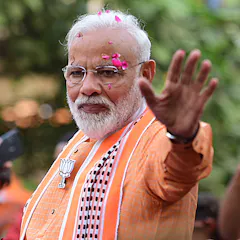
Despite branding himself India’s ‘watchman’, Modi has a mixed record when it comes to keeping India secure.
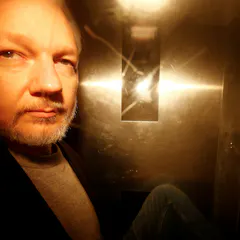
Julian Assange’s indictment under the Espionage Act, a sweeping law with heavy penalties for unauthorized receiving or disclosing of classified information, poses a threat to press freedom.
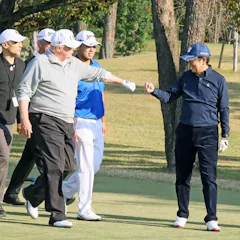
Japanese Prime Minister Shinzo Abe needs the US to confront North Korea, revitalize Japan’s economy and boost his standing at home. And he knows flattery is the way to this president’s heart.
Politicians have been leaking secrets to journalists as long as newspapers have existed. But it’s getting more difficult thanks to surveillance technology.
On primary votes, the ALP dropped a point to 36%, while the Coalition was static on 38%, from the last Newspoll a week ago.
Cutting Huawei out of the picture would limit Western access to new, state-of-the art technology.
Top contributors
-

Professorial Fellow, University of Canberra
-
Associate Professor, Griffith Criminology Institute, Griffith University
-
Senior Research Associate, Andrew & Renata Kaldor Centre for International Refugee Law, UNSW Law School, UNSW
-
Associate Professor, TC Beirne School of Law, The University of Queensland
-
Visiting Fellow, Department of Political and Social Change, The Philippines Institute, Australian National University
-
Assistant Professor in Public Law and Human Rights, Durham University
-
Vice-Chancellor and President, University of Canberra
-
Professor, Strategic and Defence Studies Centre, Australian National University
-
Associate Professor, Law School, The University of Western Australia
-
Senior Lecturer in Politics and International Relations, University of Notre Dame Australia
-
Teaching Professor of Computer Science and Electrical Engineering, and Associate Director, UMBC Cybersecurity Institute, University of Maryland, Baltimore County
-
Senior Research Fellow, Centre for Advancing Journalism, The University of Melbourne
-
Chair in Global Islamic Politics, Alfred Deakin Institute for Citizenship and Globalisation, Deakin University
-
Research Fellow, Griffith University
-
Professor of the Practice of Political Science and International Relations, USC Dornsife College of Letters, Arts and Sciences