
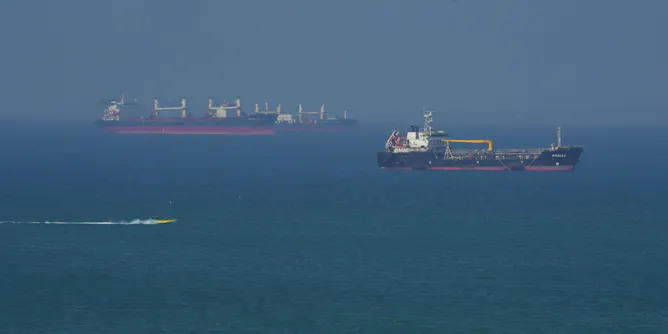
US sanctions on foreign nations have lost some of their power to influence the behavior of other nations – with increasing costs for the US to boot.
Articles on Multilateralism
Displaying 1 - 20 of 55 articles

Alexander Stubb’s book Triangle of Power is a reminder that we are a quite intelligent species, even if we continue to do unbelievably stupid things.
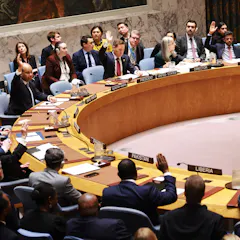
Once again, in a crisis, the UN and the EU seem to pale into insignificance. Multilateralism may not be dead, but it’s currently at an all-time low…
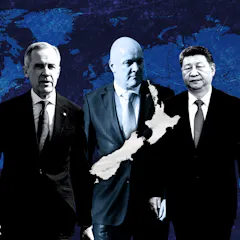
Canada’s Mark Carney is proposing a new alliance of ‘middle powers’ to offset over-reliance on the US and China. New Zealand would have good reason to be involved.
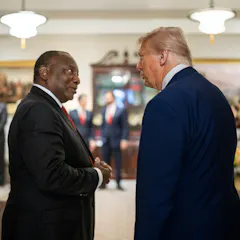
South Africa’s preference for dialogue has become harder to sustain in a polarised world.
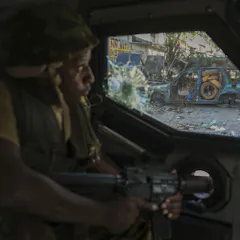
A recent Security Council resolution to curb violence in Haiti was not just a local issue but a broader idea about how to stay relevant as a global organization.
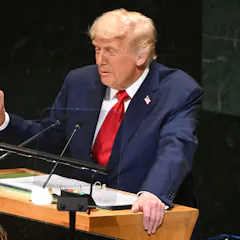
The US president spoke for nearly four times his allotted time limit mixing America first meesages with severe criticism of the UN and many member states.

African countries must work collectively to seize opportunities in new digital and green economies where the continent’s critical minerals are so important.
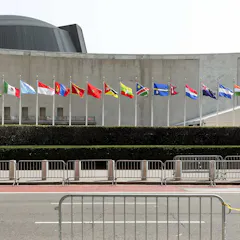
Multilateralism without the US has its limitations, but it still holds the potential for tangible, incremental progress on global challenges.

In the majority of cases, diplomacy has played a pivotal role in convincing nuclear-seeking nations to relinquish their pursuit of nuclear weapons.

A long-time leader of California’s climate efforts explains how governors from Brazil to Indonesia have become the leading edge in fighting climate change. Several are meeting this week in Brazil.
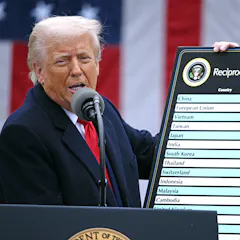
Confrontation with the rest of the world, enemies and allies alike, is at the heart of Donald Trump’s politics. His tariffs must be understood in this way.

Trade policy must evolve to prioritise economic security and resilience

Nationalistic behavior can put people, economies and ecosystems, and even peace, at risk. The US, which paused Columbia River talks with Canada, isn’t the only country shifting in this direction.
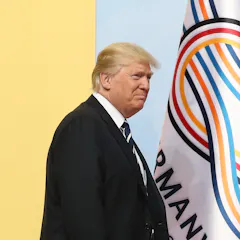
Trump’s incoming administration could create certain risks for Germany, including putting more pressure on its weak economy.
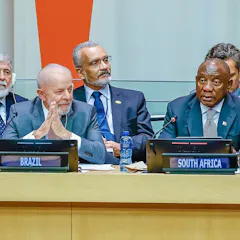
Brazil’s presidency of the G20 will end with limited results, as other members of the bloc turn a deaf ear to President Lula’s desire to lead the world in development.
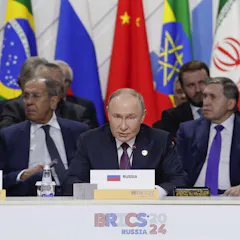
It’s not clear yet that the Brics alliance is close to being able to achieve unity of purpose.

British governments have neglected Africa and the Commonwealth due to domestic political and economic difficulties since Brexit.
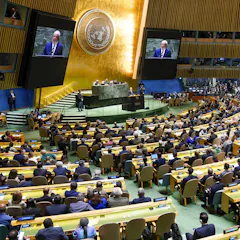
The war in Ukraine is both a symptom and a cause of a paralysing crisis in the international system. It is up to the Global South to reform the multilateral system.

The disparate nature of the six prospective members is bound to spark debate about the real nature of Brics.
Top contributors
-

Lecturer of international trade law, Monash Business School, Monash University
-
Research Fellow at the School of Government and International Affairs, Durham University
-
Professor (International Relations), University of Johannesburg
-
Political Scientist, University of the Western Cape
-
Honorary Professor of International Relations, University of the Witwatersrand
-
Executive director, Africa Institute of South Africa, Human Sciences Research Council
-
Professor of International Relations, European University Institute
-
Assistant Professor in Modern Middle Eastern History, University of Birmingham
-
Professor in the Department of Government, University of Essex
-
Visiting Professor of Tax Law, New York University, and Professor of Law, The University of Melbourne
-
Professor of British Politics, University of Leeds
-
Professor of Comparative Organised Crime and Corruption, University of Bath
-
Professor, Griffith Law School, Griffith University
-
Professor of Law, Conflict and Global Development, University of Reading
-
Assistant Professor, Canberra School of Politics, Economics and Society, University of Canberra