

It was once believed that mice had relatively poor vision. Turns out mice are far from blind – and studying how their vision is shaped by their environment and behavior can clarify the same in people.
Articles on Mouse model
Displaying all articles
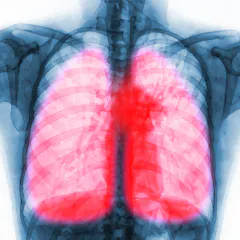
Researchers developed a new mouse model that replicates long COVID-19 more accurately than current models. Their findings could lead to new treatments.

Fragile X syndrome is the most common inherited form of intellectual disability. Using short bits of DNA to fix improperly transcribed genes may one day be a potential treatment option.

Nonhuman primates like rhesus monkeys share certain characteristics with people that may make them better study subjects than mice for research on neurodegenerative diseases.
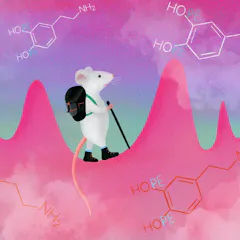
Mouse brains produce random, strong bursts of dopamine and are able to control them. This may challenge many long-held ideas about learning and motivation.

Some face masks now come with a coating of graphene, a substance that can kill microbes. Is it safe to breathe it in?

Scientists manage to boost brown fat in mice with a molecule called BMP8b. Could this be the future for treating obesity?

New approach to preventing seizures proves effective in mice.

New mouse study suggests that a heavy meal may be a better test than the glucose tolerance test.

A new initiative called the International Brain Laboratory is tackling this fundamental mystery of neuroscience in an unusual way.

The offspring of mice who don’t get enough DHA during pregnancy are more likely to have pups that display schizophrenia-like symptoms.

Research provides hope for new anti-obesity drugs.
A mouse study suggests that Parkinson’s might start in the gut and later spread to the brain.
Top contributors
-

Senior Research Associate, University of Cambridge
-
Researcher, University of Cambridge
-
Professor of Neuroscience, Royal Veterinary College
-
Lecturer in Neuroscience, Keele University
-
Professor of Molecular Nutrition and Metabolism, University of Cambridge
-
Wellcome Trust Senior Research Fellow, UCL
-
Research Associate in the Fabrication and Validation of Implantable Ion Pumps, University of Cambridge
-
Professor of Neuroscience, UMass Chan Medical School
-
Associate Professor of Biomedical Engineering, Georgia Institute of Technology
-
Assistant Professor of Molecular Medicine, UMass Chan Medical School
-
Associate Research Scientist, Yale University
-
Professor of Psychology, University of Wisconsin-Madison
-
Distinguished Professor of Pharmacy Practice, University of Connecticut
-
Professor of Behavioral Neuroscience, UMass Amherst
-
Professor of Physics and Neurobiology, University of California, San Diego