

Around the world, very few public transport agencies make money, while ride-sharing companies are making huge losses. So why partner up, and how do those partnerships work?
Articles on Mobility as a service (MAAS)
Displaying all articles
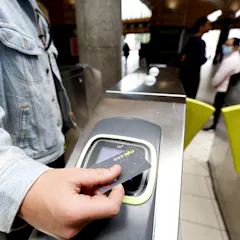
The Victorian government has announced it is replacing the state’s public transport ticketing system. So what essential features should a state-of-the-art system offer users?

Research shows apps designed to make journeys more environmentally friendly aren’t considering women’s transport needs.

Imagine if you had the option of booking and paying for multiple public transport and shared services using a single app.

It has happened with software, computing and entertainment, but we’re still waiting for the platform needed for mobility as a service to reach its full potential.

The pandemic has highlighted how remote country communities need flexible transport options that better serve their unique needs.

And the winner is … e-bikes? A new entrant is set to overtake Brisbane’s CityCycle scheme in the race for the shared mobility market.

Coronavirus has changed population projections and behaviours across society. With fewer commuters we need to shift transport planning based on a hub-and-spoke network to focus on more local travel.

On-demand public transport has now provided over 1 million rides in 36 trials in various Australian cities. Is the problem of poor suburban public transport on the way to being solved?

Over US$33 billion was invested in mobility tech last year in response to claims it will transform our lives. Based on what we have seen so far, which of these promised solutions will be delivered?
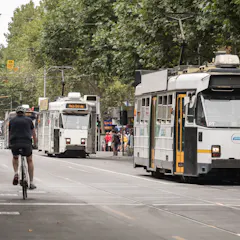
From Apple Music to Netflix, subscription services are on the rise. It’s time transport followed suit.
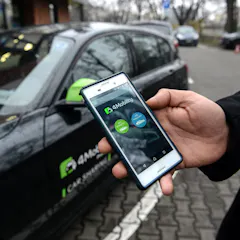
Investment is pouring into urban technology, much of it into innovative ventures that aim to transform how we get around our cities.
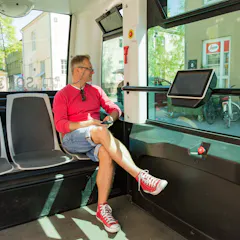
Apps that seamlessly combine all our travel options could be the most significant transport innovation since the automobile, but early trials show government policy support is vital to make MaaS work.

The UK pioneered smart cards such as Oyster. But now, experimentation is being stifled as cash-strapped councils struggle to deliver basic services.
Top contributors
-

Honorary Professor of Planning, The University of Queensland
-
Adjunct Researcher, Cities Research Institute, Griffith University
-
Associate Professor in Urban Planning, The University of Queensland
-
Senior Research Fellow, Cities Research Institute, Griffith University
-
Professor and Head of the School of Civil and Environmental Engineering, UNSW
-
RMIT University
-
Lecturer in Roads and Transport Engineering, University of Technology Sydney
-
Associate Dean, Research and Industry Engagement, La Trobe University
-
PhD Researcher in Rural Mobility as a Service, University of Aberdeen
-
Professor, RMIT University
-
PhD Candidate, Cities Research Institute, Griffith University
-
Senior Lecturer in Sustainable Innovation, University of Hertfordshire
-
Postdoctoral Researcher, KTH Royal Institute of Technology
-
Professor of Information Systems, RMIT University