

Experts describe their research into how smartphones collect and share private personal information with tracking companies and advertisers.
Articles on Mobile apps
Displaying 21 - 40 of 71 articles

Schools should consider offering mobile learning technology in multiple languages to help pupils learn better in subjects like maths and science

The additional precautions many women take when travelling alone help us manage our fears and feel more empowered to enter into public spaces.

There were 325,000 mobile health apps available in 2017. But while the digital health revolution is exciting, its rate of development is posing challenges for patients and healthcare professionals.

Thanks to a burgeoning procrastination economy, developers are creating content that can be consumed in short spurts. What does it mean for productivity?

The biggest mobile technology showcase of the year wrapped up in Barcelona yesterday. We took a look at some of the highlights.

As businesses’ branded mobile apps become more common and popular, how are they affecting shoppers’ buying habits?

Why do tech companies care so much about self-driving cars? If drivers no longer need to pay attention to the road, they can use their mobile devices even more.

Dating apps have changed the way people present themselves. Visual cues and short 100 word bios are the new currency of dating.

Watching how people play a game against a computer opponent can help identify how humans use – or don’t use – game theory principles to make decisions.

For decades, parents have fretted over ‘screen time,’ limiting the hours their children spend looking at a screen. But as times change, so does media… and how parents should (or shouldn’t) regulate it.

When smartphone apps get permission to access your location or other activity, they often share that data with other companies that can compile digital profiles on users.

While Apple Pay may have won the battle against some of Australia’s banks, it may lose the war against the providers of digital wallets, such as Tencent and Alibaba.

The best way to protect a presidential device is to keep it off the internet altogether. If that’s not going to happen, how else can such a sensitive gadget be kept safe?

Using sensors on smartphones and smartwatches can shed light on patients’ symptoms of depression, even identifying ones they didn’t notice or share with counselors.

The more often Americans used their phones to obtain information, the less they trusted strangers. How can this be, and what does it mean?
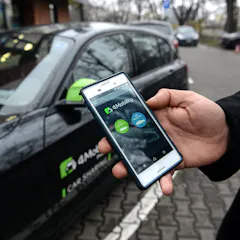
Roads versus public transport: for decades, these have been the battle lines in debates over transport in our cities. But a revolution in mobility is under way that will transform our thinking.

Involving the public in data collection - through crowd sourcing - to produce critical public services such as maps and transit apps helps build new conversations on how the system can be improved.
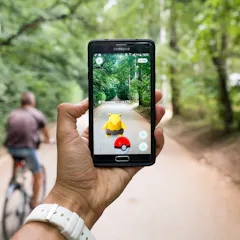
The minds of Pokemon trainers have been manipulated using basic behavioural science.

What research into game play and human interaction can tell us about why the newest mobile game craze is attracting so many different people to play.
Top contributors
-

Associate Dean, Research and Innovation, University of Salford
-
Professor of Strategic Management, University of Toronto
-
SHARP Professor, Vitalities Lab, Centre for Social Research in Health and Social Policy Centre, and the ARC Centre of Excellence for Automated Decision-Making and Society, UNSW
-
Lecturer, Faculty of Education and Arts, Australian Catholic University
-
Associate Professor of Economics, University of Miami
-
Senior Lecturer in Psychology, Nottingham Trent University
-
Senior Lecturer in Digital Cultures, University of Sydney
-
Post-Doctoral Research Assistant, University of Dundee
-
Adjunct Professor, Swinburne University of Technology
-
Professor in Behavioural Neuroscience, Bangor University
-
Lecturer in Digital Civics, Newcastle University
-
Co-director, Games Studio, Human Centred Design Technology, University of Technology Sydney
-
Associate Professor, Informatics and Operations, Kingston University
-
Professor of Nursing and Director of Health Innovations, University of Wollongong
-
Associate Professor of Economics, HEC Paris Business School