

Medications used to perform abortions are also widely used to treat severe pregnancy complications, as well as several conditions unrelated to childbirth.
Articles on Mifepristone
Displaying 1 - 20 of 27 articles

The court’s decision sends the mifepristone case back to a lower court, which has signaled that it will continue its challenge to the legality of mailing the abortion pill.
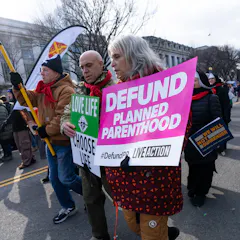
Four years after the Supreme Court’s Dobbs ruling gave states the power to ban abortion, further restrictions are arriving through legislation and litigation.
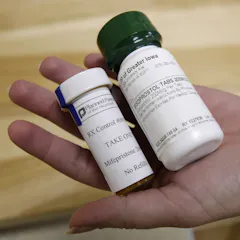
Judges and federal regulators will make significant decisions over Americans’ reproductive rights.
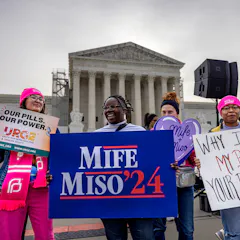
The opinion did not take on the substance of the plaintiffs’ claims against mifepristone, and the abortion pill is already facing other challenges.

The new law makes it illegal to possess 2 types of abortion pills without a prescription.

Medical workers navigate their own moral and religious beliefs, professional standards, the law and the realities of clinical work – which can be especially complicated in abortion care.

Two legal scholars who study abortion-related laws explain what happened at the Supreme Court in a case that could make it harder to get an abortion.

In a year when the Supreme Court deals with many high-profile cases, a professor who teaches law to undergraduates describes how to read the court’s opinions.
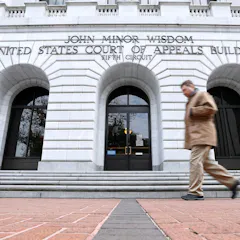
A court long known for its landmark decisions expanding civil rights is now known for highly conservative rulings reining in government power.

A 2023 Senate inquiry report described abortion access in Australia as a ‘lottery’. Barbara Baird’s research doesn’t describe chance, but an inadequate system. What needs to change?
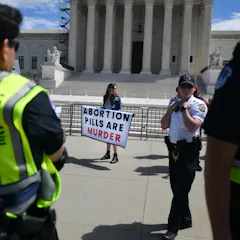
The 1873 Comstock Act makes it a crime to mail abortion drugs or medicine – raising legal questions about the law’s potential revival and influence over nationwide abortion laws.

As the government’s oldest consumer protection agency, the FDA has long butted up against drugmakers, activists and politicians. But undermining its work could be harmful to patient health and safety.

Mifepristone’s safety in medication abortions has been well established over more than two decades, but legal wrangling leaves the future of the drug hanging in the balance.
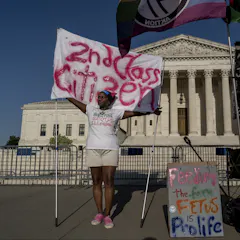
The Supreme Court’s ruling on mifepristone keeps the drug accessible for now, but its future is still in limbo.
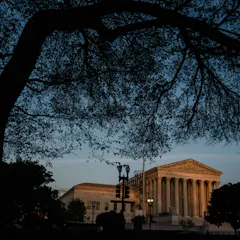
Many people wonder how courts can rule in contradictory ways. But it happens relatively frequently.

The increase in abortion restrictions may also lead to a decline in access to emergency contraceptives.

If the ruling to reverse the use of mifepristone stands, it will not only severely restrict abortion access for women throughout the US – it will have far-reaching effects on health care.

Mexico abortion referral networks are assisting American citizens and undocumented migrants seeking abortions. The model could provide inspiration for similar networks at the Canada-U.S. border.
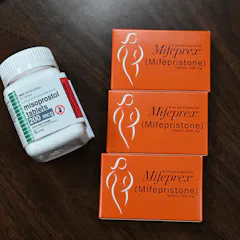
A rash of pending lawsuits raises questions about the FDA’s approval of mifepristone two decades ago, whether the drug can be legally mailed and the constitutional right to interstate commerce.
Top contributors
-

Professor of Law, George Washington University
-
Professor of Law, University of Virginia
-
Associate Professor of Family Medicine, School of Medicine, University of Washington
-
Associate Professor of Legal Studies and Political Science, UMass Amherst
-
Associate Professor of Obstetrics, Gynecology and Gynecologic Surgery, University of California, San Francisco
-
Lecturer in Legal Studies, Bryant University
-
Professor of Law, Wake Forest University
-
Associate Professor of Obstetrics, Gynecology and Reproductive Sciences, University of California, San Francisco
-
Associate Professor, College of Humanities, Arts and Social Sciences, Flinders University
-
Professor Emeritus, Center for Bioethics and Social Sciences in Medicine, University of Michigan
-
Service Assistant Professor in Family Medicine, West Virginia University
-
Professor, Institute of Feminist and Gender Studies, L’Université d’Ottawa/University of Ottawa
-
Assistant professor, Kedge Business School
-
Professor of Obstetrics and Gynaecology, James Cook University
-
Professor Emeritus of Law and Adjunct Professor of Political Science, Case Western Reserve University