

Although states have the power to regulate medical care, they cannot exercise that power by prohibiting speech on medical topics that the state disagrees with.
Articles on Medication abortion
Displaying all articles
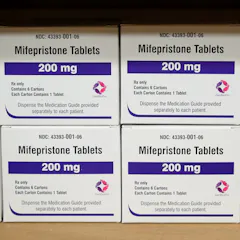
This year, decisions from the courts, FDA or DOJ could all shut down telehealth for medication abortion, which is how most people in states with bans get care.

Medications used to perform abortions are also widely used to treat severe pregnancy complications, as well as several conditions unrelated to childbirth.

Research showed that older women used safer methods of abortion. Fully safe methods did not dominate in any region of Ghana.
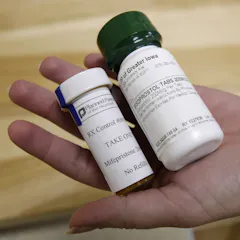
Judges and federal regulators will make significant decisions over Americans’ reproductive rights.

As the government’s oldest consumer protection agency, the FDA has long butted up against drugmakers, activists and politicians. But undermining its work could be harmful to patient health and safety.
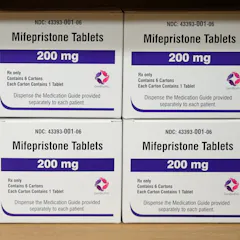
Mifepristone’s safety in medication abortions has been well established over more than two decades, but legal wrangling leaves the future of the drug hanging in the balance.
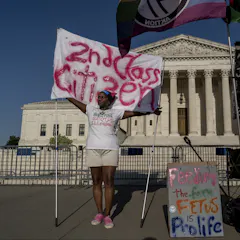
The Supreme Court’s ruling on mifepristone keeps the drug accessible for now, but its future is still in limbo.
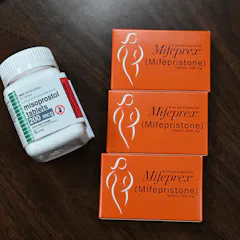
A rash of pending lawsuits raises questions about the FDA’s approval of mifepristone two decades ago, whether the drug can be legally mailed and the constitutional right to interstate commerce.

The FDA’s allowance for pharmacies to dispense mifepristone will broaden access to the two-pill mifepristone-misoprostol regimen of medication abortion, which is 95% to 98% effective.

The fall of Roe v. Wade will result in more people deciding to privately end a pregnancy, a new study finds. But how often people will turn to safe versus unsafe options remains to be seen.

Primary care doctors have long played an important role in providing birth control. Now, with the fall of Roe, they could help fill a critical need for comprehensive family planning services.

Three experts answer questions about the effectiveness, safety and side effects of medication abortion, using mifepristone followed by misoprostol.

During the pandemic, health care providers began prescribing abortion pills without requiring in-person exams. This practice could help people access the care they need when abortion rights are in limbo.

Carrying a pregnancy to term is riskier than having an abortion, especially for non-Hispanic Black women.
Top contributors
-

Associate Professor of Family Medicine, School of Medicine, University of Washington
-
Professor of Law, The University of Texas at Austin
-
Distinguished Professor of Medicine, University of California, San Francisco
-
Associate Professor of Obstetrics, Gynecology and Gynecologic Surgery, University of California, San Francisco
-
Assistant Professor of Sociology, University of Colorado Boulder
-
Associate Professor of Obstetrics, Gynecology and Reproductive Sciences, University of California, San Francisco
-
Clinical Assistant Professor, University of Michigan
-
Professor of Law, George Washington University
-
Associate Professor of Legal Studies and Political Science, UMass Amherst
-
Associate Professor of Family Medicine and Obstetrics & Gynecology, School of Medicine, University of Washington
-
Professor of Internal Medicine, University of Washington
-
Professor of Law, Wake Forest University
-
Professor of Obstetrics, Gynecology & Reproductive Sciences, University of California, San Francisco
-
Professor of Law and Director of Appellate Advocacy, University at Buffalo
-
Lecturer, University of Ghana