

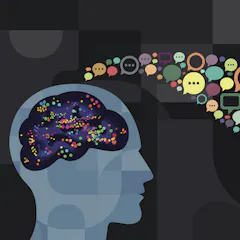
Today’s AI systems are powerful, and it’s natural to see them as having humanlike intelligence. Shaking that illusion is important – and difficult to do.
Articles on Metaphors
Displaying all articles

Novel metaphors can make it easier to understand complex concepts such as quantum computing.

Boasting about centering your transformative systems change paradigm means you’re doing it wrong. But fixes are available.

The metaphors used to characterize monkeypox can contribute to narratives that help sustain racist, colonial, homophobic and other discriminatory attitudes and beliefs.

The danger in these metaphors is they can subconsciously discourage reinterpretation, which can further contribute to sexist, racist and colonial influence in historical writing.

Creative problem-solving using metaphors can help us deal with the long-term anxiety and challenges of the coronavirus pandemic.
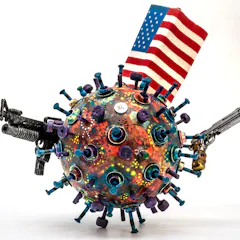
The use of military metaphors in some contexts can be helpful. In medicine? Not so much.

We want to be whitelisted and not blacklisted for jobs. White lies make stretching the truth okay, but you don’t want to receive a black mark on your record.
Print advertising increasingly makes use of linguistic and visual syneasthesia to create multisensory experiences.

Economists try to create and use maps to navigate the world of human choices. But in some ways, these maps are limited.

Throughout history, metaphors based around the testes and semen brought out very different sides of masculinity.

Are we in a race against climate change? Or is it a war? How does thinking of the past or the future affect your support for the science? Researchers are learning how metaphors and context matter.
Top contributors
-

Senior Lecturer in Strategic Management, University of Liverpool
-
Postdoctoral Researcher, University of Oxford
-
Assistant professor in Linguistics, Università degli studi di Genova
-
Senior Researcher, Oxford Martin School, University of Oxford
-
Professor of Management Humanities, University of York
-
Ph.D. Candidate in Cognitive Science, University of California, San Diego
-
Director, Center for Public Interest Communications, University of Florida
-
Dwight F. Benton Professor of Marketing, University of Michigan
-
Associate Professor of Women's and Gender Studies, Carleton University
-
Director of Strategic Communications, Office of Diversity, Inclusion and Intercultural Initiatives, Stony Brook University (The State University of New York)
-
PhD in Health Candidate, Dalhousie University
-
MD/PhD Candidate, Wayne State University
-
Associate Dean for Research, Purdue University
-
PhD Candidate in History, Dalhousie University
-
Associate professor, international business, Carleton University