

For vacation time to be truly restful, the onus is on both employers and employees.
Articles on Mental workload
Displaying all articles

Despite being a central concept in the digital age, mental workload remains difficult to define and study in real-life situations.

To better measure their activity and become members of a sports community, many amateur athletes are adopting smartwatches and digital tools. But others are giving them up.

New research shows that scrolling through Instagram can effect our processing and language capabilities. Listen to The Conversation Weekly podcast.

We’re experiencing an influx of pictures from conflicts in Ukraine and Gaza – and that takes a physical toll on our bodies.

While working from home can have advantages, new research shows that there can also be a wide range of negative effects, including psychological reactions such as emotional exhaustion.

Lateral reading, self-nudging and a persistent refusal to feed the trolls are some of the ways one can better manage information.

Social media does have some redeeming features – and its utility will depend on how you use it. But for many of us, the reward no longer outweighs the harms.

Analysis of 46 studies indicates that there’s still a lot of uncertainty about the long-term impacts of digital device use on cognition.

Female office workers have faced a growing burden during the pandemic.

Interference with our brain’s goal-directed functioning is increasing with ever more tools for virtual communication and collaboration.

Lots of research shows why video calls are mentally and emotionally taxing.
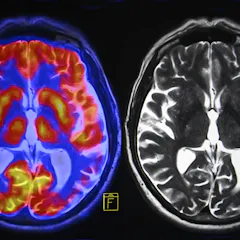
Chemical changes in the brain associated with chronic stress can put our cognition and mood under serious strain.

A happier, healthier work life is easy to achieve.
Top contributors
-

Producer, The Conversation Weekly Podcast, The Conversation
-
Director, Center for Adaptive Rationality, Max Planck Institute for Human Development
-
PhD Student in Health and Well-being, Bangor University
-
Profesor Titular departamento de Psicología Experimental, Universidad de Sevilla
-
Associate Professor - Innovation & Entrepreneurship, EDHEC Business School
-
Senior Lecturer in Psychology, Deakin University
-
Clinical Lecturer, University of Cambridge
-
Professor of Clinical Neuropsychology, University of Cambridge
-
Senior Lecturer, Stellenbosch University
-
Professeur des Universités en Physiologie de l'Exercice / Neurosciences Intégratives, Directeur Unité Recherche EuroMov Digital Health in Motion, Université de Montpellier
-
Maître de conférences en sociologie du sport, Université Claude Bernard Lyon 1
-
Professor, Educational sciences, Université du Québec à Chicoutimi (UQAC)
-
Chair of Cognitive Psychology, University of Bristol
-
Professor of Organisational Behaviour, Bayes Business School, City St George's, University of London
-
Postdoctoral Research Associate, Cognitive Neuroscience, University of Cambridge