

In Summer, you may need to be extra sun smart if you’re swallowing certain medications or putting them on your skin.
Articles on Medications
Displaying 21 - 36 of 36 articles

When news reports tout a drug, people get interested, even if the benefits are unproven. Patient hopes, requests and demands can easily turn into real prescriptions in their doctor’s office.

Toilet paper shortages were bad enough. A shortage of drugs during the COVID-19 pandemic would be worse. A provision in the Canadian government’s relief package aims to prevent that from happening.

As the boomers age, many will have medication issues. That can be compounded by the number of drugs they take, both prescription and over-the-counter.

For most medicines, it doesn’t matter when you take them. But others work best at particular times.

When codeine became a prescription only drug in 2018, the number of overdoses dropped, our new research shows. But restricting sales of codeine is only one way to reduce harm from opioids.

National drug regulators use evidence from clinical trials to decide whether new cancer drugs will be approved for use. But these studies are often flawed.

As Canadians consider possibilities for pharmacare reform in the coming months, they should have access to the best available evidence about how it might work in our country.

Current trials suggest MDMA could used to treat psychiatric disorders as a prescription medicine by 2021. But there remain a number of unresolved patient / doctor issues to be considered.
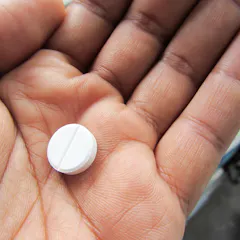
Commonly recommended sleeping tablets aren’t appropriate for plane travel. Here’s why.

If you look into your kitchen or bathroom cabinet, chances are you’d find some unused medicine, much of it expired. Here’s what to do with it.

A push towards prescribing generic medications rather than their branded equivalents, as flagged in the budget, may have benefits beyond simple cost savings.

Intuitively, it might seem desirable to speed up access to medicines. But this means more drugs will be approved that may subsequently prove unsafe or ineffective.

In many cases, the most appropriate treatment for a health condition isn’t a drug. It could be a recommendation for a dietary change, a specific exercise, or even a phone app.

The Social Medwork is a website that promises patients legal access to medicines from overseas. How does it work? What are the risks? And why are patients turning to it to access the drugs they need?

Antipsychotic medications for delirium don’t work and could harm, a new study shows. So what options are left?
Top contributors
-

Professor of Pharmaceutical Chemistry, Macquarie University
-
Associate Lecturer, Sydney Pharmacy School, University of Sydney
-
Lecturer, Queensland University of Technology
-
Professor of Palliative Medicine, University of Technology Sydney
-
Associate Professor, Centre for the Business and Economics of Health, The University of Queensland
-
Director and Taylor Family Chair, Centre for the Business & Economics of Health, The University of Queensland
-
Professor of Bioethics, Macquarie University
-
Associate Professor, Political Science, McMaster University
-
Pharmacy Lecturer, Griffith University
-
Palliative Medicine Physician, Senior Research Fellow, The University of Melbourne
-
Macquarie University Research Fellow, Macquarie University
-
Research fellow, Griffith University
-
Research Professor and Director of the Behaviour-Brain-Body Research Centre, Adelaide University
-
Professor of functional genomics, University of Sydney
-
Professor of Mental Health, Griffith University