

Owners of midsize nursing home chains drain billions from facilities, hiding behind opaque accounting practices and harming the elderly as government, which has the power to stop it, falls short.
Articles on Medicaid
Displaying 61 - 80 of 143 articles

Family caregivers who have stronger support networks and positive communication with loved ones tend to be more resilient.

Reduced staffing means nursing home residents make more unnecessary trips to the hospital.
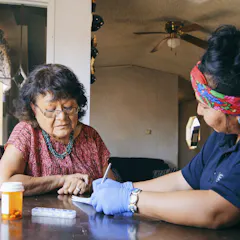
Increasing the number of older people with both Medicaid and Medicare would mean fewer of them would be forced to skimp on the care and treatment they need.

The health coverage program’s enrollment soared during the three years after March 2020 due to temporary policies adopted at the start of the COVID-19 pandemic.

The U.S. and Canada both have different approaches when it comes to work conditions and income assistance programs.
If Democrats embrace and deploy the Constitution leading up to the 2024 election, it will enable them to offer a confident message based on the hallowed principles of America’s founding charter.

The emergency status allowed the federal government to cut through a mountain of red tape, with the goal of responding to the pandemic more efficiently.
Adults insured by Medicaid who are 19 to 55 years old and don’t have children or other dependents would need to spend 80 hours a month doing paid work, job training or community service.

A team of economists looked at what happened after Supplemental Nutrition Assistance Program work requirements were reinstated in Virginia in 2013.
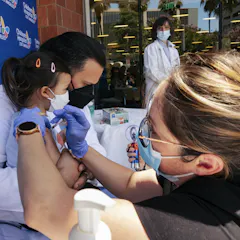
President Joe Biden’s intention to end the national COVID-19 emergency will have long-lasting ripple effects on federal programs such as Medicare, Medicaid and the Children’s Health Insurance Program.

Evidence from Massachusetts suggests that a multistep process discourages enrollment. The findings could help policymakers stave off a sharp decline in coverage when COVID-19 policies change.
Pandemic-related policies made it easier for states to afford to cover more people and made that coverage more stable for millions of Americans who rely on the program for health care.

Abortion funds, which help people who cannot afford the procedure, are facing new kinds of pressures, including potential legal risks and a rising client demand that exceeds their capabilities.

When states reduce barriers for low-income children to get coverage, their mothers are more likely to be married and less likely to smoke.

Social scientists determined that body mass index growth declined for children of low-income parents in states that had expanded their Medicaid programs.

Most states have taken advantage of the opportunity to expand access to Medicaid since 2014 through the Affordable Care Act. That’s helping reduce the number of uninsured people.

Public investments in benefit programs could save tens of thousands of children from being victims of child abuse and have important later-life effects on child welfare and overall health.

The Affordable Care Act has allowed many preventive health services, including cancer screenings and vaccines, to be free of charge. But legal challenges may lead to costly repercussions for patients.
The federal government sent a lot of money to states to help with an anticipated COVID-related economic downturn. Turns out, states did not need that much money – but they may spend it anyway.
Top contributors
-

Associate Professor of Public Health, The Ohio State University
-
Professor of Gerontology, UMass Boston
-
Senior Research Fellow and Lecturer of Gerontology, UMass Boston
-
Professor of Law, University of Virginia
-
Professor of Public Policy (retired), University of Virginia
-
Assistant Professor of U.S. History, University of Cambridge
-
Professor of Social Welfare, Stony Brook University (The State University of New York)
-
Professor of Law, George Washington University
-
Venable Professor of Law, University of Baltimore
-
Investigative Journalist, The Conversation
-
The Lee and Brena Freeman Professor at the University of Chicago Law School and Professor at the Pritzker School of Medicine., University of Chicago
-
University Professor of Sociology, Syracuse University
-
Associate Professor of Health Law, Policy and Management, Boston University
-
Research Scientist of Health Policy and Economics, University of Southern California
-
Associate professor of Education, University of Oregon