
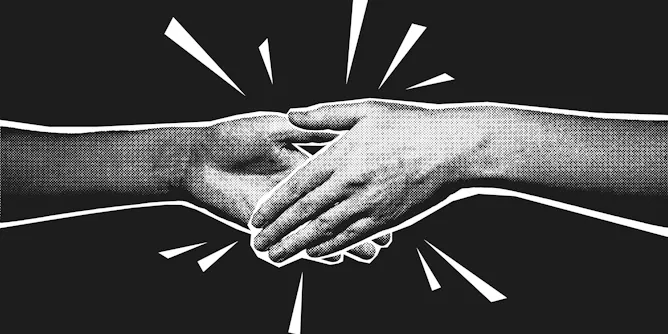
Although it’s important that journalists practice diligence and deference, communities need to be willing to engage, forgive and voice concern.
Articles on Media studies
Displaying 1 - 20 of 48 articles

In this course, eight professors share their disciplinary perspectives to help students analyze proposed interventions for increasing wildfire risks.
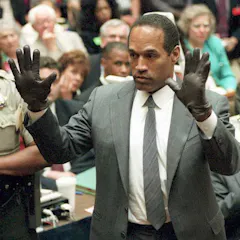
Since the ‘trial of the century,’ the lines between news and entertainment have become increasingly blurred.

Mae D Huettig, Romana Javitz and Shirley Graham DuBois were instrumental in their respective media fields but very few of us will be aware of their individual contributions.

A journalism professor discovers that some of the best lessons for future journalists can be taught on a pool table.

A scholar of race and media discusses the importance of analyzing media through a critical lens.

Subtly shifting the crafting and delivery of public health messaging on COVID-19 vaccines could go a long way toward persuading many of the unvaccinated to get the shot.

Schools are back, but NCEA level 1 media studies soon won’t be — at a time when media literacy is more vital than ever.
Journalists use real people’s stories to ‘humanize’ the news. But these tales – whether harrowing or heartwarming – can be misleading about the pandemic’s greatest threats.
BBC presenter John Humphrys seems to think the school of hard knocks is superior to academe. He’s wrong.

It’s time characters on TV reflected not only women’s experience of heart disease but those of men from diverse backgrounds if we want to prevent more people dying from heart disease.
According to a new study, those who have a tendency to sabotage their relationships may find solace in the fictional worlds of TV and movies.

Despite its magnitude, the response to the Montara oil spill did not receive the publicity of other offshore oil disasters like the Deepwater Horizon spill in the Gulf of Mexico.
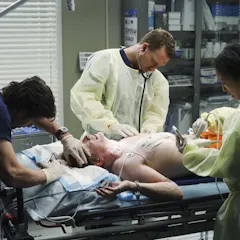
A new study compared fictional patient experiences in Grey’s Anatomy with real trauma cases. It concluded patients who are fans of the show might have unrealistic expectations of medical care.

An analysis of media coverage provides lessons for how to move the climate debate forward and other highly polarized issues.

When the Corporation for Public Broadcasting was founded 50 years ago, it was supposed to reflect the nation’s disparate voices.
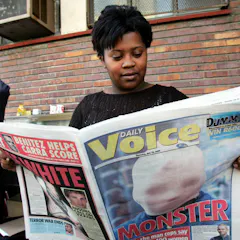
The growth of new, vibrant, independent media sites and projects in South Africa have challenged conceptions of what a newsroom is. On limited budgets, some even fare better than mainstream media.

Don’t listen to the headlines linking binge watching to depression and loneliness. It can be a positive experience – but only if we think of it as a good thing.

U.S. journalism has long championed an allegiance to cold objectivity. But one researcher analyzed Pulitzer Prize-winning stories from the past 20 years and found that they’re suffused with emotion.
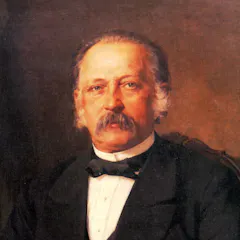
Theodor Fontane was a German newspaper’s England correspondent – who reported ‘from’ London without leaving his Berlin desk.
Top contributors
-

SHARP Professor, Vitalities Lab, Centre for Social Research in Health and Social Policy Centre, and the ARC Centre of Excellence for Automated Decision-Making and Society, UNSW
-
C. Edwin Baker Professor of Media Policy and Political Economy, University of Pennsylvania
-
Associate Professor of Communications, University of Oregon
-
Associate Dean of Graduate and Professional Studies and Professor of Marketing at Point Loma Nazarene University (NOT at California State University San Marcos; system is apparently glitched and cannot change my affiliation), California State University San Marcos
-
Vartan Gregorian Post-doctoral Fellow in Science Communication, University of Pennsylvania
-
Senior Research Fellow, Centre for Advancing Journalism, The University of Melbourne
-
Associate Professor of Journalism, Indiana University
-
Professor of Political Communication; Director CAJ, The University of Melbourne
-
Knight Chair in Sports Journalism and Society, Penn State
-
Holcim (US) Professor of Sustainable Enterprise, Ross School of Business, School for Environment & Sustainability, University of Michigan
-
Associate Professor in Media Theory and History, Università di Torino
-
Professor in Technological Culture & Aesthetics, University of Southampton
-
PhD Candidate in Communication, University of Pennsylvania
-
Associate Professor of Communication, College of Mount Saint Vincent
-
Clinical Assistant Professor of Community Health and Health Behavior, University at Buffalo