

Our research is the first to estimate what the tech giants owe publishers. The actual sums paid out are usually covered by non-disclosure agreements.
Articles on Media business models
Displaying 1 - 20 of 21 articles

Public service journalism is more vital now than ever and should be given charitable status.

Journalism is not keeping pace with the evolution of new technologies. Newsrooms need to take advantage of what AI can offer and come up with a new business model.

Netflix has added millions more subscribers as people practice social isolation to control the coronavirus. But service’s diverse menu of content is not an efficient business model.

Americans truly value local news. But 71% think that their local news outlets are doing just fine financially – which might explain why only 14% paid for a local news source in the past year.

What does the future newsroom look like?
The Conversation, CC BY52.4 MB (download)
We often hear about media companies shedding staff and revenues, but is there hope? We ask the man with a mission to launch 100 media start-ups in three years: what does the future newsroom look like?
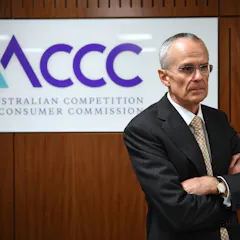
Australian media ownership is already among the most concentrated in the world, but if the competition regulator approves the Nine-Fairfax deal, expect the race for survival to produce more mergers.
It’s not alternative facts we need to worry about, it’s the fact that moguls still dominate the media, both old and new.

Whoever pulls together the best sales plan and a solid national footprint, will be most likely to do well at the forthcoming auctions.
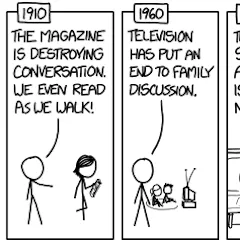
Journalism is in an existential crisis. Whether it can survive will depend on experiments news organisations are carrying out now.
With ad blockers hurting digital, and print readership declining, The Guardian’s plans to take on the world face strong headwinds.

It’s the first standalone daily newspaper to launch in the UK for 30 years. So what’s it like?
Tech and social media companies that benefit from using news content should help support journalism.

As more and more sporting bodies seek to speak directly to consumers, independence could disappear. Will consumers care?
It worked for ‘iTunes’, but news organisations experimenting with ‘pay-to-read’ models are finding that users want to have a say in what makes the news.
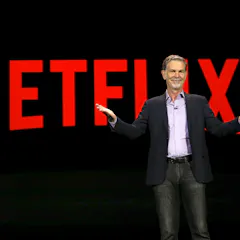
The success of original series TV is opening up new opportunities for producers, owners and audiences.

The likes of Der Correspondent and Kickstarter raise the prospect of a new funding model for journalism. To some extent, we are kidding ourselves.

Comment may be free, but newspapers have got to make money somehow.
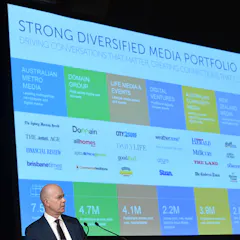
The transition from print to digital will not be painless at Fairfax, or its global peers.

Media consumers are spoilt for choice, making new revenue models difficult for publishers.
Top contributors
-

Senior Lecturer, University of the Sunshine Coast
-
Professor of Media and Communications, Goldsmiths, University of London
-
Associate Professor, Co-Director of the Research Centre for Journalism, Media and Democracy, Auckland University of Technology
-
Lecturer in Journalism and Media, Birkbeck, University of London
-
Professor of Journalism, Goldsmiths, University of London
-
Lecturer in Journalism, La Trobe University
-
Professor of Digital Communications and Culture, The University of Sydney, University of Sydney
-
Professor of Communication, Charles Sturt University, and Honorary Associate, Discipline of Media and Communications, University of Sydney, University of Sydney
-
Professor of Journalism Innovation, City St George's, University of London
-
Director of Media, Film, Journalism and Creative Technology, University of Salford
-
PhD candidate, University of Canberra
-
Full Professor in Journalism, Dublin City University
-
Senior Lecturer in Sports Journalism, La Trobe University
-
Professor of Journalism, The University of Melbourne
-
Director of Undergraduate Studies, School of Journalism, Media and Cultural Studies, Cardiff University