

Indigenous filmmakers are changing the world by telling their own stories in their own ways.
Articles on Media
Displaying 321 - 340 of 1180 articles

First Nations media organisations play a crucial role in emergency situations. However

To think about the ways in which images engage audiences, we can consider Europe’s response to two major refugee crises.
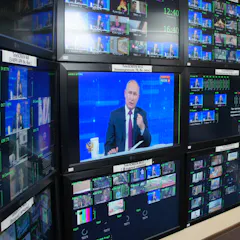
The west underestimates the power of Russian-state television, says an expert.

Despite years of consultation and planning, the government’s announcement of a new ‘public media entity’ raises more questions than it answers.

Inspired by the sensitive, handsome men they see on TV in their favorite K-dramas, they travel abroad in pursuit of a ‘soft’ masculinity they say they can’t find at home.

In a joint project with the BBC, we’re exploring how AI could personalise the way you consume media. But we recognise that AI comes with risks too.
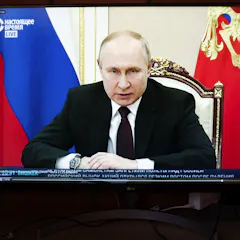
Even as it wages a propaganda and disinformation campaign in Ukraine, Russia is fighting to retain control of the story within Russia.

Social scientists find that using geography-related names or racialized framing around the coronavirus in even one news story can trigger racist stereotypes and biases.

When an attention-based media system always allows the noise-makers to dominate the conversation, it becomes impossible to hear the full range of voices and views.

Under the Sullivan standard, a public official has to prove that there was ‘actual malice’ in defamation cases. That could be challenged in the Supreme Court.

Stories build powerful emotional attachments. We root for heroes, boo their opponents and get anxious for the fictional problem to be solved. Facts have very little to do with it.

Children don’t have to be in physical danger for disaster images to have a powerful psychological impact.
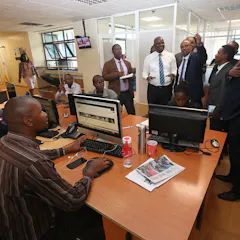
Many countries are experimenting with different forms of government support for journalism, but the question is about what works best and is sustainable.

A new law could make it harder for women to be publicly blamed for a marriage’s end.

Fact-checking risks oversimplifying and distorting Americans’ political conflicts, while not actually helping people find ways to work together productively.
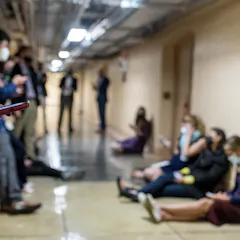
A quarter of Americans don’t know how they feel about the Build Back Better Act. Focusing on Americans’ individual stories – and not just political theater – could help fuel civic engagement.

Rather than a royal commission focused on News Corporation, the best approach would be an inquiry into ways to maintain standards and better fund public interest journalism.

The way the press talks about obesity has changed over time.

Specialist reporters are important, but climate coverage can no longer be left to them. Here’s what New Zealand journalists say about why climate should be part of every newsroom and every beat.
Top contributors
-

Senior Research Fellow, Centre for Advancing Journalism, The University of Melbourne
-
Professor of Journalism, Media and Communication, Queensland University of Technology
-
Professor of Political Communication; Director CAJ, The University of Melbourne
-
Professor, Journalism, RMIT University
-
Professorial Fellow, University of Canberra
-
Professor of Communication, Charles Sturt University, and Honorary Associate, Discipline of Media and Communications, University of Sydney, University of Sydney
-
Professor of Journalism, The University of Melbourne
-
Professor, Digital Media Research Centre, Queensland University of Technology
-
Associate Professor in Convergent and Online Media, University of Sydney
-
Professor of Communication, Deakin University
-
Professor of Media Industries, University of Nottingham
-
Associate Professor Journalism & Media, Deakin University
-
Rodney Tiffen is a Friend of The Conversation.
Emeritus Professor, Department of Government and International Relations, University of Sydney
-
Professor, Cardiff School of Journalism, Media and Culture, Cardiff University
-
Associate Professor, Co-Director of the Research Centre for Journalism, Media and Democracy, Auckland University of Technology