

High school pupils enjoy using mobile devices for socialising. But their motivation to use devises decreases when it comes to studying online, especially unsupervised.
Articles on Mathematics
Displaying 221 - 240 of 641 articles

Think of yourself as learning alongside your child.

Cybersecurity risks are evolving rapidly. How can they be more effectively assessed and managed ?
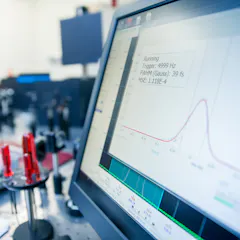
Whether you are predicting the outcome of an election or studying how effective a new drug is, there will always be some uncertainty. A margin of error is how statisticians measure that uncertainty.

To better understand how cancer tumors grow, mathematicians use diffusion models.

Our study shows that maths anxiety not only causes children to struggle in exams – it also means they learn less at school.
Ontario’s new math curriculum was written by competent mathematicians relying on the latest research, and includes both coding and social-emotional learning.
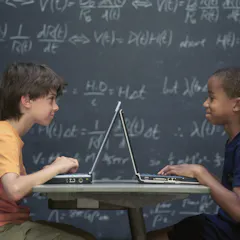
What’s taught in South African schools is at odds with the skills pupils need for the post-school world.

School boards across the country are using different measures to stop the spread of COVID-19. A new study suggests rotating students during different times at school could be most effective.
What did Pythagoras do with all those triangles, anyway?

Nobody expected that allowing more communication would make computational problems more reliable.
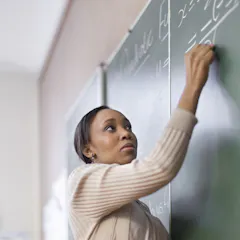
Long breaks from school lead to learning loss, with maths scores being particularly badly affected - but a return to core concepts could be the answer to a pre-pandemic problem.
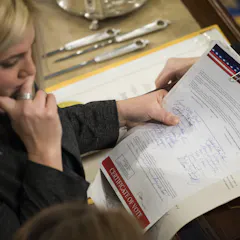
Mathematically speaking, the Electoral College is built to virtually ensure narrow victories, making it very susceptible to manipulation and disinformation.
Without a vaccine, the cost of reaching herd immunity during a pandemic is counted in lives lost, and it won’t quickly stop the virus’s spread.
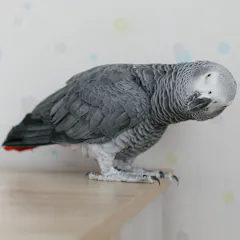
Some animals demonstrate an ability for mathematics that reflects a more sophisticated understanding of language.

The equation ‘COVID alert level = R (rate of infection) + number of infections’ simply does not add up to a number between one and five.
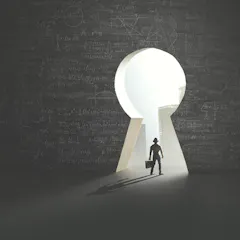
Christopher Havens came upon his love of math while in solitary confinement. A decade later, he published a paper on number theory in a top mathematics journal.
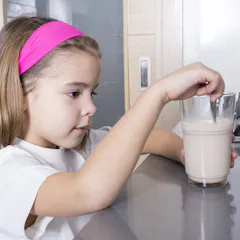
Improving a child’s sense of numbers, and their understanding of probability, fractions, ratios, shapes and patterns, can all be incorporated into daily life or with simple games.
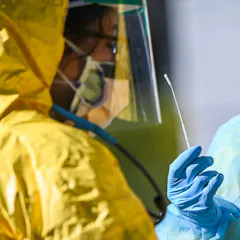
Testing everyone for COVID-19 isn’t realistic in a country the size of the US, but there are ways to design testing systems that can catch most of the cases.

Here’s one way to test more people for coronavirus with fewer resources.
Top contributors
-

Laureate Professor of Mathematics, University of Newcastle
-
PhD; Lawrence Berkeley Laboratory (retired) and Research Fellow, University of California, Davis
-
Emeritus Professor, University of Nottingham, (currently Vice-Chancellor at MILA University, Malaysia), University of Nottingham
-
Professor of Mathematics, University of Florida
-
Professor of Mathematical Biology and Public Engagement, University of Bath
-
Lecturer in Mathematics Education, University of Sydney
-
Senior Lecturer in Mathematics Education, University of Sydney
-
Research Fellow, School of Biological Sciences, Monash University
-
PhD Candidate, Australian National University
-
Senior Lecturer in Mathematics, Department of Mathematical Sciences, City St George's, University of London
-
Professor of Mathematics, Toronto Metropolitan University
-
Associate Professor, Department of Physiology, Monash University
-
Mathematician, University of Portsmouth
-
Lillian Gilbreth Postdoctoral Fellow, Purdue University
-
Professor of Mathematics and Statistics, University of Maryland, Baltimore County