
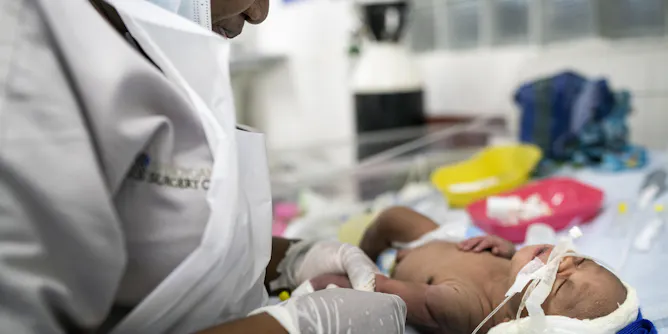
The last decade has seen no measurable change in global preterm birth rates in any region of the world.
Articles on Maternal mortality
Displaying 21 - 40 of 59 articles

Abortion bans and restrictions have numerous downstream effects on health care. For instance, medical students in states where those laws exist will not receive training for some standard procedures.

A recent report found that black women are four times more likely to die while pregnant or just after childbirth, compared with white women.

Rahima Moosa Hospital caters for a very large number of women and children. The large patient numbers and high burden of care have a negative impact on the hospital.
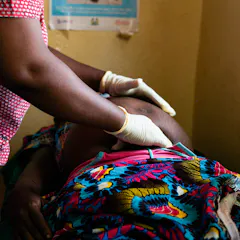
User fees is a major barrier to healthcare, including maternal and newborn care in Kenya.
Many of the preventable pregnancy-related deaths documented by the CDC are directly attributable to failures and barriers in the maternal care system.

Nigeria must prioritise investment in education, health and infrastructure to harness the opportunities of its huge population.

For every maternal death, there are about an additional 20 women who suffer serious injuries, infections and disabilities related to pregnancy.

Carrying a pregnancy to term is riskier than having an abortion, especially for non-Hispanic Black women.

Using data from the popular navigation app, researchers have pinpointed the areas of Lagos, Nigeria, where emergency obstetric care is most needed.
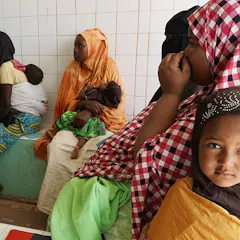
The average Nigerian woman or child faces a host of hindrances in accessing health services.

Malnutrition during the first 1000 days of life can cast a long shadow over a person’s life.

Studies in poor countries have highlighted disparities in respectful and responsive care during childbirth based on women’s socioeconomic status and other characteristics.
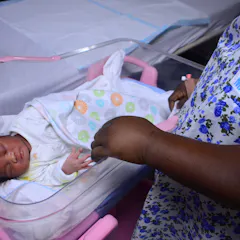
Unfortunately, disrespectful and neglectful treatment of women during childbirth, including verbal, physical and emotional abuse is not uncommon.

A Hungarian obstetrician was the first to nail down the importance of handwashing to stop the spread of infectious disease.
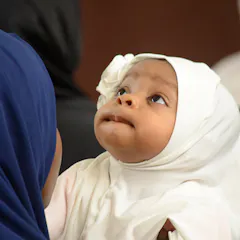
With the introduction of free maternal healthcare, Nigeria appears to have got more women using health facilities, but there are more hurdles to cross.

When governments have evidence, they are better placed to develop health policies and programmes.
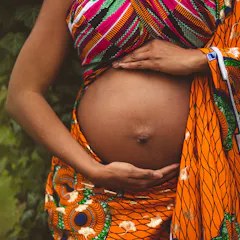
Most women feel they are unable to ask health professionals questions. And only half were consistently asked if they had questions.

Research in Ghana, India and Kenya shows that more women experience subtle forms of undignified care than they do physical and verbal abuse during childbirth.
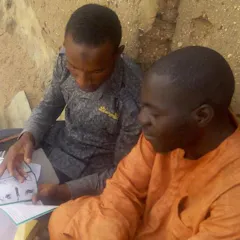
Home visits as part of community-based schemes to women during and after pregnancy can improve the health of mothers and babies.
Top contributors
-

Associate professor, University of California, San Francisco
-
Communications Specialist, University of California, San Francisco
-
Associate professor, London School of Hygiene & Tropical Medicine
-
Senior lecturer, York St John University
-
Professor of Global Surgery, University of Cape Town
-
Professor of Demography and Social Statistics., Obafemi Awolowo University
-
Director, Maternal and Infant Health Care Strategy Extramural Unit, SAMRC, University of Pretoria
-
Associate Professor of Global Health Systems, The University of Queensland
-
Professor in Food Security; Head of the Department of Agricultural Economics, Extension and Rural Development, University of Pretoria
-
Executive Director at the Centre for Health, Human rights and Development and lecturer, Uganda Christian University
-
Obstetrician and Gynaecologist and Fellow, Royal College of Obstetricians and Gynaecologists
-
Wellcome Trust Intermediate Fellow & Senior Research Officer, Department of Medicine, University of Cape Town
-
Research Assistant Professor of Maternal and Child Health, Texas A&M University
-
Senior Clinical Lecturer, Liverpool School of Tropical Medicine
-
Lecturer, Indonesian Center for Law and Policy Studies (PSHK)