
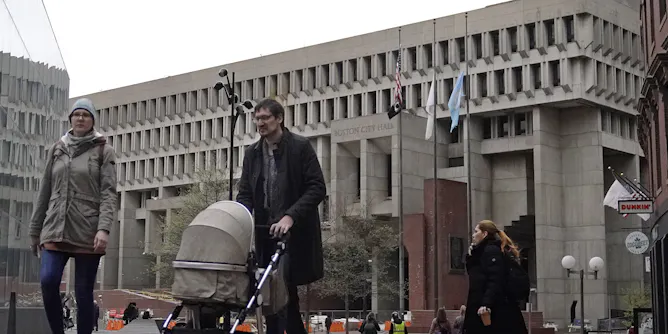
The Supreme Court ruled May 2, 2022, in Shurtleff v. Boston, a free speech case.
Articles on Massachusetts
Displaying 21 - 40 of 48 articles
The regionalism that fuels the Red Sox-Yankees rivalry is also found in U.S. attitudes about energy production, a new study shows. That could have repercussions for the renewable energy transition.
Shurtleff v. Boston, a case argued before the Supreme Court on Jan. 18, raises important questions about free speech and religion in public spaces.

It’s usually good news when a once-scarce species starts to recover – unless it starts getting in humans’ way. An ecologist explains how science can help predict unwelcome encounters.
Electric cars get a lot of hype, but what really matters for the climate are excess emissions from the many millions of gasoline vehicles still sold each year.
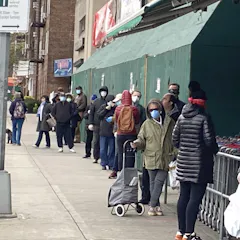
A social scientist argues that in the absence of strong government action, people took it upon themselves to work out conduct to stem the spread of virus.
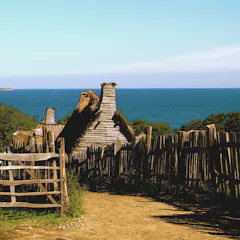
Descendants from the Pilgrims were keen to highlight their ancestors’ role in the country’s founding. But their sanitized version of events is only now starting to be told in full.
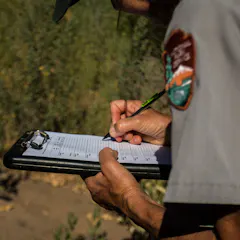
The COVID-19 pandemic is interrupting scientific field work across North America, leaving blank spots in important data sets and making it harder to track ecological change.
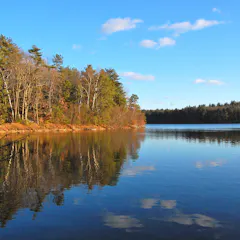
‘Walden,’ published in 1854, is a manual for solitude with a purpose.
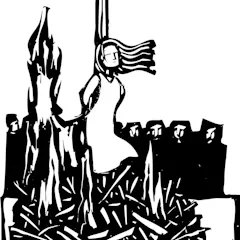
Powerful men often proclaim baseless accusations to be a ‘witch hunt.’ But American witch trials have always targeted a persecuted minority: women.
More than 40 percent of U.S. adults have a gun in their household, making it hard to get guns off the streets – even if new gun restrictions are passed.
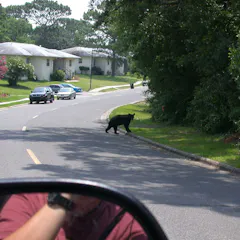
Once hunted into corners of North America, black bears have expanded across the continent since the early 1900s. But bears that end up living near people aren’t seeking close encounters.

Stressing out about potentially losing benefits can prolong financial instability. Solving this problem will help low-paid workers and everyone else.
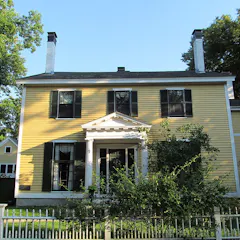
Many people associate Henry David Thoreau with solitude in the outdoors. But Thoreau understood in the mid-1800s that there was no such thing as nature separate from humans.
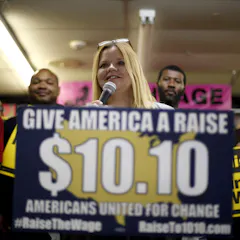
As inequality in the US increases, the federal government is failing to address it. Can states pick up the slack?
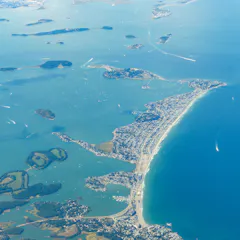
A few decades ago Boston Harbor was one of the nation’s dirtiest water bodies. Now, healthier fish in the harbor underscore that a multibillion-dollar cleanup has succeeded.

The return of white sharks to Cape Cod, Massachusetts was a tourism success story – until a shark killed a swimmer. Can the Cape’s residents and visitors learn to share the ocean with these apex predators?
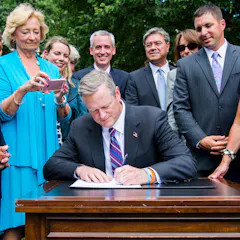
Generating less electricity with fossil fuels could help save lives.

Depression can have a profound impact on mothers and their children. But women often have no idea that they have depression – nor do their medical providers.
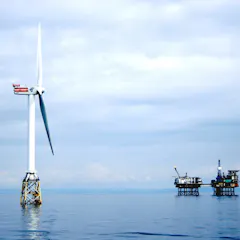
Several states, including Massachusetts and Rhode Island, have developed ambitious renewable energy targets that hinge in large part on getting their power from turbines stationed in the water.
Top contributors
-

William Nelson Cromwell Professor of Jurisprudence and Political Science, Amherst College
-
Professor of Law, Boston University
-
Professor of Earth Science, University of Connecticut
-
Associate Professor of Political Science, UMass Boston
-
Professor of English, UMass Lowell
-
Associate Professor of Philosophy and Law, Wayne State University; Institute for Humane Studies
-
Distinguished Professor of Industrial Engineering and Faculty Director of The Energy Transition Institute, UMass Amherst
-
Associate Professor of Psychiatry and Obstetrics & Gynecology, UMass Chan Medical School
-
Associate Director and Professor, School of Public Policy, Penn State
-
Assistant Professor of Public Health and Community Medicine, Tufts University
-
Associate Professor of Obstetrics-Gynecology and Pediatrics, UMass Chan Medical School
-
Professor of Law, Boston University
-
Professor of Mechanical Engineering, UMass Amherst
-
Ph.D. Candidate in Genetics and Genomics, Texas A&M University
-
Senior Scientist, Woods Hole Oceanographic Institution