

A statewide survey finds majorities in farm country at odds with the deportation push reshaping their workforce.
Articles on Mass deportation
Displaying all articles

The U.S. strategy of deporting asylum seekers to Global South countries is abhorrent. Migration scholars, human rights organizations and allies must co-ordinate, organize and actively resist.

District courts have dismissed the administration’s efforts to detain virtually all undocumented immigrants without a bond hearing while they await deportation proceedings.

A process of normalisation has led Reform to propose mass deportations where once it believed such a policy would never be politically viable.

These commitments have cemented the UK at the heart of the rules-based international order.

Neither President Donald Trump nor Florida Gov. Ron DeSantis can legally create a new system of immigration judges outside of the one established by Congress.

History shows that building the trust of immigrants is an effective tactic in combating local crime and making entire communities safer.

Immigrants who fear deportation might have their kids miss school, or skip a doctor’s appointment. This fear can affect people who are legally in the US.

Conflicting polls can make it seem like Americans back Trump’s deportation plan. A psychologist and survey researcher explains how to make sense of the numbers.

Trump isn’t alone in using tariffs, travel bans and sanctions to make countries play ball on deportations. But the other side of migration diplomacy can be incentives for countries willing to take on refugees.

As the US president-elect prepares to deliver on his promise of mass deportations, it is urgent to examine the situation in the DR, the most significant case of ongoing forced returns in the Americas.

The Alien Enemies Act, first approved in the late 1700s, was last used during World War II to identify particular foreign nationals living in the US.
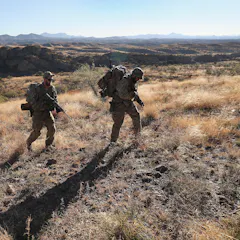
Some militia groups may see it as their duty to assist with immigration-control efforts. Some may even be deputized for this purpose by local law enforcement agencies.

Russian actions in occupied Ukraine are following a plan modeled on how the Soviet Union dismantled Nazi influence in Germany after World War II – including arrests and revised school lessons.
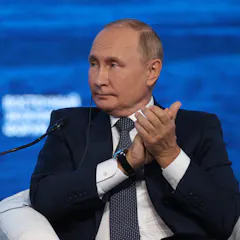
Some of the key articles from our coverage of the war in Ukraine over the past week.
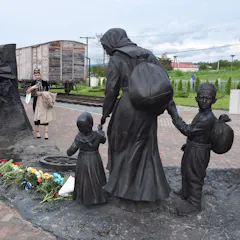
Forced relocation of civilian populations is a war crime.
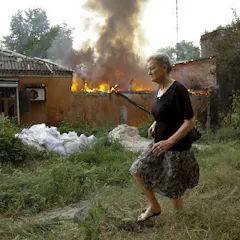
Russia and other countries and political regimes have a long history of forcing people to move, mostly for security and economic gains.

There are a few warning signs that genocide is happening. In the Russian war on Ukraine, all of those are present.

The Gambia’s agreement with the European Union to return immigrants to the country is causing the government problems at home.
Top contributors
-

Distinguished Professor of Anthropology; Director, Center for the Study of Genocide and Human Rights, Rutgers University - Newark
-
Professor of Law and Director of the Center for Professional Ethics, Case Western Reserve University
-
Senior researcher, Arnold Bergstraesser Institute
-
Professor of International Relations and Security, University of Bradford
-
Researcher, University of Osnabrueck, University of Basel
-
Director of Research, Academic Development and Innovation at the Center on Terrorism, Extremism and Counterterrorism, Middlebury College
-
Professor of Political Science, University of Oregon
-
Assistant Professor of Development Studies, Huron University College, Western University
-
Assistant Professor of Human Rights and Cultural Relations, American University School of International Service
-
Professor Emeritus in Psychology, Clemson University
-
Research Fellow, Center for Racial Justice, Ford School of Public Policy, University of Michigan
-
Associate Professor of Criminal Justice, St. Edward's University
-
Professor of Law, University of California, Davis
-
Senior Visiting Research Fellow, UCD Sutherland School of Law, University College Dublin
-
Professor of Human Rights Law, Middlesex University