
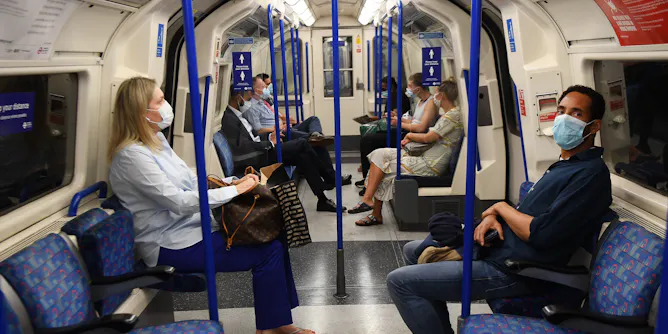
A moral philosopher looks at the difference between “having” a right and “doing” right.
Articles on Mask-wearing
Displaying all articles
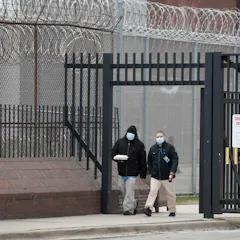
New research shows correctional officers are vectors of infection, driving COVID-19 rates both inside prisons and in their communities.
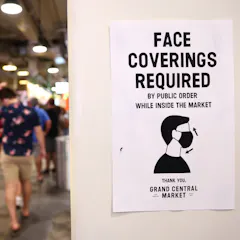
The CDC guidance applies to areas with high coronavirus transmission rates – which on the day of the announcement covered 63% of US counties.

The COVID-19 vaccines are a smash success. But that doesn’t mean they keep every vaccinated person completely free of the coronavirus.

As more people become vaccinated, many of them are eager to resume their social lives. And yet, many are fearful, and some may not want to return to life as they previously experienced it.

Americans were tired of social distancing and mask-wearing. At the first hint the virus was receding, people pushed to get life back to normal. Unfortunately another surge of the disease followed.
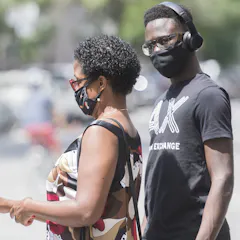
The COVID-19 pandemic is not the first time people have been required to wear face masks for protection. Mask-wearing has a long history, and reflects society’s sense of shared responsibility.
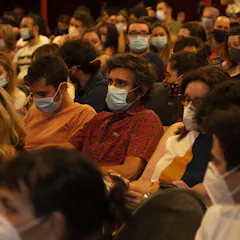
Policies meant to improve public health – like mandatory face masks during the coronavirus pandemic – need to take into account how people might adjust other behaviors in response.

Psychologists call these traits the ‘Big Five’: openness, conscientiousness, extroversion, agreeableness and neuroticism. A researcher suggests your profile implies your response to social distancing.

In the coronavirus pandemic, wearing a protective mask signifies a commitment to the social and collective good of society. But that changes when a face mask is worn by Black and racialized people.
Top contributors
-

Professor of Sociology, Wilfrid Laurier University
-
Lecturer in Executive Education; Distinguished Professor Emeritus of Communication Studies from Louisiana State University, University of Texas at Dallas
-
Associate Professor of Economics, HEC Paris Business School
-
Professor, Department of History, University of Guelph
-
Assistant Director of the Center for the History of Medicine, University of Michigan
-
Associate Dean for Regional Campuses, University of California, San Francisco
-
Research associate, Warren Alpert Medical School, Brown University, Brown University
-
Associate Professor of Medicine, Michigan State University
-
Associate Professor of Criminology and Criminal Justice, Arizona State University
-
Associate Professor of Economics, University of Miami
-
Professor, Head of Institute for Ethics in Technology - TUHH, Technical University of Hamburg