

Using government developed criteria for marketing to kids, none of the child-targeted cereals examined would be permitted to be advertised to children, and 96 per cent surpassed sugar thresholds.
Articles on Marketing to children
Displaying all articles

Many food and beverage companies are not doing enough to positively shape diets in Canada, while positive examples show that public health commitments are achievable.

We reviewed research into gender stereotypes and biases in early childhood, and found gender as a social category develops early in life, and insight into some gender stereotypes begins early.

Many children receive gift cards or even ask for them so they can choose their own presents. But are youngsters ready to handle the wiles of advertisers and the complexities of ‘credit’ on a card?

Ken dolls with a ‘man bun’. Female superhero action figures. At long last, the gendered distinctions of the pink and blue toy aisles are starting to break down.

Marketers take advantage of the fact that children sometimes can’t recognise the difference between product placement and advertising.

When children work on their school assignments, unknown to them, the software they use is busy collecting data. These data are then used for individualized marketing of junk foods and other products.
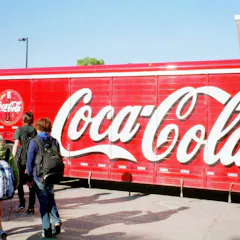
Unhealthy foods are the most heavily marketed products in school. Why do we allow it?
Top contributors
-

Research Professor, University of Colorado Boulder
-
Research Associate in Education Policy, University of Colorado Boulder
-
Associate Professor of Marketing, Tasmanian School of Business and Economics, University of Tasmania
-
Emeritus Professor, University of Tasmania
-
Associate Professor and Director of the SAMRC/Wits Centre for Health Economics and Decision Science - PRICELESS SA (Priority Cost Effective Lessons in Systems Strengthening South Africa), University of the Witwatersrand
-
Executive Dean of the Faculty of Arts and Design, University of Canberra
-
Associate Professor, Department of Community Health Sciences, University of Calgary
-
Master of Science student, School of Nutrition, Université Laval
-
Professor, ANU Centre for Social Research and Methods, Australian National University
-
Professor, School of Epidemiology and Public Health, L’Université d’Ottawa/University of Ottawa
-
Associate Professor in Social Epidemiology, The University of Melbourne
-
Professor, Communication Studies, University of Calgary
-
Canada Research Chair in Healthy Food Policy, Assistant Professor in Nutrition, Université Laval