
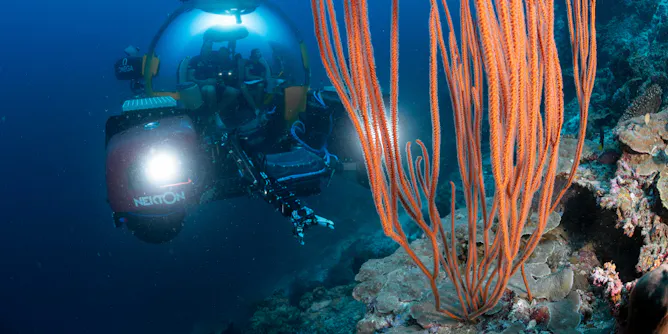
Considered too deep for most reef biologists, and too shallow for deep-sea researchers, most deep reefs are unprotected.
Articles on Marine ecology
Displaying 21 - 40 of 43 articles
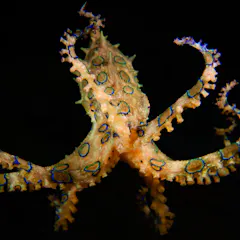
Ranging from 12 to 22 centimetres, these tiny octopus are extremely venomous and found all over Australia. Here’s what to do if you see someone get bitten.
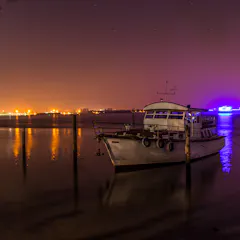
Artificial lighting from cities illuminates coastal waters and can change the physiology and behaviour of marine organisms.
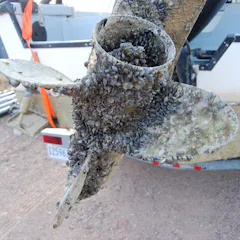
Zebra and quagga mussels entered the Great Lakes in large ships’ ballast water. Now, local boaters and anglers are spreading them into the southern and western US.
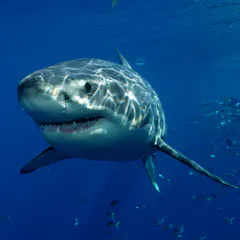
As the oceans warmed, great whites were more adaptable.

Normally land-bound pathogens that cause deadly diseases for both humans and animals can cling to microplastics and end up in your seafood.
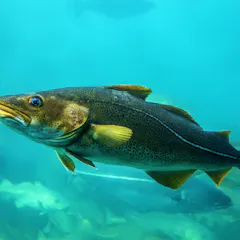
Certain combinations of genetic material are being conserved through the generations.

Increased motorboat activity has resulted in an alarming increase in turtle injuries. Northern map turtles are an at-risk species, and boat collisions threaten their survival.

Harmful algae blooms are an increasing problem in Florida. Once nutrients are in the water to fuel them, little can be done to stop the growth, and the results can be devastating for marine life.
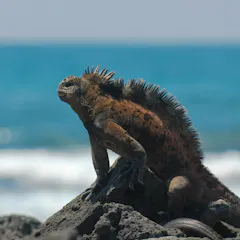
How Pacific winds interact with the sea to bring colder waters up from the depths.
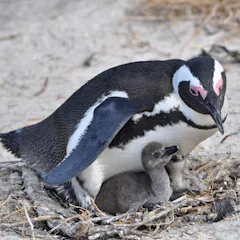
Penguins are sensitive to ecosystem changes such as reduction of available prey, pollution and climate change. Their presence and abundance is indicative of a healthy and balanced ecosystem.

New research points to ‘heavy metals’ having unseen effects on a much larger scale than previously thought.
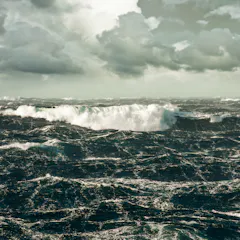
Cold-water plankton is being replaced by warm-water species.

Empatheatre’s latest production is more than a play about three characters who live near the sea. It’s a model for collective consultation on how to save the ocean.
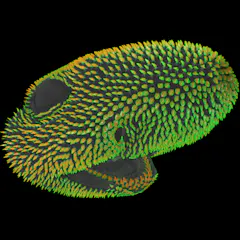
Shark skin is composed of millions of tiny scales, which have a similar chemical composition to human teeth.

Scientists are uncovering the secrets of a giant undersea rock shelf, parts of which lie four kilometres below the ocean’s surface.
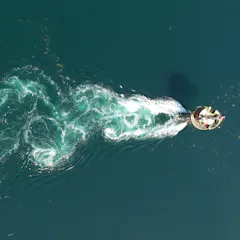
New research finds birds like to forage for fish in the wake of a tidal power plant.
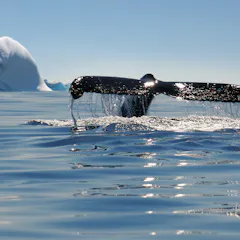
New research shows how marine mammals ignore the rules of biology to thrive in the world’s coldest waters
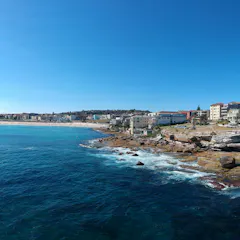
The New South Wales government has turned its back on plans to create sanctuary zones covering 2.4% of waters around Sydney, despite evidence that these ‘no-take’ areas are crucial for protecting fish.
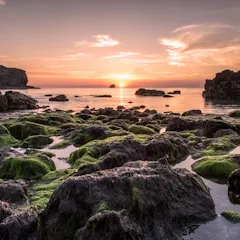
If we know what makes species tick, we can start truly understanding life on the UK’s coast.
Top contributors
-

Doctoral Programmes Manager, Nottingham Trent University
-
Adjunct Associate Professor in Marine Science, James Cook University
-
Research Fellow, Environment & Life Sciences, University of Salford
-
Associate Professor in Marine Biology, Swansea University
-
Professor of Biology, University of Portsmouth
-
Lecturer in coastal environmental sciences and sustainable development, Uppsala University
-
Professor of Marine Ecology, University of Technology Sydney
-
Research Fellow, Cardiff University
-
Professor of Marine Biodiversity, Liverpool John Moores University
-
Postdoctoral Research Associate, University of Sydney
-
Professor of Physical Oceanography, Bangor University
-
Instructor, Ecology and Evolutionary Biology, Carleton University
-
Research Fellow, School of Biological Sciences, University of Aberdeen, UK, University of Aberdeen
-
Veterinary researcher, University of California, Davis
-
Director of TropWATER, James Cook University