
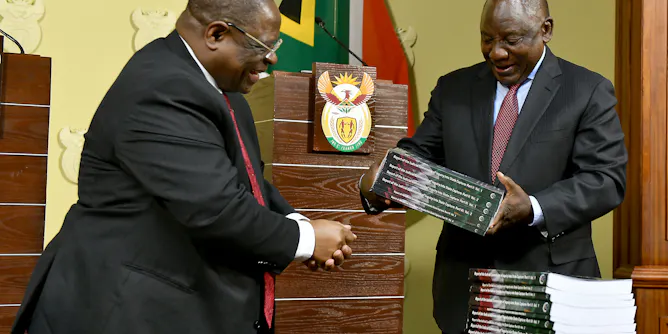
The Zondo Commission was globally unique in scope and scale. The book selects and explains its key findings and recommendations.
Articles on Marikana massacre
Displaying 1 - 20 of 34 articles
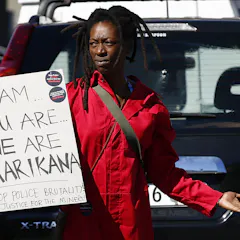
Individual beliefs about the past and its relevance to the present strongly influenced awareness of the Marikana tragedy.

The country urgently needs more people who are committed to living decently to undo the systemic humiliation caused by political and economic institutions.
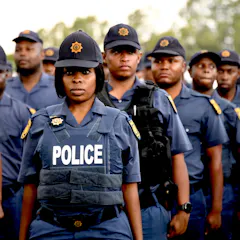
Perceptions that South African police treat people disrespectfully, lack impartiality or transparency, and are prone to brutality
undermine public confidence in them.

Most South Africans believe the report into state capture must be followed up to ensure that those responsible for rampant corruption are held accountable.

This history covers twelve decades, from the surrender of Boer guerrillas in the Second Anglo-Boer War in 1902 to the July 2021 looting spree and violence.
Corruption thrives in a destabilised state with weak institutions. South Africa cannot be allowed back to that space because there will be no turning back.
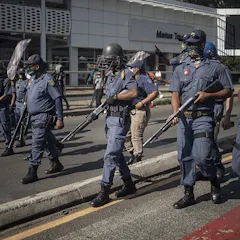
South Africans deserve a fuller picture of the extent of police brutality, and the level of accountability, especially when people die at the hands of police.
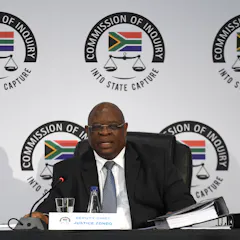
Globally, intelligence services trade in secrets and conduct covert operations. But this does not exempt them from public scrutiny, parliamentary oversight, and audit processes.

His appearance on behalf of the families of mine workers shot by the police at the Marikana Commission of Inquiry was just one of his efforts to seek justice for the poor and marginalised.

A lesson from the 2012 massacre of mineworkers is the need for government to retain its role as primary governance agent, enforcing clear rules and ensuring the provision of public goods and services.
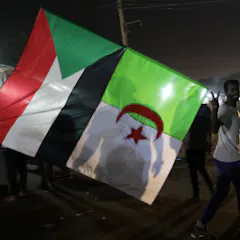
In spite of noble promises in their constitutions, many countries have a very restrictive approach to demonstrations.

Community radio stations have thrown themselves into the political discussion with gusto.
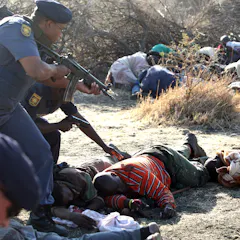
Some prosecutions followed soon after President Cyril Ramaphosa promised accountability for the Marikana massacre.
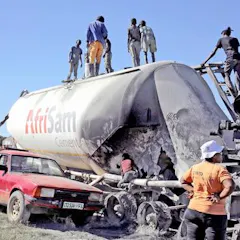
Corruption has become one of the biggest concerns for South Africans living in a province that has erupted in violence.
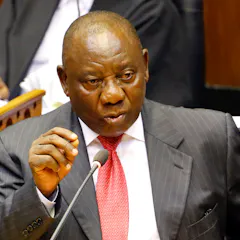
Jacob Zuma was removed by the people’s effect, which connected the dots of corruption, a mismanaged state and rapacious capitalism.

Zuma will go down in history as South Africa’s most corrupt head of government since Cecil Rhodes was prime minister of the Cape Colony.
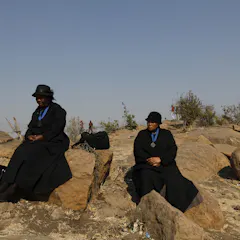
It is five years since the Marikana massacre in South Africa - a related musical unfortunately contributes to the amnesia about the traumatic incident.
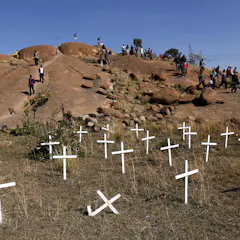
Five years on, no-one has been held to account for the Marikana massacre where 34 miners were shot dead by members of the South African Police Service in a single day.
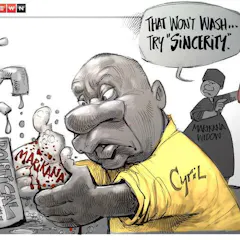
South African Deputy President Cyril Ramaphosa’s apology for his role in the 2012 Marikana massacre has no credibility, as there wasn’t full disclosure.
Top contributors
-

Political Scientist, University of the Western Cape
-
Chief Research Specialist., Human Sciences Research Council
-
Professor, University of Cape Town
-
Professor of Criminology, University of Nottingham
-
Research Director: Developmental, Capable and Ethical State (DCES) research division, and Coordinator of the South African Social Attitudes Survey (SASAS), Human Sciences Research Council
-
Senior Lecturer, Edge Hill University
-
Associate Lecturer in Philosophy of Education, University of the Witwatersrand
-
Professor and Head of Department of Political and Conflict Studies, Nelson Mandela University
-
PhD, University of Cape Town
-
Research Director, Development Capable and Ethical State, Human Sciences Research Council
-
Extraordinary Professor, Department of Political Sciences, University of Pretoria
-
Professor and Research Theme Leader of the Flourishing Life Research Theme, University of the Free State
-
Associate Professor (Archaeology), University of South Africa
-
Centre for Social Change, University of Johannesburg
-
Professor of Digital Society, University of Glasgow