

The Ebola outbreak in the DRC has the potential to become huge and of long duration.
Articles on Marburg virus
Displaying all articles

A 25-year-old local scientist captured rare footage showing how one of the world’s deadliest viruses could jump from bats to humans.

The CDC was instrumental in eradicating smallpox, identifying the causes of HIV and encouraging Americans to get the COVID-19 shot.
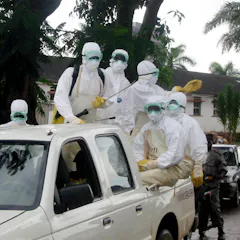
Marburg virus has killed 12 people in the latest outbreak, but a new vaccine is now to hand.
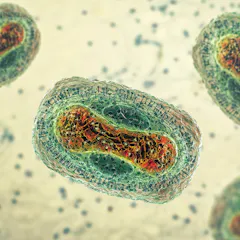
It’s likely a combination of the incidence of viral outbreaks increasing, and the fact we’re getting better at detecting them.

The Marburg virus, a close cousin of Ebola, currently has no approved treatments or vaccines to protect against it.

There has been an epidemic outbreak of Marburg virus in Equatorial Guinea for the first time. Here’s what you need to know about the virus, and how it spreads.

The chances of surviving Marburg are improved if there’s early supportive care with rehydration and symptomatic treatment.

Many African countries are experienced in managing outbreaks of viral haemorrhagic fevers and many of the lessons learnt from the Ebola can be applied to the Marburg outbreak.

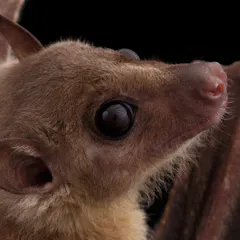
The Marburg virus will be present wherever the Egyptian Rousette bat occurs.

Uganda is the testing ground for a new vaccine that could work on more strains of the Ebola virus and other haemorrhagic fevers.
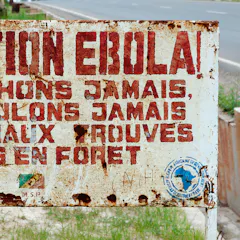
If the past is anything to go by, the DRC will effectively deal with the current Ebola outbreak. But that doesn’t mean we should be complacent.
In the 50 years following the discovery of the Marburg virus there have only been 12 known outbreaks.
Unless African governments put their money where their mouths are, innovative advances from young scientists on the continent will be stifled.
Top contributors
-

Lecturer in Virology, Queen's University Belfast
-
Postdoctoral research scientist, African Population and Health Research Center
-
Principal Medical Scientist (PhD MPH), National Institute for Communicable Diseases
-
Professor/Director Centre for Viral Zoonoses/ DST-NRF South African Research Chair, University of Pretoria
-
Lecturer in Virology, University of Surrey
-
Professor of Microbiology, Boston University
-
Research Assistant Professor of Microbiology, Boston University
-
Senior Research Scientist, Boston University
-
Professor of Global Biosecurity, NHMRC L3 Research Fellow, Head, Biosecurity Program, Kirby Institute, UNSW
-
Fellow, Nigerian Academy of Science
-
Principal Researcher - Epidemiology, Wits-VIDA, University of the Witwatersrand
-
Professor in the faculty of Medicine, Mbarara University of Science and Technology
-
Head of the Center for Emerging and Zoonotic Diseases, National Institute for Communicable Diseases
-
Senior Lecturer, Medical Microbiology, University of Westminster
-
Teaching Professor of Public Health, Arizona State University