

Marchionne set new leadership standards as CEO of the Fiat family business. His successor, Mike Manley, must build on his legacy.
Articles on Management
Displaying 181 - 200 of 361 articles

Reducing companies’ future strategic successes to the simple idea of an ever-faster reaction time overlooks human intelligence, the organic capital involved in shaping their future.

Ken Starkey defends the importance of business schools, while Martin Parker says ‘bring in the bulldozers’.

Those who study, research and teach management are often viewed skeptically, even by their students, who might have more experience than they do in the business world. Here’s why that’s wrong.

Don’t tell your employee they are not doing well, according to new research. “White lies” coming form managers to staff about how well they are doing can help with their motivation.

There are more than a thousand chief happiness officers on LinkedIn but their roles differ wildly.
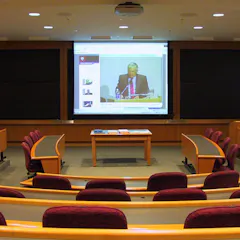
Since the financial crisis, business schools have been accused of every evil – inequality, oppression, environmental devastation. So why should management schools be preserved?

A range of pressures are forcing companies to consider being more open about pay structures, levels and gaps. What are the risks and potential benefits of being more transparent?

CC BY-ND40.5 MB (download)
A podcast on intuition: from how it works in the body, to how to harness it, and the story of two scientists who followed a hunch – about quantum biology.
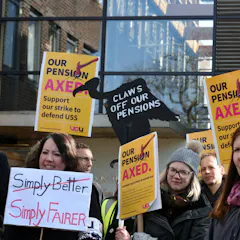
Cutting pension scheme costs can make staff angry and belligerent.
Mission-driven workplaces, it so happens, can be pretty bad at rooting out leaders who are sexual abusers.
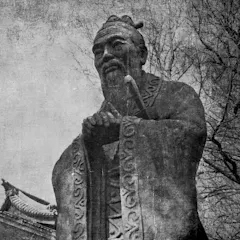
The ancient Chinese teacher called reflection the best way to become wise, yet we rarely consider it a core trait of a great leader. It’s time for that to change.

We may often criticise our lack of leaders. But leadership is not easy to define – even by leaders themselves.

According to a management scholar, a team’s mindset and structure – not its stars – will often determine its success.
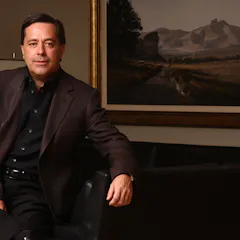
Gaps in the two tier board structure which is favoured in Europe may be partly responsible for the Steinhoff corporate scandal.

CFOs spend two-thirds of their waking hours working, according to a survey. The difficulty that companies are having hiring and retaining qualified employees is also at a 20-year high.

A flat management structure can reduce costs and boost efficiency but may be hard for larger firms to implement.

The people leading nonprofits are much less diverse than the communities they serve and there’s no reason to expect that to change soon.

Employees whose bosses give them some discretion over their work tasks are significantly more likely to engage in political behaviours outside work.

Research shows that coaching employees makes them feel valued and empowered, and builds better relationships with management.
Top contributors
-

Professor, College of Business, University of Sharjah
-
Lecturer, College of Business and Economics, Australian National University
-
Professor of Organisational Behaviour, Bayes Business School, City St George's, University of London
-
Professor of Organisational Psychology and Health, University of Manchester
-
Professor of Organisation Studies, University of Bristol
-
Senior Lecturer and Researcher in Innovation and Digital Leadership, University of Brighton
-
Professor of Leadership and Organisation Studies, University of Birmingham
-
Associate Professor in Human Resource Management and Industrial Relations, University of Technology Sydney
-
Professor of Practice, Associate Dean, Warwick Business School, University of Warwick
-
Cadre en exercice, John Molson School of Business, Concordia University
-
Dean, John Molson School of Business, Concordia University
-
Adjunct Senior Lecturer, Applied Ethics and CyberSecurity, Griffith University
-
ANZ Chair in Business Growth. Director, Australian Centre for Business Growth, Adelaide University
-
Professor of Organisational Sociology and Leadership, Cambridge Judge Business School
-
Director, Centre for Sports Business, University of Salford