

Ransomware has crippled governments and companies around the world, encrypting data and demanding payment for the decryption key – though that’s no guarantee of recovering the information.
Articles on Malware
Displaying 21 - 40 of 72 articles

The latest malware is designed especially to make small companies pay through the nose for their data.

When you click on unverified links or download suspicious apps you increase the risk of exposure to malware. Here’s what could happen if you do – and how you can minimise your risk.

Before you download antivirus and ad-blocker apps, do your due diligence on what personal information they want to access. Here are some tips on what to look out for.

Enterprising cryptocurrency enthusiasts have found a way to use your computer processor and electricity to make themselves money. What is cryptojacking, and how does it work?

Revelations about the fitness app have turned up the heat on the privacy and security risks of wearables.
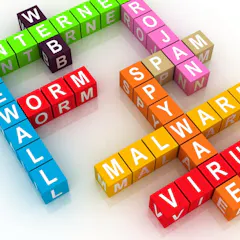
Like the recent WannaCry, viruses and other hacker software are now part of our digital lives. How big are the threats? How can we protect ourselves?

Like legitimate e-commerce, ransomware e-crime is increasing in scale, value and sophistication.

Scanning physical items constructed with nefarious intent can introduce malware into a smartphone or computer.

The situation of Marcus Hutchins – hailed as a hero for stopping one malware attack but charged with being involved with another – highlights the ambiguity of hacker culture.

How do malware analysts examine software that’s designed to wreak havoc with computers? By using tools that watch software’s inner workings very closely.
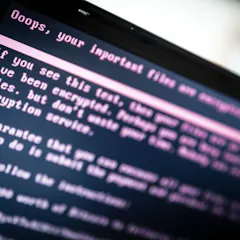
Mayhem, not money, seems to be the ultimate aim of the latest attack unleashed on computer networks around the world.

It’s not safe out there for an app.

It can be useful to think of hackers as burglars and malicious software as their burglary tools. Both types of miscreants want to find ways into secure places and have many options for entry.

Simply updating and patching an organisation’s computer software may not be enough to fend off another cyber attack. You could engage an ethical hacker to help out.

The underground market for software vulnerabilities has been growing steadily since the 1990s, so the latest WannaCry could be a sign of things to come.

People don’t want to endure the interruptions and inconveniences of keeping their computer software up to date. Research tells us why, and how we might fix the problem – and protect ourselves.

The technical consensus is clear: Adding ‘backdoors’ to encryption algorithms weakens everyone’s security. So what are the police and intelligence agencies to do?
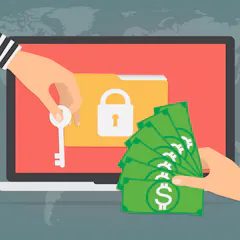
You know it’s a serious problem when even Google and Paypal have been targeted.

Kenya recently expressed fear that Al-Shabaab could interfere with the electronic voting system during the upcoming general election. Are cyber attacks a real threat in Africa?
Top contributors
-

Senior Lecturer in Networking, The Open University
-
Head, The Cyber Academy, Edinburgh Napier University
-
Professor of Cyber Security Practice, Edith Cowan University
-
Professor of Criminology, University of Leeds
-
Professor, Department of Computer Science, University of Surrey
-
Teaching Professor of Computer Science and Electrical Engineering, and Associate Director, UMBC Cybersecurity Institute, University of Maryland, Baltimore County
-
Associate Professor of Information Systems, Brock University
-
Visiting Professor, Nottingham Trent University
-
Postdoctoral Fellow, Cyber Security Project, Belfer Center for Science and International Affairs, Harvard University
-
Professor of Operations Research, Brock University
-
Senior Lecturer – Security, University of Sydney
-
Research Assistant, Systems Security Lab, Northeastern University
-
Vice Chancellor's Fellow in Digital Innovation and Wellbeing, University of Bristol
-
Security Researcher, PhD Candidate, Michigan State University
-
Reader in Cyber Security, University of Kent