
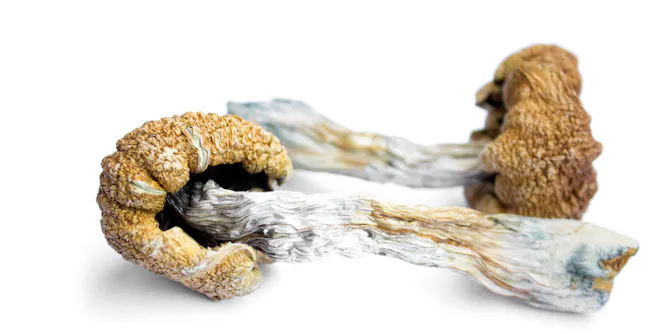
A woman with advanced dementia appeared to regain speech and independence after psilocybin. The findings are intriguing, but far from proof.
Articles on Magic mushrooms
Displaying 1 - 20 of 30 articles
A study provides new insights into how magic mushrooms evolved and may have travelled the world.
Psilocybin falls into a regulatory gray zone, with strict limitations around how it can be studied. As a result, very little is known about its health risks, despite its surging popularity.
Hallucinogenic chocolate bars were removed from six Denver-area gas stations.

Magic mushrooms and LSD may do more than bend minds: they could fight inflammation linked to depression, arthritis and heart disease.
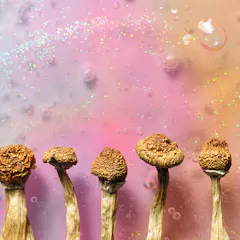
The discovery could also make the production of psilocybin in the lab more sustainable.

Participants report life-changing effects years after psilocybin treatment.

The magic mushroom longevity study that’s too good to be true.

Several religious groups have historically used psychedelics for healing. Now, a growing number are pushing for their use as a way to mystical experiences.
With little evidence or regulatory oversight, some mushroom products claim to improve cognitive function while posing a risk of serious side effects, including seizures and cardiovascular risk.
Psychedelics are marketed as a way for the general population to extract more work out of their already overworked lives, and to be happy about it in the process.
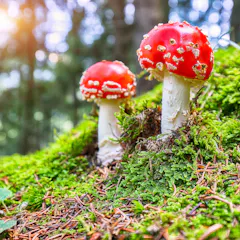
The Alice in Wonderland mushroom is being sold online with vague promises of better health. Buyer beware.
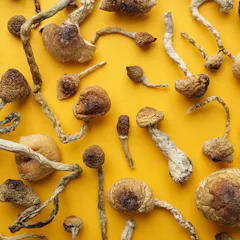
There are fundamental flaws in psychedelics research. But I’m still intrigued by their potential.
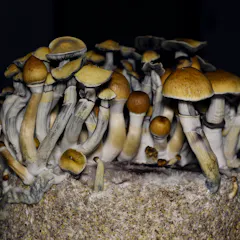
Researchers found a sharp rise in calls to US poison centers about magic mushrooms coincided with their decriminalization in several US cities and states.

Psilocybin, commonly known as magic mushrooms, has shown promise in treating anorexia in early studies, mostly in rats. But more research is needed to test if it’s safe and effective in humans.

The pages of The Book of Kells certainly contain some of the elements that have been used to identify drug use in modern and contemporary art.
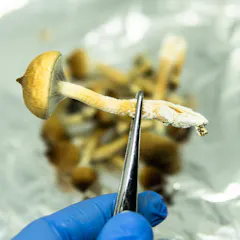
Psilocybin, the active ingredient in magic mushrooms, is one example of a fungus which can alter the human mind.

While ‘The Last of Us’ is a dramatic projection of a deadly fungal outbreak, it is based, if not in reality, in logic. And it’s a reminder that fungal infections are growing more resistant.
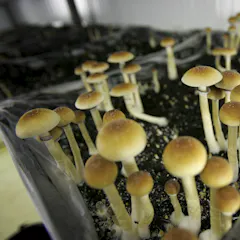
Alberta’s new policy on psychedelic-assisted therapy for mental illness may set a precedent that moves Canadians one step closer to accepting psychedelics as medicinal substances.
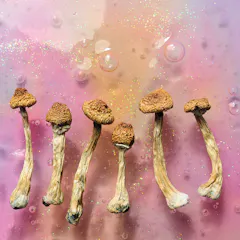
The active compound in magic mushrooms seems to increase connections between different brain networks.
Top contributors
-

PhD student in Clinical Psychology, York University, Canada
-
PhD Candidate, Congnitive Neuroscience, University of Toronto
-
Research fellow, Swinburne University of Technology
-
Senior Lecturer of Addiction, Edith Cowan University
-
Professor and Canada Research Chair in the History of Health & Social Justice, University of Saskatchewan
-
Senior Lecturer in Biochemistry & Fungal Biology, Queen's University Belfast
-
Maître de conférences, histoire, Labex Tepsis – Mondes américains (EHESS), Université Paris Nanterre
-
Professor, Psychiatry and Biobehavioral Sciences, University of California, Los Angeles
-
Lecturer in Latin Literature, University of Glasgow
-
Associate Professor, Cognitive Psychology, Leiden University
-
Professor in the History of Art and Architecture, Trinity College Dublin
-
Professor of Biochemistry and Biomedical Sciences, McMaster University
-
Professor of Environmental and Forest Biology, State University of New York College of Environmental Science and Forestry
-
Professor of Neuropharmacology, University of Lancashire
-
Associate Professor, Behavioural Pharmacology Research Unit, Johns Hopkins University