
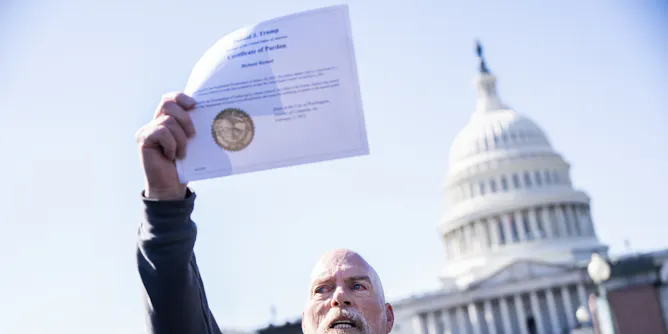
It’s not yet clear whether Trump’s pardons will herald a period of national harmony – as past presidents hoped for – or more incidents of violence, as actually resulted.
Articles on Lynchings
Displaying all articles

Country singer Jason Aldean’s hit song triggered renewed attention on vigilante justice, racism and urban America.

Student journalists are using spreadsheets and databases to examine one of the darkest chapters in American history.
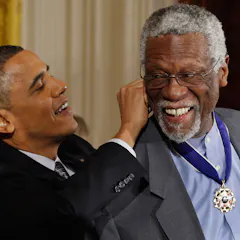
America’s complicated history with race can be told through the lives and times of Black Americans, a view that some GOP-controlled state legislatures want to restrict, if not outright ban.
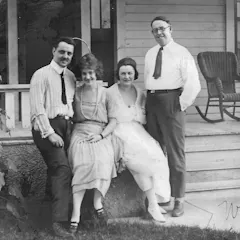
If Texas Gov. Greg Abbott had his way, the state’s past of lynching Blacks would be taught as an exception rather than the rule. History tells a different story.

Digging deeply into the nation’s past can help illuminate the racial setbacks facing the US today.
Experts help explain the context around the murder trial and convictions of Greg McMichael, Travis McMichael and William Bryan.
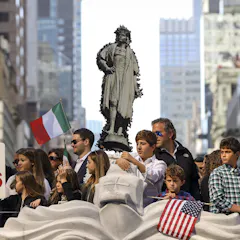
Given Italian history, U.S. descendants of Italian immigrants have reason to reject their association with Columbus and stand in solidarity with indigenous groups as they reclaim their histories.
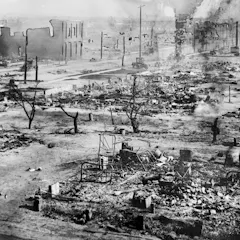
Digging deeply into the nation’s past can help illuminate the racial struggles facing the U.S. today.
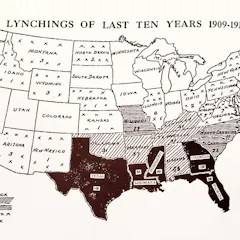
Mapping is one way African Americans fight for equality and help each other navigate a racially hostile landscape.
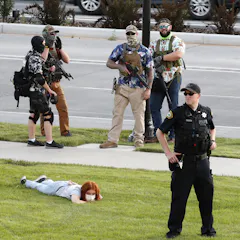
For many Americans, law and order has long been as much a private matter as something for the government to handle.
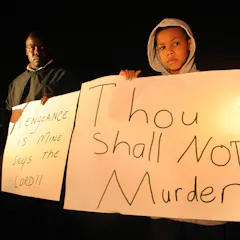
The racist legacy of the American death penalty.

The US has a centuries-old tradition of killing black people without repercussion – and of publicly viewing the violence. Spreading those images can disrespect the dead and traumatize viewers.
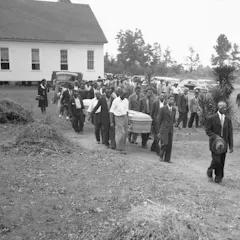
Religion was no barrier for Southern lynch mobs intent on terror. White pastors joined the KKK, incited racial violence and took part in lynchings. Sometimes, the victim was a preacher.

The first truth commission to research lynchings has been established in Maryland. It has the potential to educate the public about and support racial reconciliation. But it also faces obstacles.
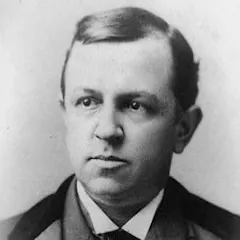
Henry W. Grady wanted to promote northern investment in the South – and he was willing to ignore lynchings and the exploitation of black labor.
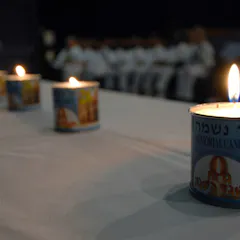
Remembrance days and memorials provide people the opportunity to share stories with a community. An expert explains how that can make a difference.
Top contributors
-

Professor of Literature and Director of Irish and Irish American Studies, College of Charleston
-
Assistant Professor of History and Community Engagement, St. John Fisher University
-
Professor of History, Sam Houston State University
-
Associate Professor of Journalism, USC Annenberg School for Communication and Journalism
-
Sherman Fairchild Distinguished Professor of History, Dartmouth College
-
Professor of Geography and Senior Research Associate in the Rock Ethics Institute, Penn State
-
Bizot Family Professor of History, University of Memphis
-
Senior Lecturer, School of Law and Politics, Cardiff University
-
Professor of Sociology, Drake University
-
Professor of Law, Faculty Director of the Excellence in Policing & Public Safety Program, University of South Carolina
-
Associate Professor in Honors, University of North Dakota
-
Assistant Professor of Political Science, Amherst College
-
Professor of History, Brandeis University
-
Assistant Professor of Government; Director of the International Justice Lab, William & Mary
-
Professor, Journalism Department, UMass Amherst