

When Beethoven died, all he left behind were some sketches for his 10th Symphony. Now, thanks to the help of artificial intelligence, the composer’s vision is coming to life.
Articles on Longreads
Displaying 21 - 39 of 39 articles
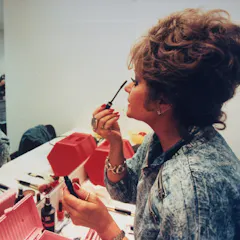
The subject of a new biopic, Tammy Faye was a televangelist icon. But she also represented another side of the evangelical coin – one that was big-hearted, vulnerable and accepting.

The FDA has largely lost its ability to regulate the myriad pills, powders and potions that promise to grow muscle, shed body fat and improve your focus.

Unloading about trauma and mental illness is in vogue. But like undressing, it centers musicians’ vulnerabilities at the expense of their artistry.

Marketers will soon be able to use AI-assisted vocal analysis to gain insights into shoppers’ inclinations – without people knowing what they’re revealing or how that information is being interpreted.
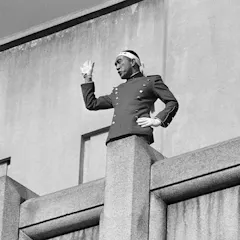
Like a Rorschach test, the incident offers limitless interpretations. But newly published photographs of Yukio Mishima in his final weeks alive show an artist obsessed with scripting out death.
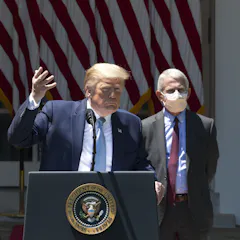
We shouldn’t see politicians and scientists as residing in distinct, separate realms.
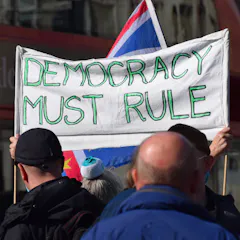
Unlike older visions of economic democracy which started with class or the collective, the starting point now should be the individual
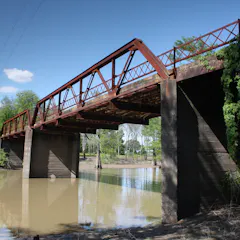
Scholars continue to debate what, exactly, happened to Emmett Till the morning of his murder. But that hasn’t stopped a poor Mississippi community from trying to profit off one version of the story.

Long read: How nature is fighting our attempts to use biohacking to live forever.

Tall buildings are an increasing feature of Australia’s city landscapes, although they’re still relatively small compared to overseas. But is there a limit on how high we can build?
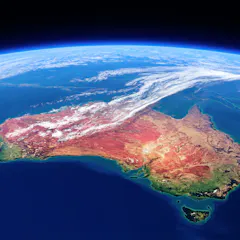
Australia was a significant global space player during the 1950s and 1960s. Now we’re one of only two OECD countries not to have a space agency. What happened?

Australia’s herbaria are a priceless repository, holding around 8 million samples that map historical and current distributions of native and introduced plant species in Australia.
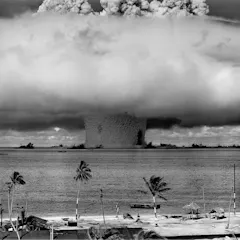
An expert panel has announced that we truly are living in the geological era defined by humanity’s fingerprint. But is it as simple as that, and does it leave “Anthropocene science” open to attack?

Does including torture or other human rights violations in video games trivialize the actions? Or might it force us to think more critically about them?

Humans have always required some form of extra help being born. But how much help is truly necessary – and how much is too much.
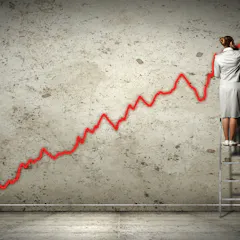
What does genuine economic progress look like? The orthodox answer is that a bigger economy is always better, but this idea is increasingly strained by the knowledge that, on a finite planet, the economy…

In the daily hubbub of current “crises” facing humanity, we forget about the many generations we hope are yet to come. Not those who will live 200 years from now, but 1,000 or 10,000 years from now. I…
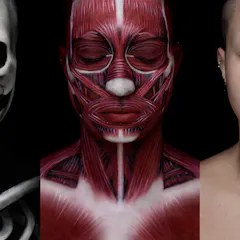
Only two decades ago, when I was starting my PhD studies at the University of California in Berkeley, there was talk about the death of anatomy as a research subject. That hasn’t happened. Instead the…
Top contributors
-

Professor of Evolutionary Biomechanics, Royal Veterinary College
-
PhD candidate, UNSW
-
Professor of Fire Protection Engineering, University of Maryland
-
Research fellow, The University of Queensland
-
Associate Professor of Communication Studies, West Virginia University
-
James Martin Research Fellow, Future of Humanity Institute & Oxford Martin School, University of Oxford
-
Professor, School of Biological Sciences, University of Adelaide and Chief Botanist, State Herbarium of South Australia, Adelaide University
-
Assistant Professor of Obstetrics, Gynecology and Reproductive Biology, Harvard University
-
Academic Director, School for International Training, The University of Melbourne
-
Visiting Assistant Professor of English, Clark University
-
Affiliate Faculty of Computer Science, University of Washington
-
Professor of Computer Science, Dickinson College
-
Assistant Professor in Plant Biology & Geography, University of Illinois Urbana-Champaign
-
Professor of Regional Political Economy, University of Glasgow
-
Adjunct Professor of Society & Environment, University of Technology Sydney