

By cranking up the difficulty on the test task, researchers found that children are capable of finding systematic solutions to complex problems far earlier than psychologists had believed.
Articles on Logic
Displaying 1 - 20 of 32 articles

These arguments sound convincing but lead to false or misleading conclusions. Here’s how to spot them.

How researchers measure the logical reasoning of monkeys, pigeons, rats, fish and wasps shapes how they understand mental processes in animals − and in people.

The rigid structures of language we once clung to with certainty are cracking.

Philosophy has been instrumental to AI since its inception.

In 1908, the English philosopher J. M. E. McTaggart published an important paper on the logic of time.
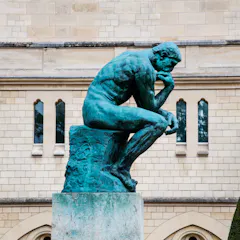
Svend Brinkmann’s idea of thoughtfulness is not just about exercising our rational powers to solve puzzles, but the existential dimensions of thinking.

What mathematicians call ‘disordered collections’ can help engineers explore real-world worst-case scenarios. The simple card game Set illustrates how to predict internet and electrical grid failures.

Sapolsky summarises the latest scientific research relevant to determinism: the idea that we’re causally ‘determined’ to act as we do and couldn’t possibly act any other way.

The idea that the least skilled are the most unaware of their incompetency is pervasive in science and pop culture. But a new analysis of the data shows that the Dunning-Kruger effect may not be true.
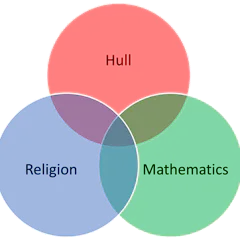
Venn diagrams have helped the development of logic and computing.

Ludwig Wittgenstein’s brilliant early work has had a lasting influence on philosophy, though almost no one has agreed with his conclusions – not even Wittgenstein himself.

False premises, fear-based reasoning and mob thinking are baked into the platform, allowing misinformation to thrive.

Machine logic can be too precise to seem fully human. Chatbots that learn logic from Aristotle instead might behave more like people.

Framing cats as responsible for declines in biodiversity is based on faulty scientific logic and fails to account for the real culprit – human activity.

Post-truth questions the very nature of truth itself – that’s why it’s so dangerous.

What’s the role of someone who, like
Robert Mueller, speaks only facts in a tornado of partisan bombast? Is it a breath of fresh air or an abdication of responsibility to protect America’s interests?

No cheating, please.

The lovers’ diaries show how David Pinsent supported Ludwig Wittgenstein through his depression.

Most of us lack the expertise to evaluate climate science, but there are ways anyone can spot a badly reasoned argument.
Top contributors
-

Professor of Cognition and Cognitive Neuroscience, Anglia Ruskin University
-
Senior Lecturer in Philosophy and Education; Curriculum Director, UQ Critical Thinking Project, The University of Queensland
-
Laureate Professor of Mathematics, University of Newcastle
-
PhD Candidate in Mathematical Sciences, Probability and Applications, Queen Mary University of London
-
Emeritus reader in science education and communication, University of Sussex
-
Professor of Philosophy, University of Reading
-
Professor of Philosophy, The University of Melbourne
-
Professor of Physics and Astronomy & Professor of Microbiology and Molecular Genetics, Michigan State University
-
Professor of Mathematics, University of Florida
-
Associate Professor, Department of Philosophy, University of Nottingham
-
Lecturer in Mathematics, Deakin University
-
Associate Professor, School of Mathematical Sciences, Monash University
-
PhD in machine ethics, University of Canterbury
-
Postdoctoral Researcher, University of Wisconsin-Madison
-
Professor of Philosophy, University of Sydney