
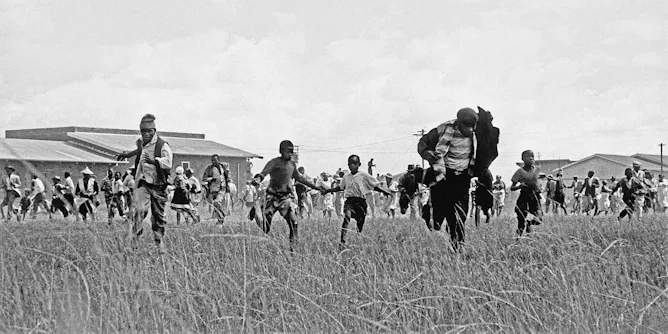
Ian Berry’s photographs of the Sharpeville massacre provided evidence of a crime against humanity.
Articles on Liberation struggle
Displaying 1 - 20 of 28 articles
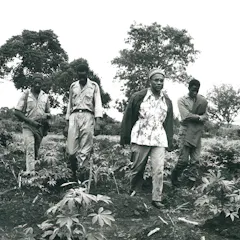
A new collection of Amílcar Cabral’s agricultural writings shows why Africa’s soil crisis today is about history, politics and people as much as farming.
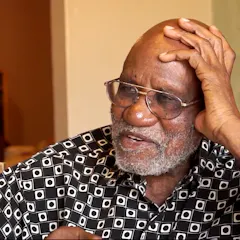
Unusually for his generation, he never scrambled to gain positions of power after independence.

His image is the watermark in South African passports, but he is not as widely known as leaders like Nelson Mandela and Desmond Tutu.
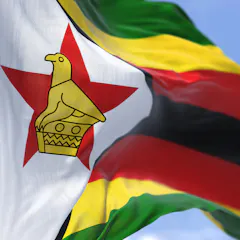
Sithole was just one of tens of thousands of individuals who died during Zimbabwe’s independence struggle.
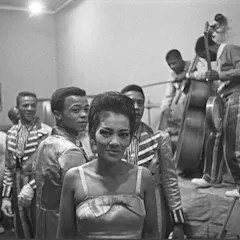
Former residents recall a community nurtured by a spirit of extended family and solidarity.
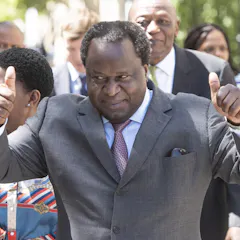
Mboweni leaves a legacy of a successful transformation from a freedom fighter to a businessman, central banker and politician.

It’s important that this brutal chapter in South Africa’s past be commemorated in the right spirit, to reflect, take stock and to heal.
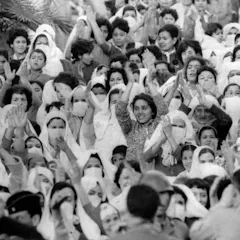
Fanon’s famous book was translated to isiZulu by South African writer and scholar Makhosazana Xaba.
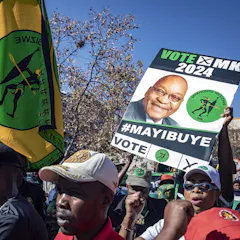
Former president Jacob Zuma’s MK Party borrows the slogan “mayibuye” from the liberation party to make a point about the ruling African National Congress.
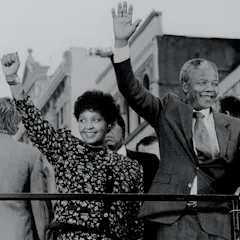
Would South Africa have been torn apart by civil war without the myth of Nelson Mandela?
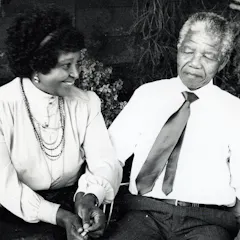
Jonny Steinberg talks about his intimate double biography of the famous South African leaders.
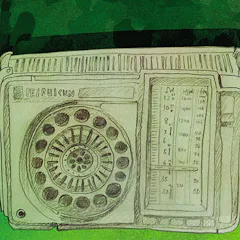
The role played by guerrilla radio in the liberation struggle will not be lost to history, thanks to books like this.
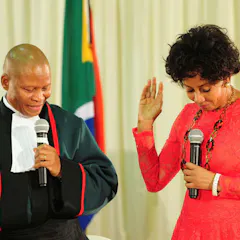
The rule of law embodies the rallying cry for the fair and democratic exercise of public power, buttressed by law and fundamental rights.
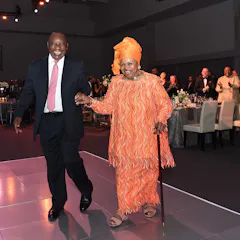
For her, art was a weapon in the struggle and a tool for education. She used every opportunity to build movements and to archive experiences in writing.

Kaunda will be remembered as a giant of 20th century African nationalism – a leader who gave refuge to revolutionary movements, a relatively benign autocrat and an international diplomat.
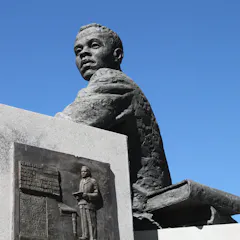
According to a new book, the friendships among women in the novel reveal its author Sol T. Plaatje’s view of effective political struggle.
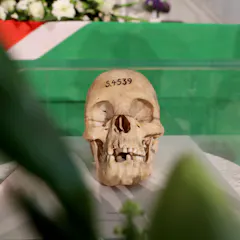
An oral history based biography of a survivor of colonial genocide in Namibia indicates instances of humanity during an entirely inhumane era.
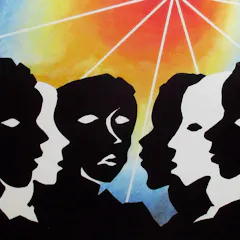
A retrospective exhibition displays the key works from the life and times of activist and artist Judy Seidman. She has used political posters as a galvanising force in the fight against injustice.
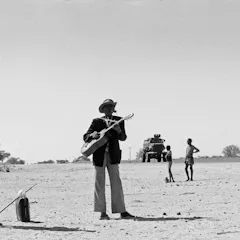
An archive project is restoring the secret history of Namibia’s resistance music culture from the 1950s to the late 1980s – suppressed and censored during apartheid but now touring the world.
Top contributors
-

Senior lecturer in African Studies, Yale University
-
Extraordinary Professor, Department of Political Sciences, University of Pretoria
-
Professor of Anthropology, University of the Western Cape
-
Senior Lecturer (Radical Humanities Laboratory, University College Cork), University College Cork
-
Emeritus Professor of Christian Studies, University of Cape Town
-
Professor of Public Affairs, Tshwane University of Technology
-
Canada150 Research Chair in Gender and African Politics and Visiting Professor, WiSER Wits University, Carleton University
-
Professor Emeritus of Public Law, University of Cape Town
-
Postdoctoral Fellow, Nelson Mandela University
-
Professor, Simon Fraser University
-
Lecturer, Culture and Media department, Birkbeck, University of London
-
Senior Lecturer in Media Studies, University of Cape Town
-
Emeritus Professor, University of South Africa and Visiting professor and strategic advisor in Faculty of Humanities., University of Johannesburg
-
Researcher and Gender Equity Officer, University of the Western Cape
-
Researcher at History Workshop, University of the Witwatersrand