
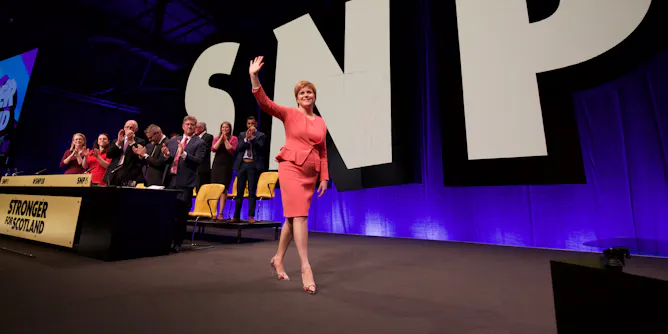
The party of government in Scotland has strayed from its ‘social democratic’ vision and desperately needs a new approach to solving inequalities across society.
Articles on Liberalism
Displaying 21 - 40 of 87 articles
It’s time for a new brand of democratic liberalism that understands and harnesses the power of markets for social and economic good.
The Democratic Alliance posters were not a bolt from the blue. They were consistent with messages the party’s current leadership has been sending out for some time.

Many countries, including South Africa, use regulations to control smoking in public so that they do not harm non-smokers. Likewise, getting vaccinated is for the common good of society.
Consumer spending fuelled by credit cards and bank loans has become central to economic growth, but it wasn’t always.
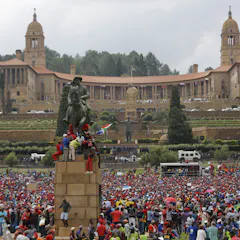
To build a political culture that supports democracy in South Africa, civic education needs to move beyond voter education.
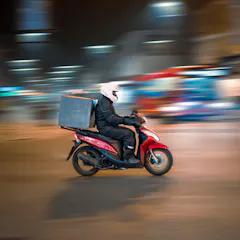
New changes to employment rules go hand in hand with the recent knocks to Deliveroo and Uber to suggest that a trend is emerging.

Given the current, often erroneous, use of the term ‘fascist’ to describe political movements and leaders, it’s important to determine what fascism is and is not.
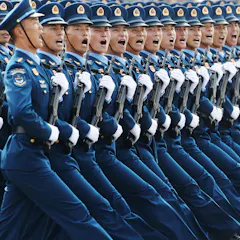
The Chinese Communist Party sees liberal values as a threat to its rule and needs many of them to be suppressed. Its approach? Co-opt, ignore and selectively exploit global institutions.
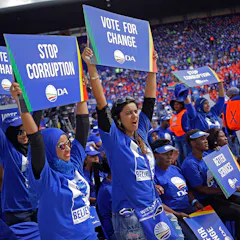
The problem for the Democratic Alliance is not one of policy. There is real substance in its commitment to substituting racial criteria for overcoming historical disadvantage.
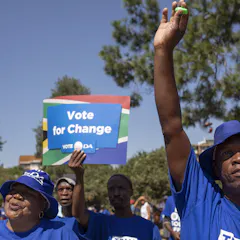
Each black person and woman may be an individual but, because they are black and women, they face obstacles which whites and men don’t.
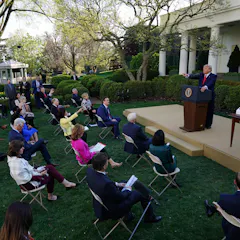
Though political elites complain about what the media covers, and how they cover it, research shows that ideological bias among media outlets is largely nonexistent.
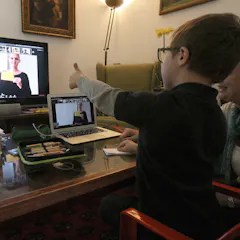
These are difficult and dire times, but holding on to the myth of childhood innocence won’t make this crisis any easier.
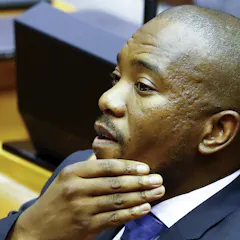
There is no moral equivalence between apartheid’s use of race categories and their continued use by the democratic government.

Objections raised about the school syllabus by parents, schools and civil society point to a bigger problem with the state.

The white liberal establishment, both inside and outside the Democratic Alliance, holds on to its race-blindness by distorting the South African idea of “non-racialism”.
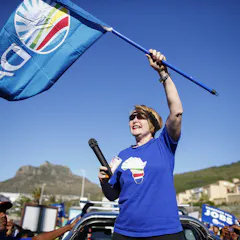
The Democratic Alliance’s problems can be traced back to the politicisation of race, which has persisted even after the dawn of democracy in 1994.
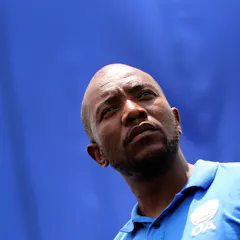
Mmusi Maimane’s resignation highlights one of the core problems of democratic South Africa - the assumption that the only way to do anything is the way white men did it in the past.
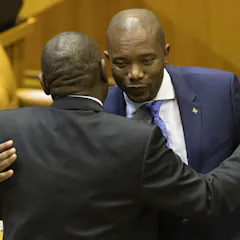
South Africa’s parliamentary system would make it difficult to achieve a fusion of parties.
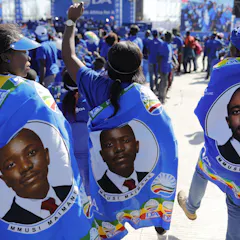
Race is the fault line. Prominent black DA figures label attempts to remove leader Mmusi Maimane as an attempt by whites to force black members into a subordinate position.
Top contributors
-

Professor of Political Studies, University of Johannesburg
-
Professor of Sociology, University of the Witwatersrand
-
Professor of History and Politics, School of Humanities and Social Inquiry, University of Wollongong
-
Emeritus Professor of Politics, La Trobe University
-
Associate Professor of History, Case Western Reserve University
-
Conjoint Senior Lecturer in Philosophy, University of Newcastle
-
Senior Lecturer, School of Humanities and Social Sciences, Deakin University
-
Emerita Professor of Politics, Adelaide University
-
Scientia Professor of Economics, UNSW
-
Senior Lecturer, Department of Political and International Studies, Rhodes University
-
Professor in Political Science, University of South Africa
-
Chief Research Specialist in Democracy and Citizenship at the Human Science Research Council and a Research Fellow Centre for African Studies, University of the Free State
-
Professor of Economics & Director of the Africa Policy Program, PERI, UMass Amherst
-
Pro Vice-Chancellor Research and Professor of International Studies, La Trobe University
-
Professor, School of Law, Western Sydney University