
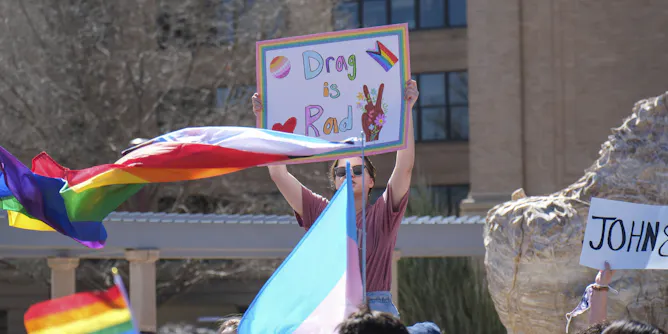
Anti-LGBT sentiments are on the rise around the world, and Canada is not immune to the tide. Now is the time for us to speak out and denounce anti-LGBTQ actions and rhetoric.
Articles on LGBTQQ2S+
Displaying 21 - 40 of 40 articles

Experts on the history of sexuality in Canada say recent changes to the Expungement Act don’t go far enough, and they urge Canadians to reject attempts to divide marginalized communities.
The closure of the virtual Connect-Clinic means fewer trans and non-binary people will get the vital health-care services they need.

Feminine leadership encompasses aspects of ourselves that have been pushed aside within conventionally male-dominant spaces. Recentring them can foster leadership that is more inclusive.

Leena Manimekalai’s film Kaali has drawn controversy and criticism, but like her other films, it highlights the inequalities and discrimination many continue to face.

Food insecurity is a social justice issue tied to social determinants of health. Historically marginalized people like 2SLGBTQ+ youth are at risk, and more likely to be food insecure during COVID-19.
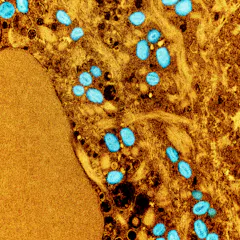
Monkeypox is not considered an STI but is spreading among sexual partners. Adding sexual health strategies to the public health response is helpful, but there is a danger of stigmatizing MPXV.

To control monkeypox, there is a short window — weeks, not months — in which to vaccinate the most susceptible and to encourage and support self-isolation for those who have symptoms.

Accessing compassionate health care is often difficult for Two-Spirit, lesbian, gay, bisexual, transgender, queer and other sexual identities, such as pansexual or asexual individuals (2SLGBTQ+).
Pride Toronto has the opportunity to change its relationship with Indigenous and racialized people.
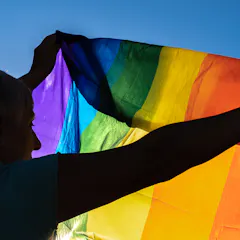
The Nova Scotia LGBT Seniors Archive and Lesbian Oral History Project focus on gathering stories from the generation that began using the term lesbian, and those who still can’t.
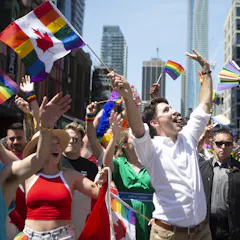
Decolonial work is necessary. Queer people, communities and organizations have a responsibility to work toward undoing historical and contemporary wrongs.
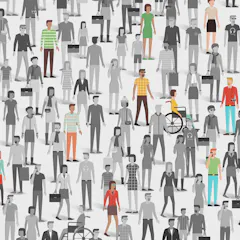
The mental health impact of the pandemic has not affected everyone equally. An equitable approach to mental health promotion, prevention and treatment can help ensure equitable access to services.

A straight cis-man could have made “herstory” as “America’s Next Drag Superstar.” Drag Race’s inclusion problem botches racialized queer histories, community discomfort and ally participation.
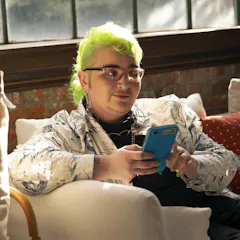
Pandemic experiences for queer people were marked not only by loneliness but new possibilities and connections that will shape their lives when the world reopens.

The Expungement Act was a centrepiece of the federal government’s apology to LGBTQ2 Canadians. But figures indicate only nine people have successfully had their convictions cleared.

The HIV In My Day project preserves the early history of the HIV/AIDS pandemic through the personal stories of long-term survivors and caregivers.
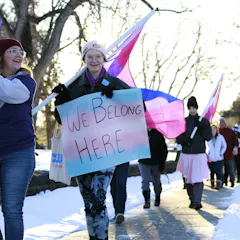
We need to commit to creating safe and inclusive environments for trans and non-binary youth, because when they have those supportive environments, they thrive.
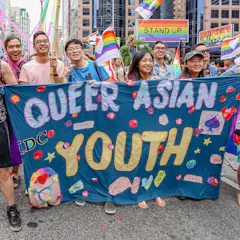
A study shows that when compared to lesbian, gay and bisexual youth, heterosexual youth report improved family relations over the same time period.
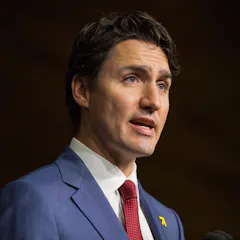
Prime Minister Justin Trudeau plans to make a formal apology to LGBTQ2 communities for past state-sanctioned discrimination against them in Canada. But the apology must be more than just words.
Top contributors
-

Associate Professor, Applied Human Nutrition, Mount Saint Vincent University
-
Associate Professor, Faculty of Health and Community Studies, MacEwan University
-
Associate Professor, Department of Psychology & Faculty of Education, Mount Saint Vincent University
-
Assistant Professor, Community Rehabilitation and Disability Studies, University of Calgary
-
Professor, Women's and Gender Studies, Mount Royal University
-
Professor in the Faculty of Business & Communication Studies, Mount Royal University
-
Assistant Professor, Social Work, Mount Royal University
-
Postdoctoral fellow, Sociology, Western University
-
Adjunct Associate Professor of History, Queen's University, Ontario
-
Assistant Professor, Faculty of Health Sciences, Simon Fraser University
-
PhD candidate, Gender, Feminist and Women's Studies, York University, Canada
-
Assistant Professor of Epidemiology, Drexel University
-
Infectious Diseases Physician, McMaster University
-
Graduate student, Werklund School of Education, University of Calgary
-
PhD Student, School of Population and Public Health & Research Assistant, Stigma and Resilience Among Vulnerable Youth Research Centre, University of British Columbia