
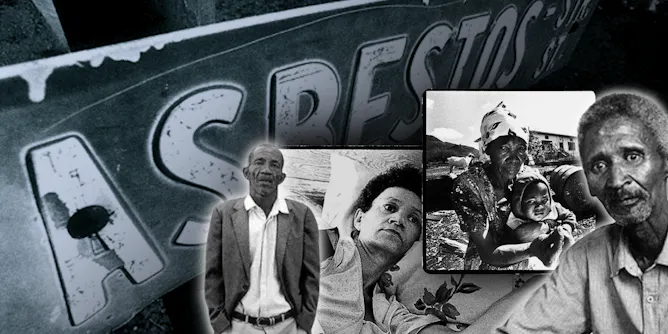
The health dangers of asbestos were already well known, but it took a David and Goliath legal battle to hold the mining industry accountable.
Articles on Legal history
Displaying all articles
Coroners are in charge of finding out the who, what, when, where, why and how in the case of an unnatural death. Here’s how this part of the legal system works.

A growing number of Republicans say that you shouldn’t be able to divorce simply because you’ve fallen out of love. It’s an idea with a long history.
Kudnarto was the first Aboriginal woman to legally marry, under colonial law in South Australia. Her descendants include prominent Kaurna people like Gladys Elphick and Michael O'Loughlin.
Alton Levy may not be a household name today, but his court-martial put a spotlight on unequal treatment in the military.

Many gun rights advocates claim that the right to carry guns is a universal right that has spanned centuries and nations. History tells a different story.

Even famous Supreme Court rulings like Brown v. Board of Education haven’t necessarily pushed US society forward in a linear direction.
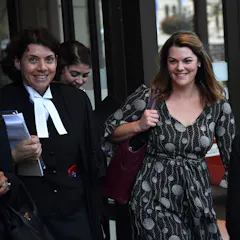
In 1886, a Victorian judge deplored the disregard given to women’s rights in cases of sexual slander. Today, women are still fighting to protect their reputations and tell their stories.
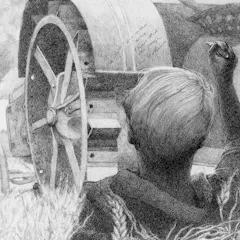
Courts have had to consider whether an eggshell, a tractor fender, a petticoat hem, graffiti on a wall, and a poem might be valid wills. They’ve shown surprising flexibility in judgment.

Internet privacy laws are partially governed by the VPPA, which was implemented to protect consumers renting videos. While the technology has changed, amendments place the consumer at a disadvantage.

Nearly one in five employed Americans is bound by a contract restricting moves to rival companies. Here’s one way to make those arrangements less common.

In many cases, a reference will contain negative things about its subject. This is part of a reference’s design: the referee should give a full and frank assessment.

A “judicial activist”, it seems, decides cases in favour of a preferred (non-“mainstream”) litigant or interest, to reach a result that is inconsistent with a conservative worldview.
Top contributors
-

Professor of Law, University of Sydney
-
Lecturer, Melbourne Law School, The University of Melbourne
-
Professor Emeritus of Management, Colorado State University
-
Professor of History, Wesleyan University
-
Emeritus Professor of History, School of Arts and Humanities, Edith Cowan University
-
Assistant Professor of Digital Cultures, University of Alberta
-
Senior Lecturer, The University of Melbourne
-
Executive Producer, Social and Political Sciences Program, University of Technology Sydney
-
Distinguished Professor of Law, University of Technology Sydney
-
Director, Schwalb Center for Israel and Jewish Studies, University of Nebraska Omaha
-
Professor of Law, University of Oregon
-
Professor of Family Law, University of South Carolina
-
Associate Professor of Law, Monash University
-
Professor of Law and Justice and Director of the Australian Human Rights Institute, UNSW