

The reasons for banning compensated surrogacy in developing countries don’t apply in Australia.
Articles on Law reform
Displaying 101 - 120 of 168 articles

Changes that would widen the gulf between Australian practice and international standards should be avoided at all costs.

A domestic violence disclosure scheme does not in itself assist people to achieve safety from an abusive partnership.

Social media does not eradicate the line between personal or private. Instead, it shifts the line in ways that require thought rather than unreflexive condemnation or celebration.
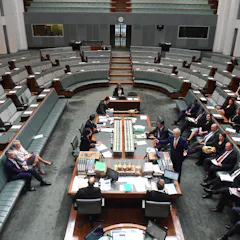
We don’t have to love a process like a plebiscite, or think it ideal, to make the most of it.

What are ASIO’s powers in detaining and questioning terror suspects? Does it need more to be effective?

The debate around amending Section 18C is a furphy: the law is there to guard against the most-damaging vilification, and very few cases end up in court.

The internet and social media have expanded the potential for more enduring forms of non-judicial punishment by way of continued denigration, humiliation and abuse.

In what circumstances can police search your phone? Must they obtain a search warrant? And what will happen if you refuse to provide your passcode or fingerprint required to access your phone?

Drug-detection dogs don’t stop most drug use. And they have been shown to encourage more dangerous practices, criminalise and traumatise marginalised groups, and render all as potential suspects.
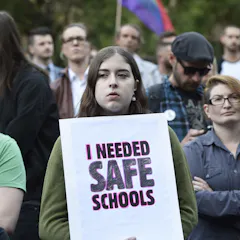
As we take necessary steps towards shedding discrimination in relation to marriage in Australia, we must also consider removing it from our legislation.

The Victorian government will bring its laws up-to-date with new forms of exploitation and abuse of children and young people that are associated with communications technologies.

Few in Australia understand the context and true meaning of customary law. Denials of its validity are often based on ignorance or on specific examples devoid of context.

People with cognitive impairments are entitled to opportunities to engage meaningfully in society, so there must be legal reform to enable this.

Sex workers in South Africa are all potential criminals due to the country’s regressive laws. But their status may change soon, making South Africa the first African country to decriminalise sex work.

South Africa’s Constitution enjoins government to act “reasonably” in ensuring that basic socioeconomic rights are progressively realised. But the government has limited resources.

Imposing significant restrictions on the liberty of a person found not guilty subverts the ordinary criminal justice process.

Banning pedestrians from using their phones seems a natural extension of the prohibition against mobile phone use while driving.

It isn’t just the ‘bad guys’ who are exposed to restrictive powers and tougher penalties. Anyone whose behaviour is regarded as a public safety risk is potentially in the frame.
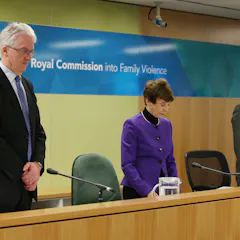
The royal commission’s recommendations seek a complete transformation of Victorian family violence services, and the state’s prevention of and response to family violence.
Top contributors
-

Professor (Practice), Faculty of Business and Economics, Monash University
-
Professor of Family and Sexual Violence, RMIT University
-
Associate Professor, Griffith Criminology Institute, Griffith University
-
Emeritus Professor in Law and Criminal Justice, Adelaide University
-
Associate Professor, School of Law, University of Canberra
-
Professor of Law; Kim Santow Chair of Law and Social Justice, University of Sydney
-
Emeritus Professor Monash University, Monash University
-
Arie Freiberg is a Friend of The Conversation.
Emeritus Professor of Law, Monash University
-
CEO, Sentencing Advisory Council
-
Eleanor Rathbone Chair of Sociology, University of Liverpool
-
Lecturer in Law, Adelaide University
-
Professor, Centre for Women's Studies & Gender Research, Sociology, Monash University
-
Associate Professor of Leadership, Swinburne University of Technology
-
Dean, School of Law, Deakin University
-
Professor of Evidence Law, University of Sydney