
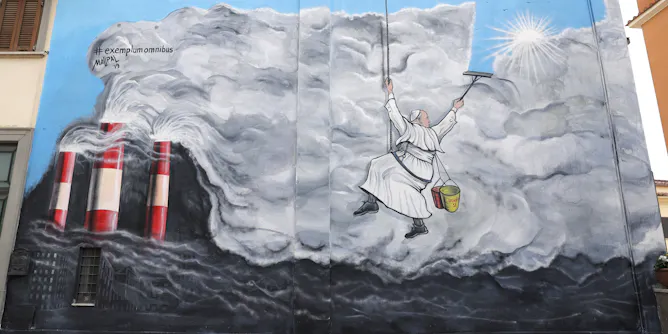
In Laudato Si’, Pope Francis connected the dots between growth, consumption, poverty and climate breakdown.
Articles on Laudato Si'
Displaying all articles

As a major conference on the global biodiversity crisis opens in Montreal, a conservation biologist explains how ideas about protecting nature have evolved over the past 40 years.
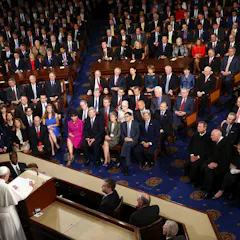
Pope Francis has embroiled himself in the partisan politics of the US by taking on important yet hot-button issues that span the political spectrum.
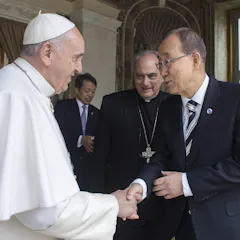
On his first visit to the US, Pope Francis will highlight the challenges of poverty and sustainability. A related issue, he acknowledges, is population. So what does that mean for Catholic teaching?
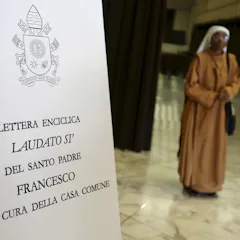
The ink is still drying on the Pope’s Encyclical Letter “Laudato Si’” or “On Care for Our Common Home,” and scholars, critics and pundits will analyze and assess it for years to come. But one aspect of…
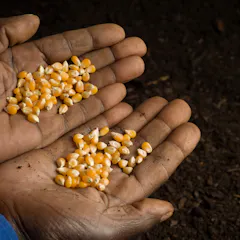
Yes, environmental racism is still a problem, but recent research shows that minority groups care about protecting the environment because of the positive experiences they’ve had.

The papal encyclical uses moral arguments for environmental protection, yet as a philosophical statement, it’s a terrific example of “public reason.”
The pope’s encyclical on ecology addresses all individuals who want to live with integrity – and their ability to take personal actions on global problems.
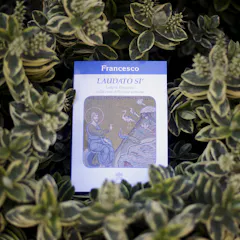
The pope’s encyclical Laudato Si’ tells us to protect nature and act on climate change for more than reasons of self interest.
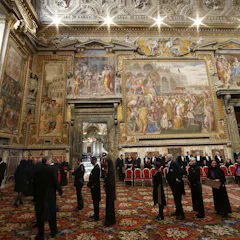
By equating human rights to the protection of nature, the pope’s encyclical opens up an international debate with broad political implications.
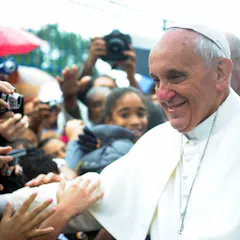
The pope’s encyclical turns climate change into a moral discussion by focusing on the disproportionate impact of climate change on poor countries and regions.
Top contributors
-

Holcim (US) Professor of Sustainable Enterprise, Ross School of Business, School for Environment & Sustainability, University of Michigan
-
Department Chair and Professor of Philosophy, Rochester Institute of Technology
-
Distinguished Professor Emerita, Oregon State University
-
Director of the Yarra Institute for Religion and Social Policy, University of Divinity
-
Professor of Environmental Ethics and Philosophy, Oregon State University
-
Assistant Professor of Religion and Environment, California State University, Northridge
-
Professor of Environmental Studies, Affiliate Faculty in Religious Studies, University of California, Santa Barbara
-
Professor, Ecosystem Science and Management, Penn State
-
Professor of Political Science, Seton Hall University
-
Professor of Political Science, University of New Brunswick