
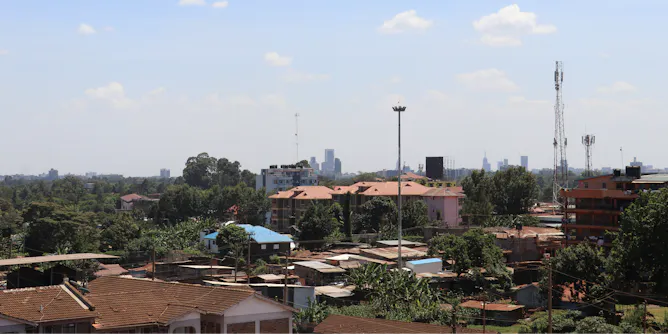
Urbanisation is experienced through growing tensions within families over precious yet meagre plots of land.
Articles on Land redistribution
Displaying all articles

Research shows that market-based land reform in South Africa since 1994 has often benefited white farmers and preserved inequality instead of reducing it.

Incomplete and inaccurate official data provides fertile ground for radical statements.

Almost 25% of all farmland previously owned by white landowners has been restored, redistributed to black South Africans, or moved away to state ownership.
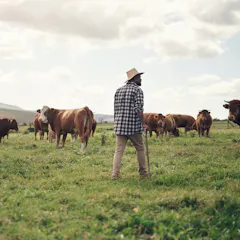
Year after year, challenges have distracted the country from its agricultural expansion goals.

The government’s approach to redistributing farmland has been mostly ineffective. Failure can be attributed to limited implementation, poor institutional capacity and corruption.
Based on official statistics, we conclude that the country has made more progress towards land reform than is generally suggested.
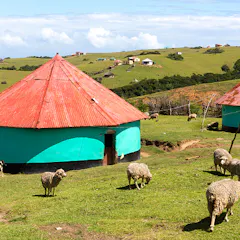
Policies, if implemented, would drive the agricultural sector’s growth in ways that would benefit all.
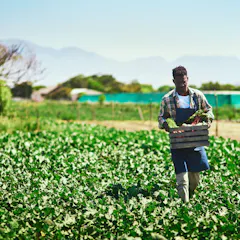
Subsidies for black farmers in South Africa would build a new ‘crop’ of commercially oriented farmers.
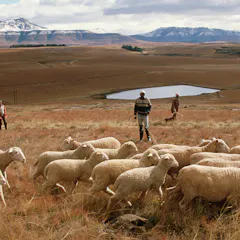
An agency could accelerate land reform by removing the process from political and bureaucratic control.
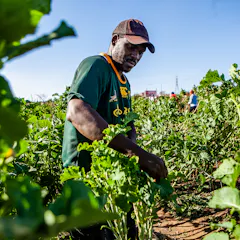
The new initiative reproduces the core weaknesses of post-apartheid state land and agricultural policy. These have done little to improve the livelihoods of the poor.
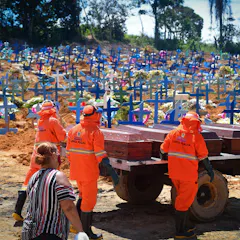
In a Latin American country hard hit by COVID-19, an agricultural collective is stepping in to help where government won’t, mounting an astonishing national pandemic response.
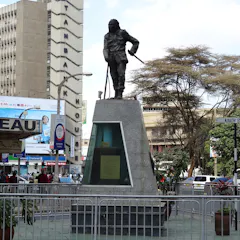
The resilient Mau Mau freedom fighters failed to maintain revolutionary action after independence.
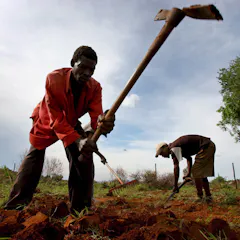
Land reform programme has done very little to improve access to land for black South Africans.
Top contributors
-

Director of the Bureau for Economic Research, Stellenbosch University
-
Senior Fellow, Department of Agricultural Economics, Stellenbosch University
-
Emeritus Professor, Poverty, Land and Agrarian Studies, University of the Western Cape
-
Professor of Agricultural Economics, Stellenbosch University
-
Researcher in Agricultural Economics, University of Pretoria
-
Associate Professor, Sociology, University of Fort Hare
-
Assistant Professor of Education and of Labor and Employment Relations, Penn State
-
Lecturer in the School of International Relations, University of St Andrews
-
Senior Manager - Agrimetrics, Agricultural Research Council
-
Postdoctoral fellow, Georg-August-Universität Göttingen
-
Elise Richter Fellow, Senior Postdoctoral Researcher, Universität Wien