

One of the world’s largest producers of oil has lost a legal battle that could have dire consequences on its fragile economy.
Articles on Judicial system
Displaying 21 - 40 of 40 articles

Under new WA legislation, the state’s attorney-general has the power to order serial killers and mass murders remain in jail, sometimes without judicial review.
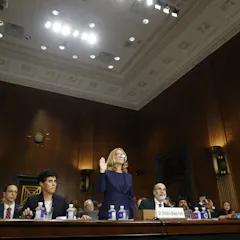
A century ago, Russian leaders staged mock trials on rape and abortion to educate citizens about new Soviet laws and values. Then, as now, victim-blaming and ‘he said, she said’ marred the verdict.
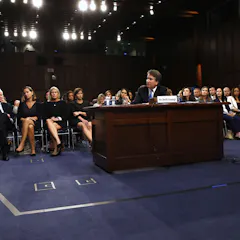
Controversial judicial appointments and divisive court rulings are not the norm everywhere. Here’s what the US could learn from Europe about ensuring ideological balance on the Supreme Court.

The attorney general can decide immigration cases because immigration courts are part of the DOJ, not the judiciary. This congested system has 345,000 open cases. Most will likely end in deportation.

Appointing judges to lifetime terms can be among a president’s longest lasting legacies. The overwhelming majority of Trump’s nominees are conservative, white and male.

It’s election season in Pakistan, and the Supreme Court is at war with the ruling party. Many Pakistanis wonder whether the nation’s top judge is cleaning up government or staging a judicial coup.

An appeals court ruling against popular Brazilian ex-president Lula has hotly divided Brazil. A legal scholar argues that this is a case of activist judges taking their anti-graft crusade too far.

Finding justice in Ghana is a slow and often frustrating process. To speed things up, the courts in the country need to reform and modernise.

A survey asked Americans what they would do if the Supreme Court started making many unpopular decisions. Here’s what they said.

Clear court procedures are required to guarantee confidentiality, safety, and dignity for victims of highly stigmatising cases, such as sexual abuse.
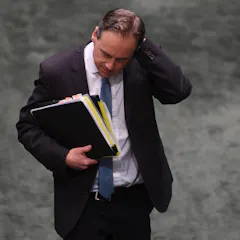
It is obviously important to protect the institutional integrity and independence of the judiciary – but the judiciary and judicial decisions should not be immune from criticism.

Local and national authorities are curtailing civil liberties in the name of ‘security’.
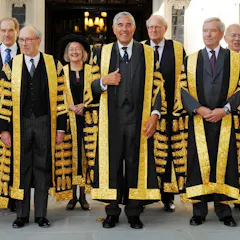
At least half of the UK’s Supreme Court will retire in the next two years, presenting a prime opportunity for a more representative judiciary.
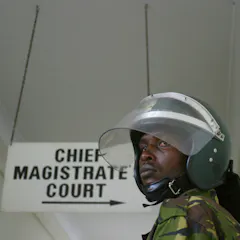
Despite some criticism, the screening of 50-odd judges and nearly 300 magistrates was a remarkable achievement. But Kenya’s new Chief Justice has some cleaning up left to do.
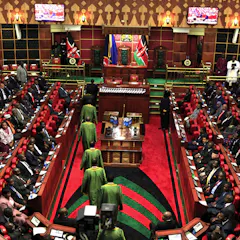
The electorate and those involved in public governance should focus more on how judges are appointed. This is because they need to make sure that individuals of the highest quality get the job.

There are inherent shortcomings in a procedure that asks judges to make objective and rational assessments about how their own conduct, relationships or interests might appear to others
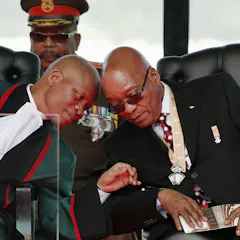
Tensions are probably inevitable in any constitutional democracy that empowers the courts to overrule the executive and legislature. But, judges are worried cabinet undermines the rule of law.

After saying he was ‘deeply suspicious’, a judge cleared a man of child pornography offences. We need to understand the standard of proof to make sense of verdicts, including AFL rulings on doping.
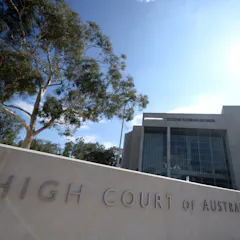
Late last week, the federal government appointed Geoffrey Nettle, a Victorian Court of Appeal judge, to the High Court to replace retiring justice Susan Crennan. Nettle is an excellent lawyer and his appointment…
Top contributors
-

Professor of Legal Studies and Political Science, UMass Amherst
-
Professor of Political Science, Northern Illinois University
-
Associate Professor of Political Science, Oregon State University
-
Professor of Political Science, Purdue University
-
Professor of Law, UNSW Law School, UNSW
-
Ph.D. Candidate in Russian Literature, Columbia University
-
Emeritus Associate Professor in Public Law, UCT. Visiting Adjunct Professor, WITS School of Governance; Director, Africa Programme, University of Cambridge Institute for Sustainability Leadership, University of Cambridge
-
Professor of Law, Texas A&M University
-
Dean, University of Ghana School of Law, University of Ghana
-
Professor of Political Science and Affiliate Law Faculty, Penn State
-
Associate Senior Research Fellow, British Institute of International and Comparative Law
-
Professor of Political Science, Penn State
-
Research Fellow, School of Law, The University of Queensland
-
Visiting Lecturer, Georgia State University
-
Visiting Fellow, Feinstein International Center, Tufts University