

On the horizon: A new omicron-focused version of the Moderna vaccine that may offer longer protection and a stronger immune response.
Articles on Johnson & Johnson vaccine
Displaying all articles
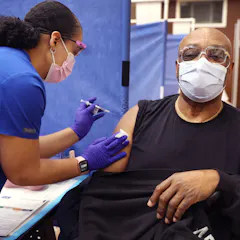
New data on the second booster suggests the older you are, the more you need it.
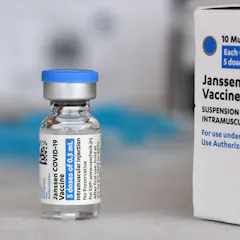
It has been six months since the Johnson & Johnson vaccine received emergency use authorization. What does six months of data show about its efficacy, side effects and protection from variants?
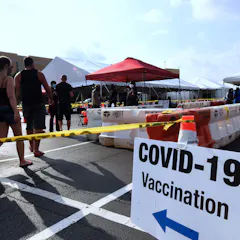
While emergency use authorization gets vaccines out to the public more quickly, it doesn’t skip any steps that full approval requires.
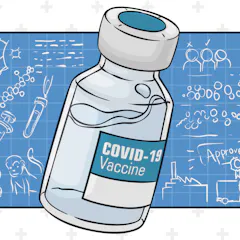
Ongoing tracking is meant to spot very rare risks – like the connection between the Johnson & Johnson shot and Guillain-Barré syndrome. And it relies on public reporting.

COVID-19 has exacerbated a backlog of domestic and foreign drug manufacturing inspections that the FDA is still too short-staffed to adequately deal with.
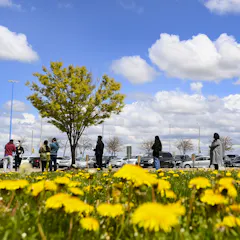
Canadian public health organizations have run into a serious communication problem about the AstraZeneca vaccine. Crisis management and communication theories explain what’s gone wrong.
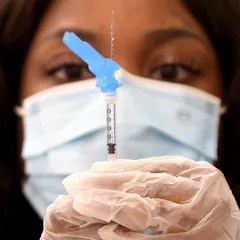
The CDC and FDA said the benefits of the Johnson & Johnson vaccine far outweigh the low risk of developing rare blood clots and lifted a pause on the vaccine’s use. A doctor explains.

Licensing agreements between pharmaceutical companies and the Medicines Patent Pool, in cooperation with the WHO, could accelerate access to doses for the poorest countries.
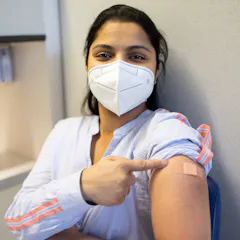
It’s normal for different people to mount stronger or weaker immune responses to a vaccine, but post-shot side effects won’t tell you which you are.
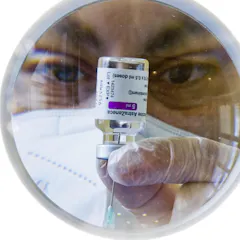
Both the AstraZeneca and Johnson & Johnson vaccines are now being investigated for links to rare blood disorders.
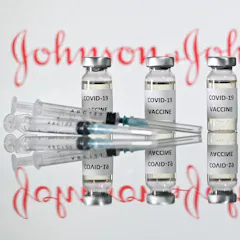
The one-dose vaccine developed by Johnson & Johnson is temporarily halted because of potentially serious blood clots seen in six women. An immunologist explains what this means for you.
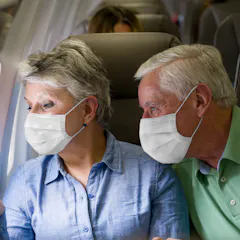
New CDC guidance permits domestic travel for fully vaccinated individuals, as long as social distancing is respected. International travel guidelines are different.
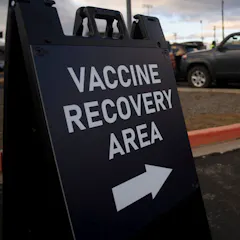
Many people never experience the least bit of discomfort from the COVID-19 vaccines, but mild side effects are common. They include swelling in the affected arm, nausea and chills.
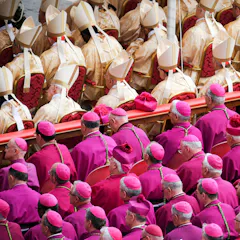
Vaccines that rely on embryonic cell lines have saved tens of millions of people.
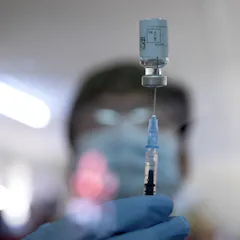
Divisions among Catholics have created doubts about the moral acceptability of one of the COVID-19 vaccines. An expert explains why there isn’t one ‘Catholic view’ on the issue.

With four COVID-19 vaccines approved for use in Canada, it’s time to answer FAQs about efficacy, immunity, eradication and variants.

Millions of vaccinated people have been waiting for guidelines on what they can do safely. The CDC says it’s OK to gather with other vaccinated people, but it’s still best to avoid travel.
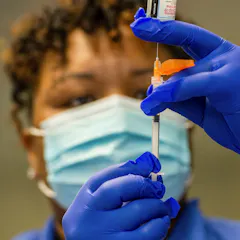
Researchers are closely watching the coronavirus mutants to make sure vaccines can be adjusted if necessary. But scientists don’t know whether vaccines will be effective in those already vaccinated.
Top contributors
-

Professor of Medicine, University of Virginia
-
Instructor of Human Immunology, Emory University
-
Distinguished Professor of Pharmacy Practice, University of Connecticut
-
Professor, Université de Lille
-
Professor, Biology, York University, Canada
-
Associate Professor of Comparative Effectiveness and Outcomes Research, University of Connecticut
-
Professor of Pathology, Microbiology and Immunology, University of South Carolina
-
Professor of Public Theology and Director of The Bernardin Center, Catholic Theological Union
-
Clinical Professor of Pharmacy Practice, University of Connecticut
-
Associate Professor, School of Professional Communication, Toronto Metropolitan University
-
Associate Professor of Biology, Rochester Institute of Technology
-
Professor of Pathology, Microbiology and Immunology, University of South Carolina
-
Adjunct Professor of Epidemiology, University of Texas Health Science Center at Houston
-
Professor of Economics, Université Clermont Auvergne (UCA)
-
Professor of industrial economics, EM Lyon Business School