

Hampshire College’s student-driven, unorthodox approach to education has roots in the early 1900s and a belief that students should be active, engaged learners.
Articles on John Dewey
Displaying all articles

Insights from philosophers about the nature of knowledge and learning can help educators identify why and when using AI in the classroom is warranted and helpful.

Educational philosopher John Dewey saw America’s schools as a place for students from different backgrounds to learn from one another.

We need a richer account of democracy within which to locate the Voice, to lift the quality of public debate about it.

We ought to worry that the pandemic has made it even easier to reduce teaching to disseminating knowledge.

Insights of neuroscientist Ian McGilchrist, philosopher Nel Noddings and physicist Ursula Franklin help centre students and our collective future in debates about education and technology.
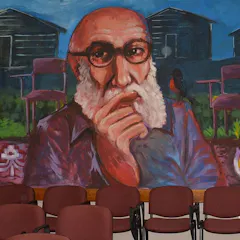
The education philosopher Paulo Freire would have denounced the pandemic-fueled proliferation of online schooling as an affront to democracy and a further entitlement for those in positions of power.
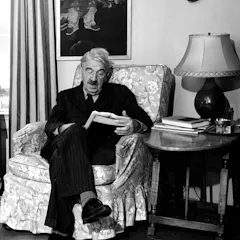
Though many in the US are disoriented and disheartened by the lack of an effective federal response to the coronavirus pandemic, American thinker John Dewey would not have been surprised.

The Ancient Greeks modelled a form of education that, in variants, has endured for centuries. But with climate change and globalisation, the world has changed, and the role of education with it.

Should the teacher be a sage on the stage or a guide on the side? Neither, it seems.

Foundation essay: This article is part of a series marking the launch of The Conversation in the US. Our foundation essays are longer than our usual comment and analysis articles and take a wider look…
Top contributors
-

Bradlee Professor of Government and the Press, Harvard Kennedy School
-
Director of the Stirling Network for Curriculum Studies, University of Stirling
-
Professor of Political Science, Fordham University
-
Researcher, UQ Critical Thinking Project, The University of Queensland
-
Danforth Chair in the Humanities, Saint Louis University
-
Professor of Education, University of South Carolina
-
PhD candidate - Faculty of Education, Simon Fraser University
-
Professor of Political Philosophy, University of Sydney
-
Professor of Education, Loyola Marymount University
-
Visiting Assistant Professor of Philosophy, Worcester State University
-
Professor, Department of Communication Arts, University of Waterloo
-
Associate Professor, Werklund School of Education, University of Calgary
-
William Nelson Cromwell Professor of Jurisprudence and Political Science, Amherst College