
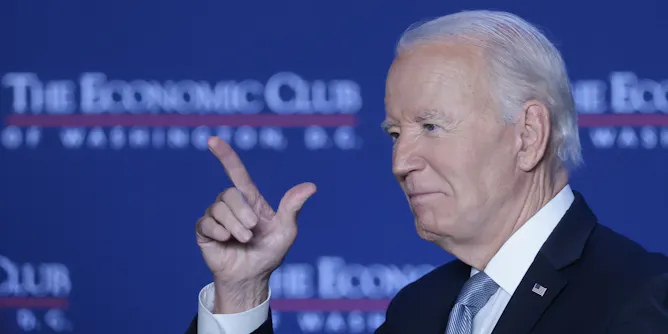
The US added just 12,000 jobs in October 2024.
Articles on Jobs Report
Displaying all articles

Slowing job growth should come as no surprise.
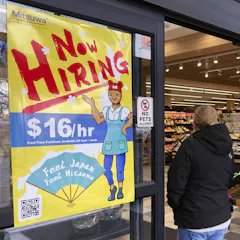
The Fed has been trying to tame employment and wages to keep inflation in check. It ain’t working.
The US economy gained more jobs than expected in June, although it was still a decline from May. An economist explains what the new numbers mean.
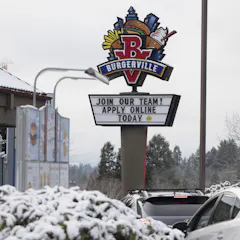
The job market continued to improve in December, but a stagnating labor pool will pose more challenges for employers in 2022.

Job creation might well have slowed, but a deeper dive into employment data suggests the picture is actually pretty rosy.
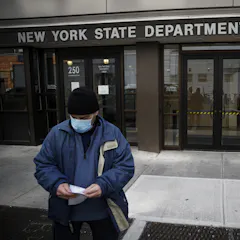
Three pandemic-related unemployment benefit programs expire on Labor Day, putting millions of mostly low-income families in financial jeopardy.

Employment and wages soared in the latest labor report, but that’s small comfort for the many workers with a job that doesn’t pay a living wage.
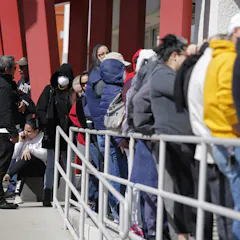
The widely reported unemployment rate – currently 6.3% – doesn’t fully reflect the reality of joblessness in the US economy.

Governments use a variety of labor market policies to support workers who lose their jobs – each with a different impact on a country’s well-being.
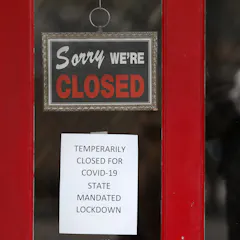
Several economists predict joblessness will eventually surpass the 25% rate experienced in 1933.
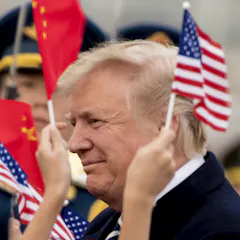
Trump may find it harder to maintain support for his escalating tariffs on China if the US economy shows further signs of weakness.
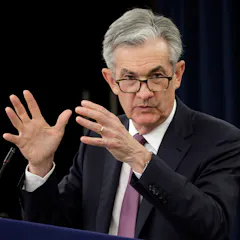
The Fed said it’s ready to act to ‘sustain the expansion.’ The latest jobs report suggests it may have to act soon.

An economist explains why the long-term drop in the participate rate is an even bigger problem for the US economy than the May slowdown in jobs growth.

The rise of superstar companies that dominate their industries may be partly to blame for the lack of wage growth in the US in recent years. It could also suggest a solution.

The economy added fewer jobs than expected in May, suggesting a Fed rate hike this month is off the table. What else did we learn from the report?
Top contributors
-

Professor of Economics, University of Nebraska Omaha
-
Associate Professor of Business, Boston University
-
Assistant Professor of Economics, Clark University
-
Clinical Professor of Practice, City and Regional Planning, The Ohio State University
-
Global Fellow at the Wahba Institute for Strategic Competition, Associate Professor at the University of Arizona, University of Arizona
-
Professor of International Economic Affairs at The Fletcher School, Tufts University
-
Senior Researcher, National Institute for Statistics and Economic Studies
-
Assistant Professor of Social Sciences, Minerva University
-
Professor of Management, Co-Director of the MIT Sloan Institute for Work and Employment Research, MIT Sloan School of Management
-
Professor of Economics, Wesleyan University
-
Assistant Professor of Finance, St. Joseph's University
-
Distinguished Professor, Arthur J. Gosnell Professor of Economics, & Head, Department of Sustainability, Rochester Institute of Technology
-
Associate Professor of Economics, Pace University