
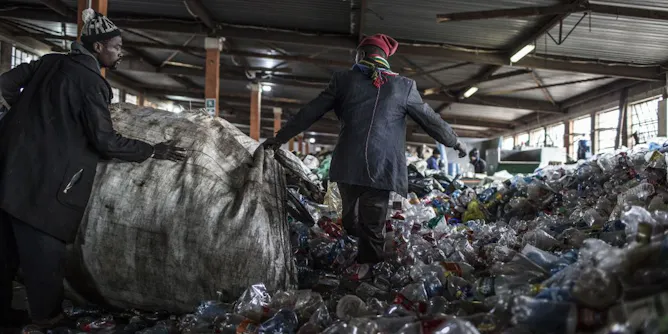
In South Africa, the work of ensuring plastic bottles are recycled lies with consumers and volunteers instead of the large industry polluters.
Articles on job creation
Displaying 21 - 40 of 70 articles

The important developmental role that intermediate city municipalities can play in creating employment and stimulating growth suggests they should be prioritised.

South Africa’s youth unemployment tax incentive is effectively a subsidy to the profits of companies.

Ghana is losing out the booming global cashew industry in terms
of job and revenue generations.
Racial and gender disparities in access to work are entrenched features of the South African labour market.
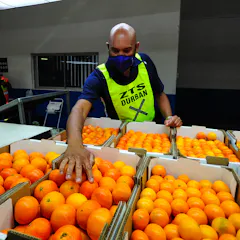
To rebuild lost credibility, the South African government can start by listening to social partners and the business sector and implementing less financially costly policies

Three pandemic-related unemployment benefit programs expire on Labor Day, putting millions of mostly low-income families in financial jeopardy.

If the best people management practices of the formal economy were to be deployed in the informal economy, new avenues of stimulating economic and life empowerment may be opened.

As Canada emerges from the pandemic, creating jobs and achieving full employment are top priorities. Relegated to the back burner are balanced budgets and reducing debt.

The pandemic has hit young people very hard. The long-term costs of having them neither studying nor working more than justify investment in a national program to help them enter the workforce.

As state and local governments lure businesses to their shores with financial incentives, a recent study finds that two forms of stimulus spur growth more than others.

Increased capital investment and productivity need not result in job losses. Government can use industrial policy to link investment incentives to job preservation and even job creation.
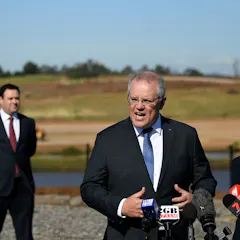
A new airport, aerotropolis and development of two of the ‘three cities’ in the metropolitan strategy all aim to create jobs in Western Sydney. But right now the only certainty is a huge jobs deficit.

The Trump administration is rolling back environmental regulations, claiming it’s good for the economy. But research shows that conservation is better both for public health and for job creation.

There aren’t a lot of studies on South Africa’s cultural economy. A new one finds a cluster of creative firms in Cape Town with high levels of innovation.

Climate journalism can play an important role in painting the picture of a post-carbon economy. It should start by encouraging collective action and a sense of empowerment for everyday people.
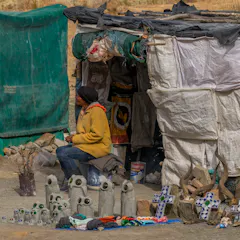
The informal sector represents an opportunity to improve the lives of a large part of the workforce. Government should desist from harming livelihoods and broaden the scope of policy measures.
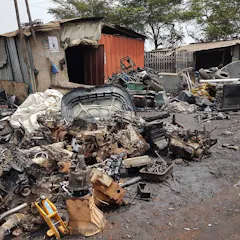
Sites like Agbogbloshie provides a valuable service. They offer opportunities for job creation, profit and cleaning up environments littered with waste.

Deportees and other migrants return home wealthier, more educated and with more work experience than people who never left. This ‘brain gain’ benefits the whole community, financially and politically.
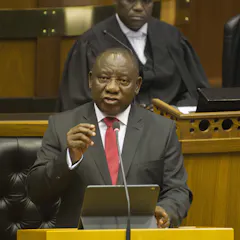
Ramaphosa offered five simple yet bold goals for the next ten years that cut across the social and economic structural constraints that inhibit South Africa’s potential.
Top contributors
-

Associate Professor, Rhodes University
-
Senior Fellow, Department of Agricultural Economics, Stellenbosch University
-
Professor, Economics, University of the Western Cape
-
Professor of Economics, The University of Melbourne
-
Dean of Business School, University of Southern Queensland
-
Assistant Professor of Anthropology, Wheaton College (Illinois)
-
Professor of Political Economy, University of the Witwatersrand
-
Research Associate, Sociology, University of Pretoria
-
Professor of International Affairs and the Vice-Provost and Associate Vice-President (Academic), Carleton University
-
Visiting senior lecturer, University of the Witwatersrand
-
Adjunct Senior Lecturer, Applied Ethics and CyberSecurity, Griffith University
-
Professor of Political Studies, University of Johannesburg
-
Professor of Economics and Director of the Development Policy Research Unit, University of Cape Town
-
Senior Lecturer School of Management and Director Postgraduate Community and Not-for-profit Management Program, University of Technology Sydney
-
Professor of the Practice of International Development, Harvard Kennedy School