

The predominantly white European field of music education in the US is changing radically these days as schools confront anti-Black histories.
Articles on Jazz
Displaying 21 - 40 of 96 articles

During the only major performance she gave in her home country, Gilberto was booed.

Her exquisite piano compositions drew fans to the Jerusalem monastery where she lived after fleeing Ethiopia.

We are all told to follow our calling. Here’s what happens if you pursue a more ‘sensible’ career instead.
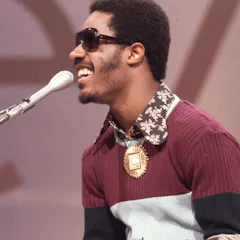
On October 24 1972, the world heard the infectious grooves and seamless vocal delivery of the song Superstition for the very first time.
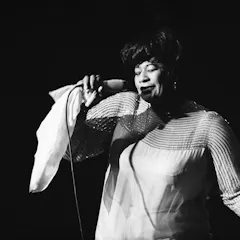
Few educators realise one decision in 1975 about notating standards cemented a practice excluding women.
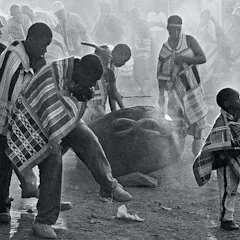
Group Theory: Black Music is the name of the new album from the composer, drummer and scholar. On it jazz meets political theory.
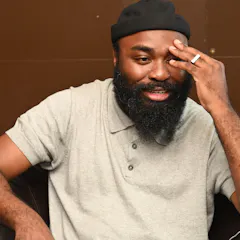
The jazz star says he wants his piano to speak in his isiZulu language, and that his music is born from spiritual concerns.
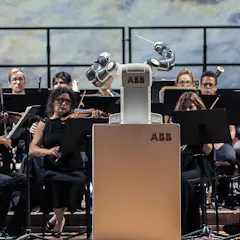
Machines have been getting better at mimicking improvisation. But can this distinctly human process serve as a bulwark against the mechanization of life and art?
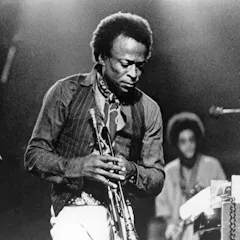
Davis’s ability to innovate and incorporate other genres into his jazz has left a lasting impact on music.

Charlie Watts was the Rolling Stones’ drummer for almost six decades. A scholar of music – and a Stones fan – describes what he brought to the band.
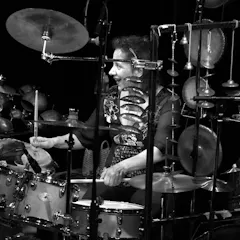
The heavily male community of jazz musicians and audiences have created barriers to success for women in the genre.

Improvisation asks us to trust that surprise will teach us something. As we enter a new year and a post-pandemic landscape, musical improvisation offers inspiration.
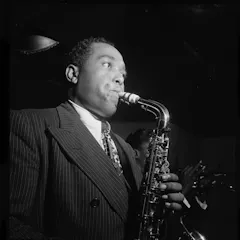
Though he lived hard and died young, Bird’s genre-busting style of sax playing ignited jazz’s bebop revolution.
The Munich-based record label ECM specialises in jazz and Western classical music. The artistry found in its catalogue allows a degree of abstraction that can be energising while enduring a pandemic.

The magazine grew to be the largest circulation publication for black readers in South Africa, and expanded to include East and West African editions.

Rap songs from Public Enemy and Ludacris have been heard at marches over the killing of George Floyd. But the history of Black American music as a form of protest dates back to the 19th century.
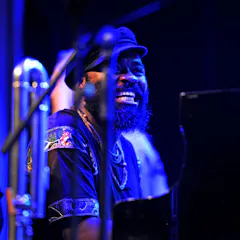
Since the lockdown in South Africa several jazz musicians have begun to harness online platforms in novel ways.

Davis’s 1970 album Bitches Brew turned jazz on its head and paved the way for fusion. More recently, Radiohead cited it as a key influence.
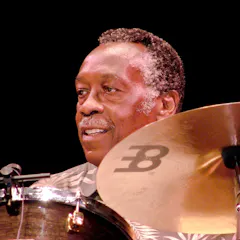
Clyde Stubblefield’s drumming has been sampled or imitated more than 1,000 times since it was recorded in 1970.
Top contributors
-

Associate of the Gordon Institute for Business Science, University of Pretoria
-
Lecturer of English. PhD Candidate in Afrofuturism and African Studies, University of the Western Cape
-
Senior Lecturer in Music, Southern Cross University
-
Professor of Music, Carleton University
-
Associate Professor of Music Business and Entrepreneurship, University of Florida
-
Lecturer in music and popular music: composition, orchestration, analysis and popular music history., University of Liverpool
-
Professor of Music (post-1900), University of Glasgow
-
Reader in Music, Politics and Society, Newcastle University
-
Assistant Teaching Professor of Music, Penn State
-
Professor of Psychological and Brain Sciences, Drexel University
-
Assistant Professor in Critical Practice, Coventry University
-
Associate Professor of Communication Arts and Sciences, Penn State
-
Lecturer of American Studies, University of Copenhagen
-
Senior Lecturer in Music, The Open University
-
Senior Lecturer in Music, Goldsmiths, University of London