
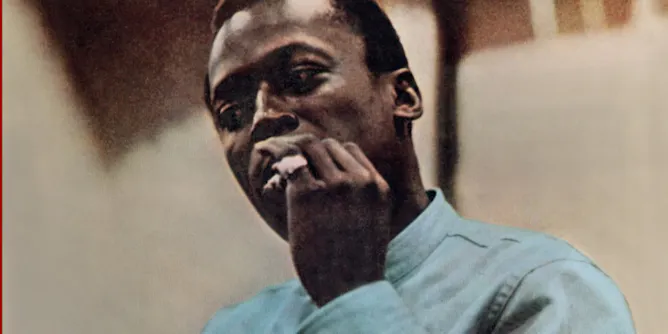
He wasn’t quite able to create the sound he wanted.
Articles on Miles Davis
Displaying all articles
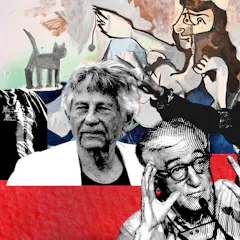
So many of our artistic geniuses have complicated legacies. What do we do with work we love by artists whose behaviour is more difficult to admire?
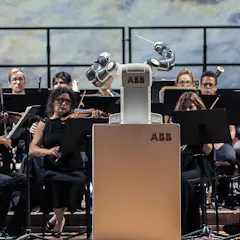
Machines have been getting better at mimicking improvisation. But can this distinctly human process serve as a bulwark against the mechanization of life and art?
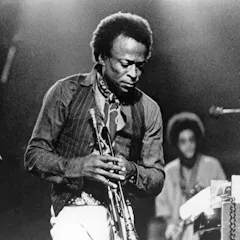
Davis’s ability to innovate and incorporate other genres into his jazz has left a lasting impact on music.

Davis’s 1970 album Bitches Brew turned jazz on its head and paved the way for fusion. More recently, Radiohead cited it as a key influence.

The release of a John Coltrane movie soundtrack from 1964 has brought jazz movies into focus.

Jazz used to be experienced on a dance floor. But over time, it became something to dissect and analyze.
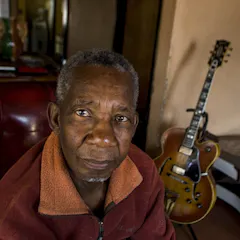
Philip Tabane was unlike any other musician. His music was intimately woven into his cosmology and spirituality.
The story of jazz in the ANC army-in-exile, Umkhonto we Sizwe culture is far more nuanced – and positive – than depicted in a new film.
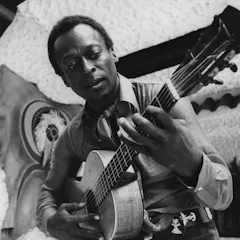
Miles Davis’s 1971 album A Tribute to Jack Johnson sits uneasily within both jazz and rock genres, but its indefinable nature should be celebrated.

South African trumpeter Hugh Masekela made an impact across the world during his decades-long musical career.

Something really magical is happening at the intersection between jazz and hip-hop at the moment. Many of the artists involved will be playing at Africa’s foremost jazz festival.

‘Bitches Brew’ and ‘Live-Evil’, two albums from Miles Davis’ electric period, have more than musicological significance. They challenge the listener to think beyond aesthetics and form.
Top contributors
-

Associate of the Gordon Institute for Business Science, University of Pretoria
-
Assistant Teaching Professor of Music, Penn State
-
Lecturer of English. PhD Candidate in Afrofuturism and African Studies, University of the Western Cape
-
Teaches in School of Justice, Queensland University of Technology
-
Reader in Music, Politics and Society, Newcastle University
-
Assistant Professor of Music Theory and Affiliate Assistant Professor in the Center for Arts, Migration, and Entrepreneurship, University of Florida
-
Professor of Music (post-1900), University of Glasgow
-
Associate Professor and Course Leader for Film and Media Studies, York St John University
-
Associate Professor, School of Humanities and Languages, UNSW
-
Artist and Lecturer in Fine Arts, University of the Witwatersrand
-
Lecturer in music and popular music: composition, orchestration, analysis and popular music history., University of Liverpool