

Whatever the eventual impact on women’s candidacies post-pandemic, COVID-19 has the potential to shock the system, upending or reinforcing existing gender imbalances in political power.
Articles on Jacinda Ardern
Displaying 121 - 140 of 153 articles

New Zealand’s COVID-19 elimination strategy has been a collective success, involving ‘ordinary’ Kiwis and unity across political divides. Ending lockdown and a looming election will test that unity.
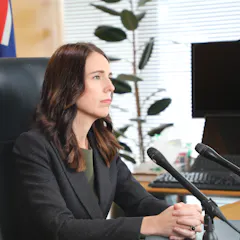
Ardern’s handling of the COVID-19 crisis has inspired high trust in the state but by the time the country goes to the polls later this year, the outbreak’s social and economic damage may change that.

As someone who researches and teaches leadership, I’d argue New Zealand Prime Minister Jacinda Ardern is giving most Western politicians a masterclass in crisis leadership.
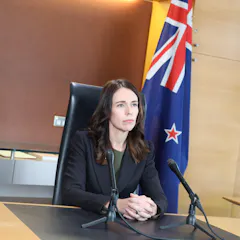
Overjoyed. That’s not a word epidemiologists normally use, but that’s how I felt after hearing Prime Minister Jacinda Ardern’s announcement of New Zealand’s COVID-19 lockdown from Wednesday night.

Disaster of any kind throws qualities of leadership – or the perceived lack thereof – under the spotlight. People respond most to leaders who show empathy and authenticity.
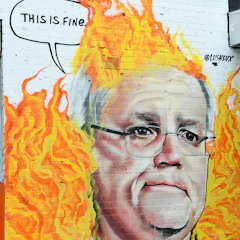
A crisis of this scale requires a willingness to listen to the best sources of advice and generate bipartisan consensus. But Morrison has struggled to put the national interest above party politics.
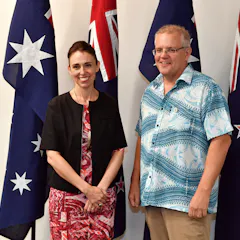
Yes, Jacinda Ardern is an intelligent, compassionate prime minister, but governing is difficult – and problems have inevitably arisen, or never gone away.
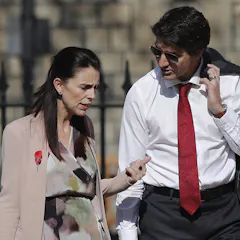
Unlike Canada’s newly elected House of Commons, New Zealand’s parliament reflects the will of voters. So do other proportional representation systems. Canada has plenty of choice.

The advertising boycott of Alan Jones’ radio show highlights which companies advertised on it, but ironically, pulling out now could enhance their brand more than if they had never supported the show.

The broadcaster’s latest outrage may finally make his employer act - but not because of any damage he is doing to the social fabric.
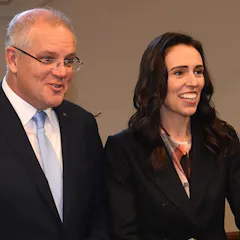
Many people being deported have extensive family ties in Australia and have spent very little time in New Zealand.

Cuba is offering a compelling example of how we can take care of each other during the climate crisis with its work training doctors on Kiribati, a nation that is being devastated by climate change.
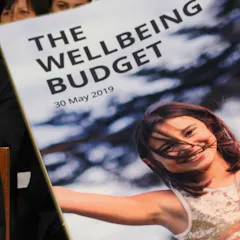
Australia’s treasury adopted a well-being framework well before New Zealand’s much celebrated “well-being budget”. Here’s what happened to it.
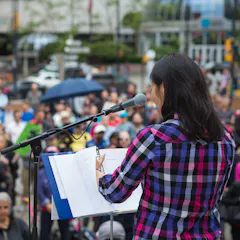
From Berlin to New York, citizens from around the world have shown that it is possible to get governments to make affordable housing a priority.
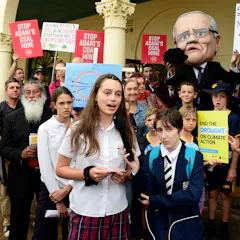
Young voters want leaders who are transparent, honest, and display integrity. They also crave stability.

Being seen to lead is clearly an important political aspect of managing online content. But internet regulation must focus on creating policy that is clear, accountable, balanced and open to appeals.

Countries around the world are taking society’s happiness and well-being into account when formulating policy. So, why is Australia so focused on economics as the sole marker of progress?

After the Christchurch mosque shootings, New Zealand’s prime minister didn’t start a war on terror. She covered her head, cried, paid for funerals and passed gun control. Is it because she’s a woman?
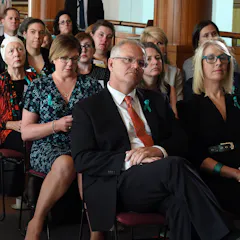
Knowledge is important to produce informed policy, but an understanding of people is also vital in a democracy. And that requires listening – to all sectors of society, not only elites and lobbyists.
Top contributors
-

Professor of Politics, Te Kunenga ki Pūrehuroa – Massey University
-
Research Associate, Public Policy Institute, University of Auckland, Waipapa Taumata Rau
-
Professor of Law, University of Waikato
-
Professorial Fellow, University of Canberra
-
Professor of Politics and Policy, University of Auckland, Waipapa Taumata Rau
-
Professor of Political Science, Te Herenga Waka — Victoria University of Wellington
-
Professor of Politics, University of Canterbury
-
Associate Professor, School of Management and Marketing Te Kahui Kahurangi, Te Kunenga ki Pūrehuroa – Massey University
-
Professor of International Relations, University of Otago
-
Senior Lecturer in Social Sciences and Public Policy, Auckland University of Technology
-
Professor of History, University of Canterbury
-
Professor in Applied Mathematics, University of Canterbury
-
Senior Research Fellow, Centre for Advancing Journalism, The University of Melbourne
-
Lecturer in Australian Politics, UNSW
-
Senior Lecturer in Philosophy, University of Waikato