
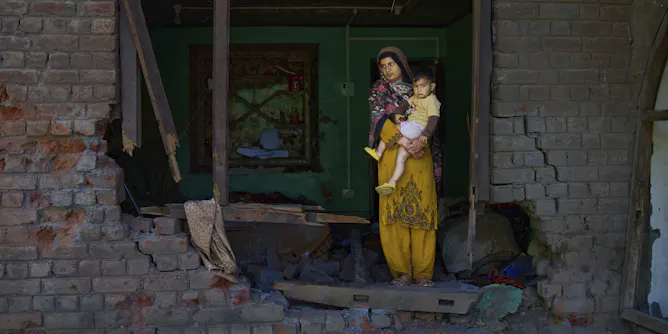
Missing from the coverage of Kashmir is the story of Kashmiris as Indigenous Peoples. Their territory has been under multiple occupations since 1947 and they face intensive repression.
Articles on Islamophobia
Displaying 21 - 40 of 268 articles
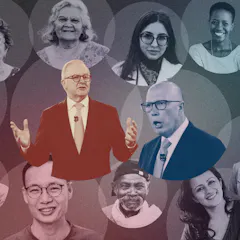
Multicultural policy is adrift in the election campaign, with the major parties refusing to commit to the changes needed to minimise mounting community tensions
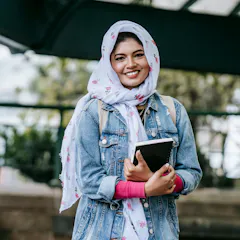
Global tensions have put pressure on universities to adopt politicised definitions of antisemitism and Islamophobia. Dehumanisation is a more inclusive alternative.
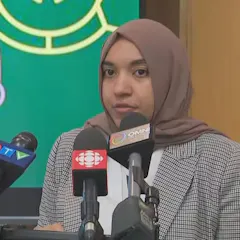
An attack on a hijab-wearing woman in Ajax, Ont. reveals a pattern of Islamophobia. Racism plus changing demographics and anti-hijab policies can contribute to how Muslim women are seen in public spaces.

A cultural studies scholar says Netflix’s removal of their ‘Palestinian Stories’ section, along with about 20 films, is more than a simple business decision: it’s instead an act of cultural erasure.
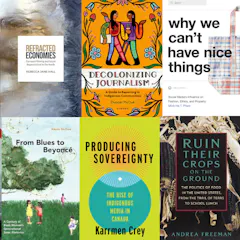
Thought-provoking reads for the critical thinker on your gift list. Each book connects with a past Don’t Call Me Resilient episode. Listen alongside reading to bring the scholar & their ideas to life.
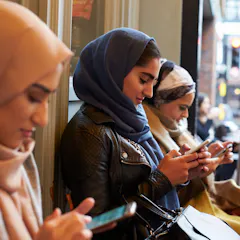
The high levels of hate crime that the UK has seen over the past year are likely due to the ongoing situation in the Middle East.

The final novel from France’s most famous literary provocateur, set in 2027, features an antihero based on a real-life French politician – who reports to a president modelled on Macron.
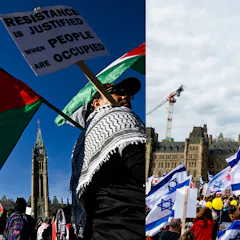
Revisit past episodes of Don’t Call Me Resilient that dive into issues related to the Israel-Gaza conflict, both at home and away.
Evidence suggests that high-school students visiting Auschwitz-Birkenau may increase their empathy towards Jewish people.
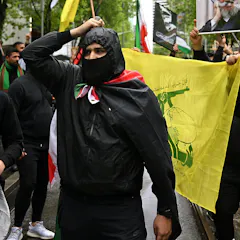
The government has pledged to examine the visa status of protesters who waved Hezbollah flags in Sydney and Melbourne at the weekend, and has also met its pledge to appoint an Islamophobia envoy.
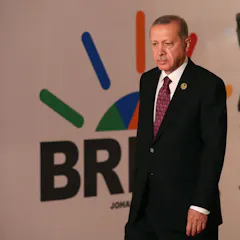
NATO member Turkey’s intention to join the 9-member body that functions as an alternative to the Western-led order shows Ankara’s global ambitions.
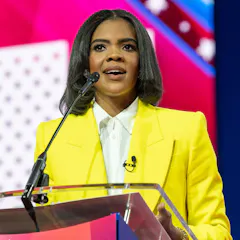
Owens reaches million of people online and wants to do five shows across Australia, but there are calls to deny her entry. Here’s what the federal government has to consider.

Muslims and mosques continue to be targeted in the violence across the country.
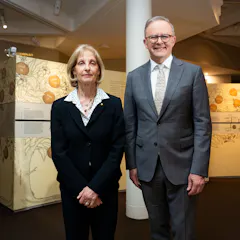
In an attempt to reduce antisemitism in Australia, the government has announced a special envoy, but the appointment is not without controversy.

Many people agree freedom of speech has its limits and the law has some role to play in prohibiting harmful speech. But what should these laws look like?
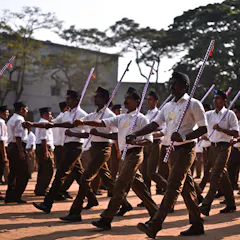
Modi has resorted to overtly Islamophobic language as he looks to secure a third term in office.

The intersectionality of hate, which combines racism, antisemitism and misogyny, leads the white heterosexual male to believe that he is a victim of the “minorities” he must resist.
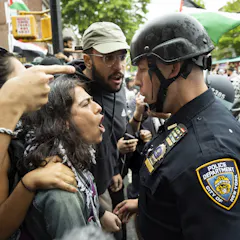
Each side is righteously sensitive to any perceived hate speech from the other, but seems unwilling to limit their own punitive strategies or inflammatory language.
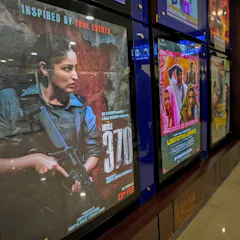
On today’s Don’t Call Me Resilient podcast, political scientist Sikata Banerjee and cinema studies scholar Rakesh Sengupta explain how cinema and social media in India may be helping to sway voters.
Top contributors
-

Associate Professor, School of Criminology, University of Leicester
-
Professor of Sociology, Wilfrid Laurier University
-
Professor of Criminology, Birmingham City University
-
Professor of Islamic Studies, Head of School, The Centre for Islamic Studies and Civilisation, Charles Sturt University
-
Professor of Social Geography, Newcastle University
-
Associate Professor, Centre for Islamic Studies and Civilisation, Charles Sturt University
-
Professorial Fellow, University of Canberra
-
Senior Lecturer, Department of Sociology and Criminology, City St George's, University of London
-
Director, Centre for Western Sydney, Western Sydney University
-
Senior Lecturer in Czech Studies, University of Glasgow
-
Distinguished Professor/UNESCO Chair-holder; Founding Director, Deakin Institute for Citizenship and Globalisation (ADI)
-
Sessional Instructor, Department of Literature and Language, Concordia University of Edmonton
-
Senior Lecturer in Criminology, Nottingham Trent University
-
Professor in Cultural and Social Analysis, Western Sydney University
-
Associate Professor in Faith and Peaceful Relations at the Centre for Trust, Peace and Social Relations, Coventry University