
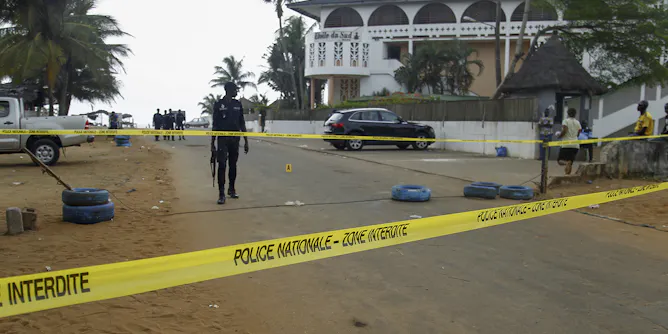
The gun attack at a hotel marks another bloody chapter in West Africa’s fight against Islamist militancy.
Articles on Islamic State
Displaying 341 - 360 of 707 articles
What is the likelihood of stateless terror suspects being brought to book for their crimes?
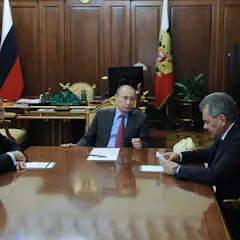
The Russian president’s announcement he will be pulling troops out of Syria has taken everyone by surprise.
Our series on understanding Islamic State attempts to catalogue many of the forces and events that can arguably have played a part in creating the conditions necessary for these jihadists to emerge.
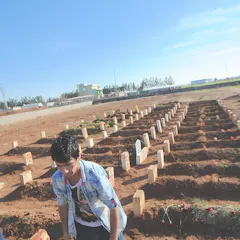
Death toll data from the war in Syria should be treated with great caution. It’s nearly impossible to provide precise numbers and assigning blame for the casualties is harder again.
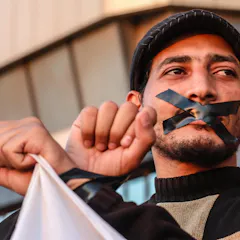
The rise of Islamic State and its declaration of the caliphate can be read as part of a wider story that has unfolded since the formation of modern nation states in the Muslim world.
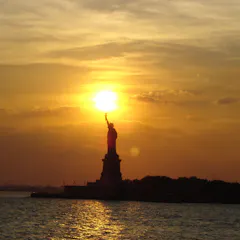
The tradition of republicanism offered us civil religion, a foundation of belief that could counter any politics or policy that demands sacrifice in this world to be compensated in some “beyond”.
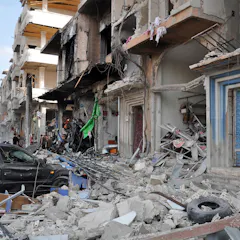
Stopping the conflict in Syria means solving a horrible array of intertwined, intractable problems.
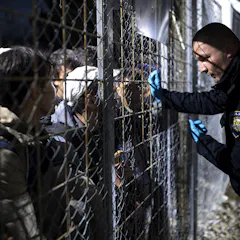
As the philosopher once described, states obsessed with the health of their own people often create the conditions for others to die.
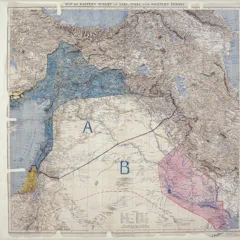
The leaders of Islamic State do not see their caliphate as an exercise in theocracy for its own sake, but as an attempt at post-colonial emancipation.
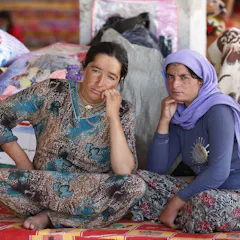
Domestic and sexual slavery are being used as weapons of war – and the victims are too often forgotten.
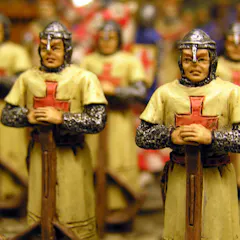
Representing even the Crusades as wars between Christians and Muslims is a gross oversimplification and a misreading of history.
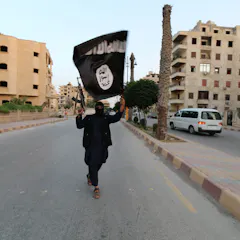
In seeking to link IS to earlier Islamic movements, Western commentators have associated the jihadist group with the medieval Ismailis, made famous in Europe by returning Crusaders as the Assassins.
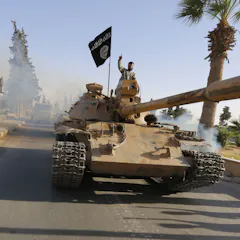
Despite what we’re told, religion isn’t inherently peaceful. People kill in the name of their religion, just as they love in its name.
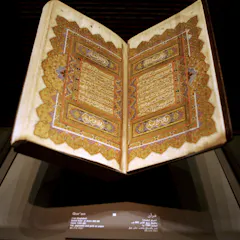
What makes Islamic State different to traditional Islam isn’t necessarily the religious texts the group uses.

Arnaud Mercier spoke with Stephen Brady, Australia’s ambassador to France, about Australia’s role in the fight against terrorism, and his own country’s approach to creating a multicultural society.
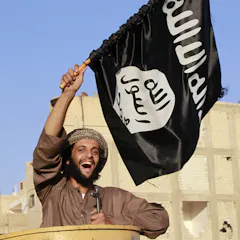
How far back in history does one have to go to find the roots of the so-called Islamic State? The first article in our series on the genesis of the terrorist outfit considers some fundamentals.
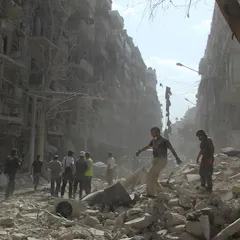
The agreement so enthusiastically received by the world is less a leap forward than a cynical act of self-preservation.

Referrals to the Channel programme are rising. Here’s what happens to people suspected at being at risk.
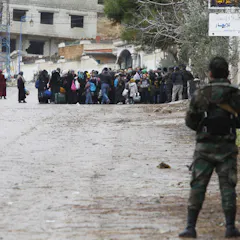
There is no guarantee that a partitioned Syria would create a more stable environment. Many Syrians would reject partition and would attempt to reverse it.
Top contributors
-

Professor of Peace Studies, University of Bradford
-
Professorial Fellow, University of Canberra
-
Professor of International Politics, Clinton Institute, University College Dublin
-
Director of the Curtin Extremism Research Network (CERN), Curtin University
-
Chair in Global Islamic Politics, Alfred Deakin Institute for Citizenship and Globalisation, Deakin University
-
Professor of International Relations, Lancaster University
-
Honorary Senior Fellow, The University of Melbourne
-
Professor in the Department of Government, University of Essex
-
Lecturer in Translation Studies, Cardiff University
-
Research Fellow, Middle East Studies, Deakin University
-
Sessional Academic, School of Social Sciences, Macquarie University
-
Visiting Fellow, Department of Political and Social Change, The Philippines Institute, Australian National University
-
Professor of International Relations, Norwegian University of Life Sciences
-
Professor of International Politics, Deakin University
-
Senior Lecturer, School of Social Sciences, UNSW