

The US economy ended 2021 with a lot of uncertainty and serious problems, such as inflation. How will economists know if things are improving in 2022?
Articles on Interest rates
Displaying 261 - 280 of 525 articles

Depending on circumstances, it may be time to re-think the bias to paying down housing debt over wealth accumulation in super. At least to do the sums, so you can make an informed choice.

The “monetary policy rule” tool has been mostly right for the past 20 years.

Central bankers are coming under mounting pressure to get inflation under control.
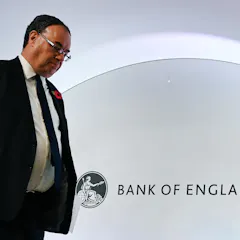
Against all speculation, the bank decided to hold the base rate at all-time lows for another month.

The Bank of England is weighing up the costs of a change.

Inflation in the UK in August rose at the highest rate in a decade.

Central bankers are expected to discuss the racial income and wealth gaps during the virtual Jackson Hole retreat. But an economist argues that the Fed is not suited for addressing these issues.

Interest rates, inflation and huge debts will all be up for debate.

The Reserve Bank governor’s ‘forward guidance’ risks him not adapting to changing circumstances, or undermining his credibility.
The Reserve Bank of Australia is ready to taper off the ‘unconventional’ monetary policy measures introduced in response to the COVID-19 crisis.
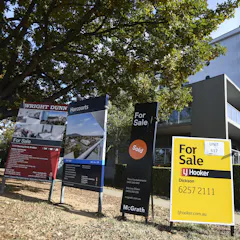
The Bank of International Settlements says technology and globalisation are the main causes of increasing inequality.

The RBA shouldn’t be spooked into raising interest rates, but the prospect of inflation in the next few years is an important consideration for central banks around the world.

Were he still alive, former prime minister Robert Muldoon might have warned the Labour government about the trouble a wage freeze can get you into.

Plus a new technique to protect birds from predators – using fake smells. Listen to episode 10 of The Conversation Weekly podcast.
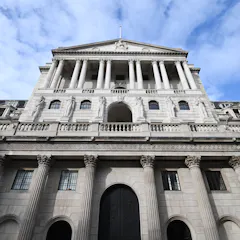
If inflation follows economic recovery, the Bank of England may be hesitant to raise interest rates enough to hold it back.

Yes, the bank would effectively pay you to borrow money. But negative interest rates won’t please savers, nor will they meet the big challenges of economic recovery.

New Zealand’s housing market is ill designed to create the surpluses that would force down values. Only the state can change that.
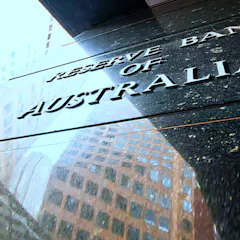
The most important change is a guarantee about the future, one the RBA can be held to.

Canadian governments are failing to treat future citizens fairly by saddling them with huge debt. What policies should Canadian governments enact that offer greater fairness to future generations?
Top contributors
-

Scientia Professor of Economics, UNSW
-
Professorial Fellow, University of Canberra
-
Senior lecturer, Canberra School of Government, University of Canberra
-
Associate Professor, Research School of Economics, and Research Associate, Centre for Applied Macroeconomic Analysis, Australian National University
-
Associate Professor, School of Economics, University of Sydney
-
Professor, Warwick Business School, University of Warwick
-
Associate Professor of Finance, Mississippi State University
-
Lecturer in Economics, Monash University
-
Senior Lecturer in Economics, The Open University
-
Professor of Economics, University of Leeds
-
Professor of Economics, University of Nebraska Omaha
-
Visiting Fellow, Crawford School of Public Policy, Australian National University
-
Head of Department of Economics, Finance & Accounting, Brunel University of London
-
Visiting Faculty in Economics, Emory University
-
Professor of Macroeconomics, University of Sydney